Powell River
Powell River is a district municipality situated in southwestern British Columbia, Canada. Located on the east side of the Strait of Georgia, it lies…
What is Powell River?
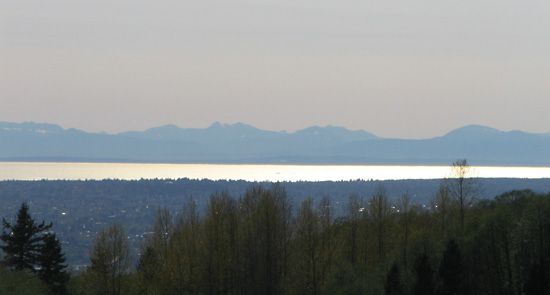
Powell River is a district municipality situated in southwestern British Columbia, Canada. Located on the east side of the Strait of Georgia, it lies approximately 80 miles (130 km) northwest of Vancouver.1
The area was named in honor of Israel Wood Powell, the Indian superintendent for British Columbia during the 1870s. Following 1910, the settlement emerged as a significant hub for the pulp-and-paper industry. In 1955, the town of Powell River amalgamated with several neighboring communities to establish the current district municipality, which spans 16 square miles (41 square km).1
Today, the district remains one of the world’s largest producers of newsprint, supported by hydroelectric power generated from the Powell and Lois rivers.1
How does the pulp and paper industry impact the local environment?
The pulp and paper industry impacts the local environment through its significant demand for natural resources and the management of its manufacturing byproducts. Key environmental considerations include:
- Forest Resource Management: Because approximately 40 percent of the global wood harvest is utilized for pulp, there is ongoing concern regarding the depletion of forest resources. While annual growth often exceeds the harvest, the industry faces pressure to balance production with the public demand for forestland preservation, recreational use, and the protection of local ecology.1
- Waste and Byproducts: The industry generates various liquid and solid wastes. The kraft process produces liquid wastes that can be processed to recover valuable chemicals like turpentine and methanol. Additionally, materials such as bark, wood chips, and lignin are often returned to the soil as fertilizers or conditioners.2
- Recycling and Sustainability: To minimize solid waste disposal and reduce the need for virgin fiber, the industry increasingly utilizes recycling methods. However, this process involves complex challenges, such as the removal of inks, adhesives, and coatings, which require the use of chemicals like caustic soda during de-inking.32
We could dive deeper into the specific chemical treatments used in modern pulping or the ecological benefits of sustainable forestry practices.
What is the significance of the Strait of Georgia to British Columbia?
The Strait of Georgia is of profound significance to British Columbia, serving as a vital marine corridor that shapes the province’s geography, climate, and settlement patterns.
- Geographic and Economic Hub: Often described as a “marine valley,” the strait separates Vancouver Island from the Coast Mountains on the mainland. Its rocky slopes host the province’s two largest cities, Vancouver and Victoria, which serve as the primary centers for population and commerce.8
- Maritime Connectivity: The strait is a critical link in the Inside Passage, a sheltered sea route essential for regional transportation and trade between the Pacific Northwest and Alaska. Furthermore, the Burrard Inlet, an eastern arm of the strait, provides one of North America’s premier natural harbors.910
- Climatic Influence: The body of water plays a key role in moderating the local climate. Prevailing winds crossing the strait deliver significant precipitation to the mainland, influencing the environmental conditions of the region’s most densely populated areas.11
How do hydroelectric plants generate power for the region?
Hydroelectric plants generate power by converting the potential energy of water into mechanical energy and, ultimately, into electricity.12
The process typically functions as follows:
- Collection: Water is stored at a higher elevation, often behind a dam, creating a difference in elevation known as the head.12
- Conveyance: Water is directed downward through large pipes or tunnels called penstocks toward a powerhouse located at a lower elevation.12
- Generation: The force of the falling water rotates turbines, which drive generators to produce electricity.12
- Transmission: Transformers increase the voltage of the generated electricity to make it suitable for long-distance transmission to the region.12
To manage varying energy demands, some facilities use pumped-storage systems, which pump water to an elevated reservoir during off-peak hours to be released for power generation during periods of high demand. While this is a renewable energy source, the construction of dams can disrupt fish migration and local ecosystems.1213
Sources
- Powell River — Encyclopædia Britannica
- papermaking - Wastepaper and paperboard — Encyclopædia Britannica
- recycling - Paper and other cellulose products — Encyclopædia Britannica
- papermaking - Wood — Encyclopædia Britannica
- papermaking - Mechanical or groundwood pulp — Encyclopædia Britannica
- papermaking - The world paper industry — Encyclopædia Britannica
- wood - Pulp and paper — Encyclopædia Britannica
- Strait of Georgia — Encyclopædia Britannica
- British Columbia - Climate of British Columbia — Encyclopædia Britannica
- Burrard Inlet — Encyclopædia Britannica
- British Columbia - Settlement patterns — Encyclopædia Britannica
- Did you know? — Merriam-Webster
- hydroelectric power — Encyclopædia Britannica
Published on · 3 min read