Pripet River
The Pripet River is a 480-mile (775-km) river flowing through Ukraine and Belarus. As a major tributary of the Dnieper River, it rises near the Polish border…
What is Pripet River?
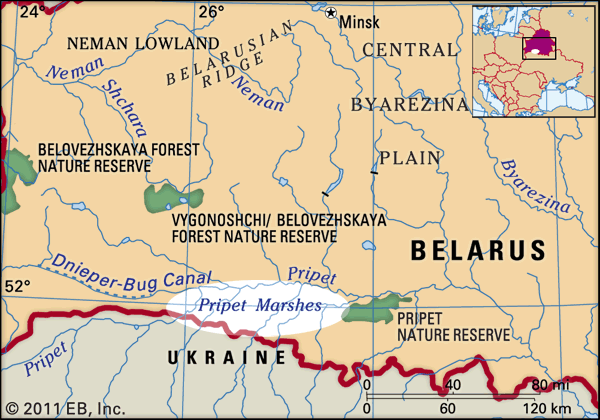
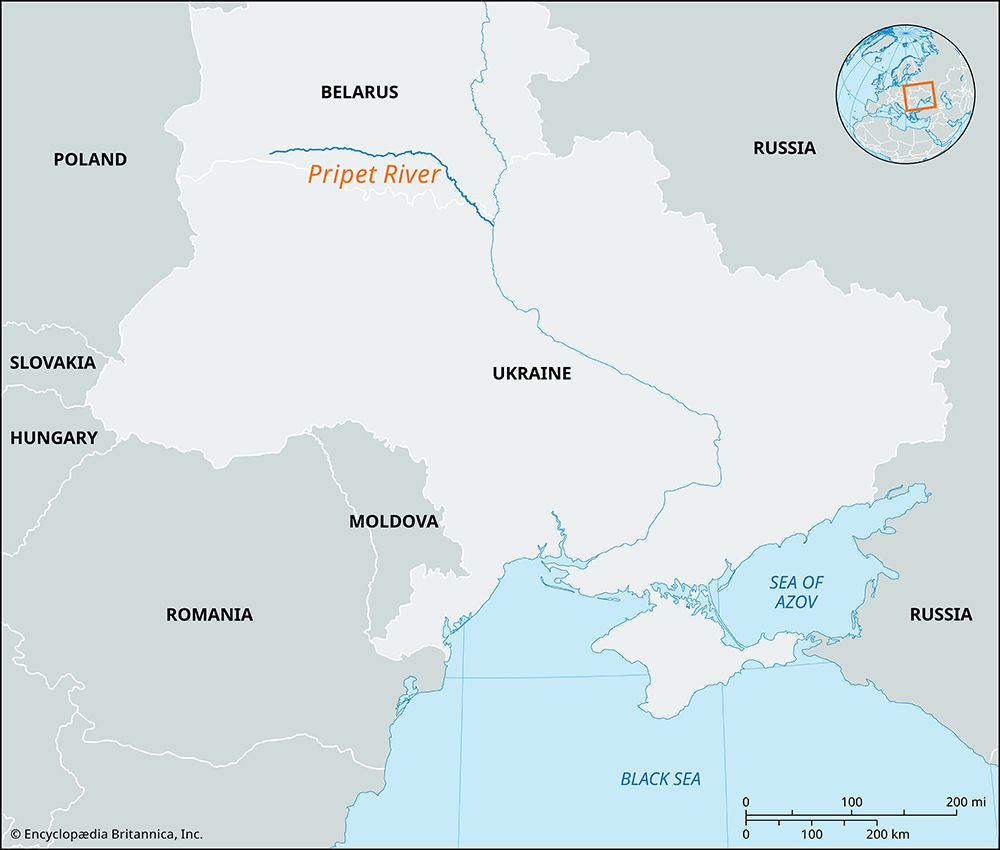
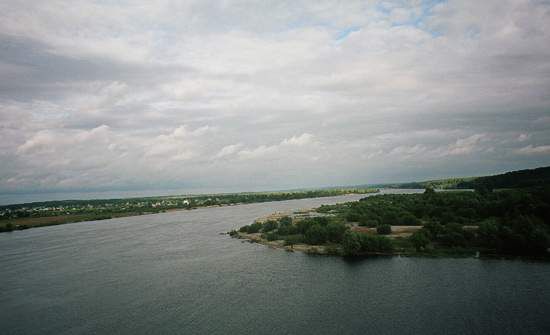
The Pripet River is a 480-mile (775-km) river flowing through Ukraine and Belarus. As a major tributary of the Dnieper River, it rises near the Polish border and flows through a flat, forested basin known as the Pripet Marshes.
The river basin is characterized by its swampy terrain and extensive wetlands, which have been subject to significant land reclamation efforts for agricultural development. Navigation is possible as far as Pinsk, where the Dnieper-Bug Canal provides a connection to the Bug River. The river eventually turns southeastward to join the Dnieper in the Kiev Reservoir.12
What are the main ecological features of the Pripet Marshes?
The Pripet Marshes represent one of the largest wetland regions in Europe, spanning southern Belarus and northern Ukraine. Their ecological character is defined by several key features:
- Hydrology and Terrain: The region consists of saturated sandy lowlands intersected by a dense network of rivers with wide floodlands. High precipitation, which exceeds evaporation, combined with abundant subsoil water, creates unique soil saturation and extensive bogging. During spring snowmelt, rivers frequently overflow their banks, further saturating the landscape.2
- Vegetation: Approximately one-third of the area is forested, featuring a mix of pine, birch, alder, oak, aspen, white spruce, and hornbeam. These forests are interspersed with vast, low-lying bogs and marshes, and many local lakes are in various stages of transitioning into bogs.2
- Wildlife: The marshes support a diverse range of fauna, including mammals such as elk, lynx, wolf, wild boar, beaver, and badger. The area is also home to numerous bird species, including black grouse, orioles, owls, and ducks.2
How does the Dnieper-Bug Canal connect different river systems?
The Dnieper-Bug Canal serves as a historic inland waterway that connects the Dnieper River system to the Vistula River system, effectively linking the Black Sea to the Baltic Sea.34
The canal achieves this connection through the following route:
- Eastern Connection: It originates near the city of Pinsk, utilizing the Pripet River and the Pina River, which are part of the Dnieper basin.345
- Western Connection: The 204-km (127-mile) canal links these waters to the Mukhavets River, which is a tributary of the western Bug River. Because the Bug is a tributary of the Vistula, this path creates a continuous, albeit historically significant, water route across the flat, swampy terrain that separates these major river basins.34
While these canals were vital for navigation in the 18th and 19th centuries, many have since become obsolete as modern transport networks evolved.3
What types of wildlife inhabit the Pripet River basin?
The Pripet River basin, characterized by its vast wetlands and forested lowlands, supports a diverse array of wildlife. The region’s unique ecosystem provides habitats for various mammals and bird species, many of which are native to the surrounding marshlands and forests.2
Mammals
The basin is home to a variety of mammals, including:
- Predators: Lynx, wolf, fox, and weasel.2
- Herbivores and others: Elk, wild boar, roe, beaver, and badger.2
Birds
The marshlands and forests host a wide range of avian life, such as:
- Game birds: Black grouse and hazel grouse.2
- Other species: Orioles, woodpeckers, owls, blue tits, and various types of ducks.2
Aquatic Life
As a major tributary of the Dnieper River, the Pripet contributes to the broader river system’s biodiversity. The Dnieper basin itself supports over 60 species of fish, including commercially significant varieties like pike, carp, catfish, perch, and burbot, as well as migratory species such as sturgeon and herring in its lower reaches.1
Sources
- Pripet River — Encyclopædia Britannica
- Pripet Marshes — Encyclopædia Britannica
- Dnieper River — Encyclopædia Britannica
- canals and inland waterways - Major inland waterways of Europe — Encyclopædia Britannica
- Pinsk — Encyclopædia Britannica
- Dnieper River - Plant and animal life — Encyclopædia Britannica
Published on · 3 min read