Pterobranch
Pterobranchs are small marine invertebrates belonging to the phylum Hemichordata. While the provided information does not detail their specific evolutionary…
How have pterobranchs evolved over time, and what is their fossil record like?
Pterobranchs are small marine invertebrates belonging to the phylum Hemichordata. While the provided information does not detail their specific evolutionary progression over time, it notes that they may be descended from graptolites, an extinct group of colonial aquatic animals that flourished between 300 million and 500 million years ago.1
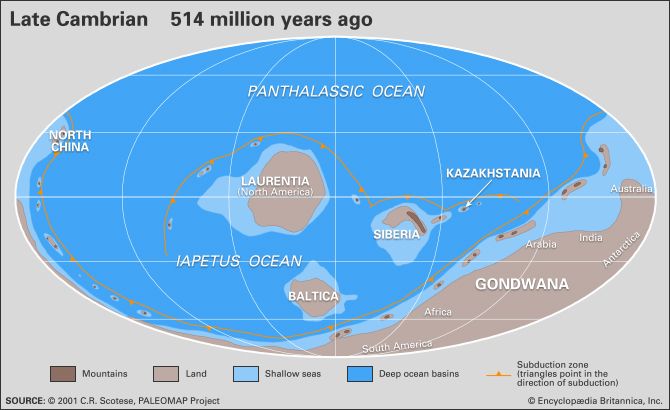
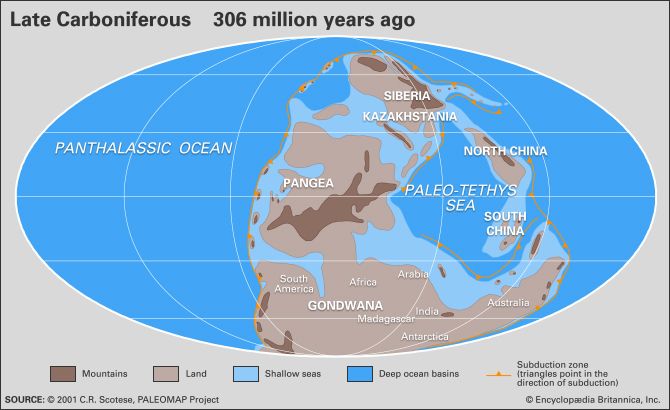
Regarding their fossil record, pterobranchs are generally considered rare today, with only about 21 described species. In contrast, their potential ancestors, the graptolites, have a significant fossil record. Graptolites first appeared during the Cambrian Period and persisted until the Early Carboniferous Period. They are frequently preserved as carbonaceous impressions on black shales, though they have also been found in uncompressed states within limestones. Because graptolites exhibited a gradual development over time, they have proven highly valuable for the stratigraphic correlation and division of Lower Paleozoic rock units.12
How are pterobranchs related to other marine invertebrates, such as graptolites?
Pterobranchs are small marine invertebrates classified within the phylum Hemichordata. They share a fundamental body plan with other hemichordates, such as acorn worms, consisting of three distinct regions: a proboscis, a collar, and a trunk.14
Regarding their relationship to graptolites, scientific evidence suggests a close evolutionary link. Graptolites were an extinct group of colonial, tentacled, and bilaterally symmetrical animals that flourished between 300 million and 500 million years ago. Because of these shared characteristics, researchers often associate graptolites with the class Pterobranchia within the Hemichordata. It is hypothesized that modern pterobranchs may be the descendants of these ancient, colonial organisms.153
While hemichordates were once thought to be related to chordates due to a perceived resemblance between their buccal diverticulum and the vertebrate notochord, this theory has been rejected. Modern molecular studies indicate that hemichordates are more closely related to echinoderms than to chordates.4
Are there any species of pterobranchs that are considered endangered or threatened?
The query appears to conflate pterobranchs—a class of marine hemichordates—with pteropods, which are a group of small, swimming gastropod mollusks often referred to as “sea butterflies.”
The provided search results discuss Pteropoda, the taxonomic group for these mollusks, rather than the conservation status of pterobranchs. Consequently, the Britannica knowledge base does not contain information regarding whether any species of pterobranchs are currently classified as endangered or threatened.
What role do pterobranchs play in marine ecosystems?
Pterobranchs are small marine invertebrates that function primarily as filter feeders within their ecosystems. Using a specialized collar equipped with tentacles, they extract small planktonic plants and animals from the surrounding water.1
Their role is closely tied to their unique colonial structure. Two of the three known genera, Rhabdopleura and Cephalodiscus, live within secreted tubes organized into a colonial structure known as a coenecium. The third genus, Atubaria, exhibits a different lifestyle by living on hydroids. Because these organisms are rare and typically inhabit deep-sea environments, they contribute to the biodiversity of benthic communities, though their specific impact on broader nutrient cycling remains a subject of ongoing study.18
It is important to note that pterobranchs are distinct from pteropods, which are swimming mollusks often found near the sea surface.9
Sources
- pterobranch — Encyclopædia Britannica
- pterosaur — Encyclopædia Britannica
- graptolite — Encyclopædia Britannica
- hemichordate — Encyclopædia Britannica
- pteropod — Encyclopædia Britannica
- Graptolitoidea — Merriam-Webster
- Pteropoda — Merriam-Webster
- Pterobranchia — Merriam-Webster
- pterobranch — Merriam-Webster
Published on · 2 min read