Pteropod
A pteropod is a small marine gastropod mollusk belonging to the subclass Opisthobranchia. These organisms are characterized by a foot modified into a pair of…
What is pteropod?
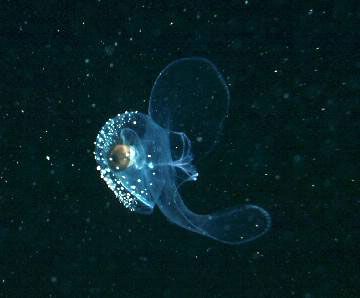
A pteropod is a small marine gastropod mollusk belonging to the subclass Opisthobranchia. These organisms are characterized by a foot modified into a pair of winglike flaps, known as parapodia, which they use to swim at or near the sea surface. Most pteropods are less than 1 cm (0.4 inch) long.1
They are classified into two main orders based on their physical characteristics:
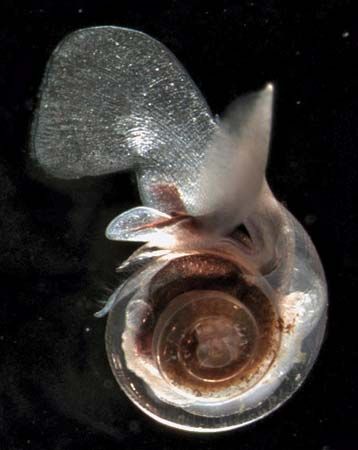
- Thecosomata: These pteropods possess a delicate, translucent shell and feed using cilia and mucus.1
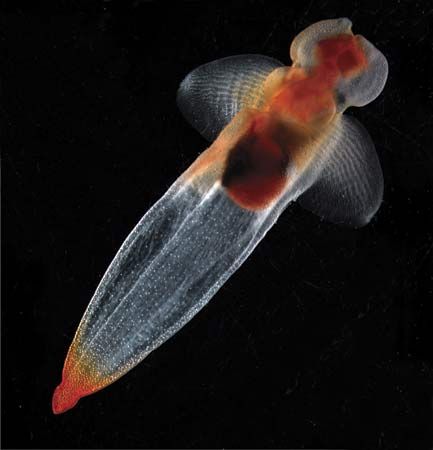
- Gymnosomata: These lack a shell and utilize complex mechanisms to capture and consume other small animals.1
Pteropods serve as a vital food source for krill and whales. However, they are highly sensitive to ocean acidification, as increased acidity reduces the availability of carbonate ions necessary for maintaining their shells, potentially threatening their survival and the stability of marine food chains.2
What is the difference between Thecosomata and Gymnosomata?
The primary differences between the two orders of pteropods lie in their physical structure and feeding strategies:
- Thecosomata: These organisms possess a delicate, translucent shell. They are filter feeders that obtain nutrients using cilia and mucus.2
- Gymnosomata: These organisms lack a shell entirely. Unlike their counterparts, they are predators equipped with complex mechanisms specifically designed for capturing and consuming other small animals.26
How do pteropods use their winglike flaps to move through the water?
Pteropods, often referred to as “sea butterflies,” move through the water using a specialized form of appendicular locomotion. Their foot is modified into a pair of winglike flaps known as parapodia.28
By flapping these structures, pteropods are able to swim at or near the sea surface. While the specific mechanics of their stroke are distinct to their anatomy, the use of these appendages allows them to interact with the surrounding water to generate the necessary force for movement. Unlike some other aquatic animals that rely on axial movement or body undulation, pteropods utilize these lateral swimming lobes to navigate their environment.289
Which marine animals rely on pteropods as a primary food source?
Sorry, the Britannica knowledge base does not contain this information.
Sources
- pteropod — Merriam-Webster
- pteropod — Encyclopædia Britannica
- ocean acidification — Encyclopædia Britannica
- Pteropoda — Merriam-Webster
- Marine ecosystem - The pelagic food chain — Encyclopædia Britannica
- Gymnosomata — Merriam-Webster
- Thecosomata — Merriam-Webster
- Locomotion - Tetrapodal vertebrates — Encyclopædia Britannica
- mollusk - External features — Encyclopædia Britannica
- Locomotion - Principles — Encyclopædia Britannica
- cephalopod - General features and importance to humans — Encyclopædia Britannica
Published on · 2 min read