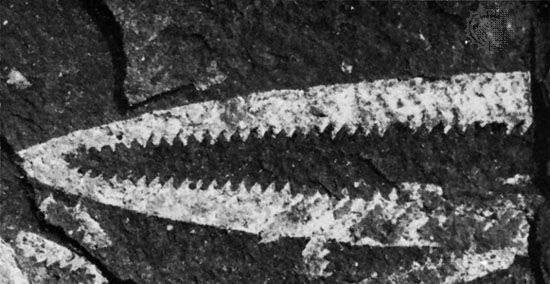
Hemichordate
Hemichordates are a group of wormlike marine invertebrates that constitute the phylum Hemichordata. The name, derived from the Greek for "half-chordate," was…
What are hemichordates?
Hemichordates are a group of wormlike marine invertebrates that constitute the phylum Hemichordata. The name, derived from the Greek for “half-chordate,” was originally proposed due to a buccal diverticulum that was once thought to be a notochord; however, this theory has been rejected, and molecular studies now suggest they are more closely related to echinoderms than to chordates.1
The phylum includes three classes: acorn worms, pterobranchs, and the rare Planctosphaeroidea. Their bodies are divided into three regions: the proboscis, collar, and trunk. They lack a central nervous system, instead relying on nerve tissue concentrated in the collar and a network within the epidermis.1
All hemichordates are suspension feeders, capturing algae and minute animals from the water using their proboscis or ciliated tentacles. Many species undergo a larval stage known as a tornaria.1
Where do hemichordates live?
Hemichordates are exclusively marine invertebrates, found in various ocean environments across the globe. Their specific habitats depend on their classification:12
- Acorn worms (Enteropneusta): These are widely distributed in intertidal zones, ranging from the White Sea and Greenland to New Zealand and the Cape of Good Hope. They typically live in U-shaped burrows within soft sand or mud, though some deep-water species are known to swim freely over the ocean floor. They have been found at depths exceeding 3,200 meters (10,500 feet).13
- Pterobranchs (Pterobranchia): These small, colonial animals are found mainly in the Southern Hemisphere, though some species inhabit northern waters. Most live within secreted tubes organized into colonial structures called coenecia, while the genus Atubaria lives attached to hydroids.2
Because these animals are strictly marine, they rely on the surrounding seawater for both their habitat and their suspension-feeding lifestyle.132
What are the main types of hemichordates?
The phylum Hemichordata is categorized into three distinct classes of marine invertebrates. These groups are defined by their physical structure and lifestyle:1
- Enteropneusta (Acorn worms): Comprising about 70 species, these are solitary, bilaterally symmetrical, wormlike animals. They are named for the appearance of their proboscis and collar, which they use to burrow into soft sand or mud. They vary significantly in size, ranging from a few centimeters to over two meters in length.12
- Pterobranchia: This class includes about 20 species of minute, colonial, tube-building organisms. Unlike acorn worms, they possess tentacle-like plumes used for suspension feeding.1
- Planctosphaeroidea: This is a rare class currently known only from a few floating larvae.1
While these animals were historically grouped with chordates due to a misidentified structure in the proboscis, modern research indicates they are more closely related to echinoderms.1
How do hemichordates get their food?
All hemichordates are suspension feeders, capturing minute organisms such as algae and small animals as they drift by in the water. While they share this general feeding strategy, the specific methods vary by class:1
- Acorn worms (Enteropneusta): These animals trap food particles on their proboscis. Many species filter food from seawater that passes into the mouth and out through gill slits in the pharynx. Some species secrete a slime that is swept into the mouth by cilia, carrying trapped food particles with it. Additionally, some acorn worms ingest sediment in a manner similar to earthworms.12
- Pterobranchs (Pterobranchia): These organisms use their collar, which bears tentacle-like plumes, to filter small planktonic plants and animals from the surrounding water.14
These feeding adaptations allow hemichordates to effectively exploit the nutrients available in their marine environments.1
Sources
- hemichordate — Encyclopædia Britannica
- acorn worm — Encyclopædia Britannica
- acorn worm — Merriam-Webster
- pterobranch — Encyclopædia Britannica
- Hemichordata — Merriam-Webster
- Chordate - Digestion and nutrition — Encyclopædia Britannica
Published on · 3 min read