Redback
The redback spider (Latrodectus hasselti) is a species of black widow spider native to Australia. Both sexes typically possess a brownish or black body color…
What are the distinctive physical characteristics of a redback spider?
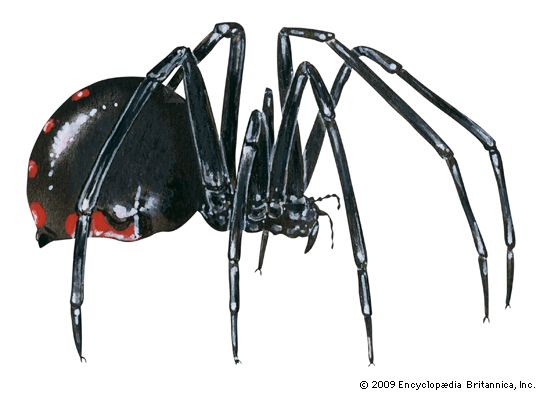
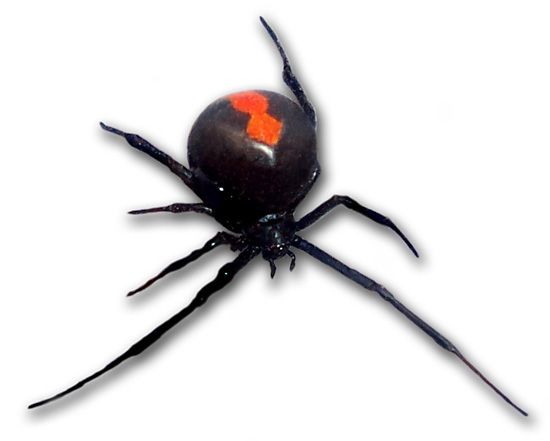
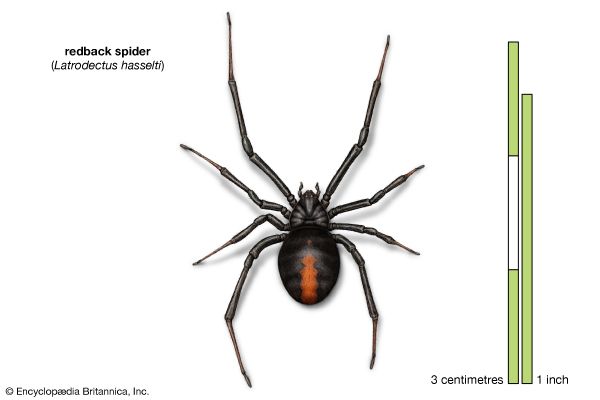
The redback spider (Latrodectus hasselti) is a species of black widow spider native to Australia. Both sexes typically possess a brownish or black body color and feature a reddish-orange, hourglass-shaped marking on the underside of the abdomen.1
The two sexes exhibit distinct physical differences:
- Females: They are larger, measuring approximately 10 mm (0.4 inch) in length. They are primarily distinguished by a prominent orange or red stripe located on the upper side of the abdomen.1
- Males: They are significantly smaller, measuring about 3 to 4 mm (0.12 to 0.16 inch) in length. In addition to the hourglass marking, males often display white markings on the upper side of the abdomen.1
While the female is venomous, it is important to note that their bites, while painful and potentially causing systemic symptoms, are rarely lethal to humans when treated appropriately.1
How did the redback spider get its name?
The redback spider (Latrodectus hasselti) derives its common name from the distinctive, prominent orange or red stripe found on the upper side of the abdomen of the female.12
While both sexes of this black widow spider relative feature a reddish-orange, hourglass-shaped marking on the underside of the abdomen, the name specifically highlights the conspicuous red coloration on the back of the female, which is more noticeable than the markings found on the male. Due to this characteristic appearance, the species is sometimes also referred to as the red-streaked spider.123
What are some interesting facts about the mating habits of redback spiders?
The mating habits of the redback spider (Latrodectus hasselti) are notable for the high frequency of sexual cannibalism, a behavior where the female consumes the male during or after copulation.45
Key facts regarding this behavior include:
- Voluntary Sacrifice: Unlike some species where males actively avoid being eaten, the male redback spider appears to sacrifice himself voluntarily. During mating, he often somersaults directly into the female’s mouthparts, making it easy for her to consume him.45
- High Frequency: Studies have observed that females cannibalize males in approximately 65 percent of all mating encounters.4
- Evolutionary Benefits: While the male pays the ultimate price, this behavior may offer evolutionary advantages. Consuming the male provides the female with additional nutrition, which can lead to the production of heavier egg cases and more numerous offspring.4
- Reproductive Success: For the male, the sacrifice may ensure his genes are passed on by increasing the female’s reproductive output. Furthermore, because females often refrain from mating for a period after consuming a partner, the act may reduce sperm competition from other males.4
How venomous is a redback spider’s bite, and what are the symptoms?
The bite of a female redback spider (Latrodectus hasselti) is venomous and can cause significant discomfort, though it is rarely lethal; the last human death attributed to a redback bite occurred in 1956. While both sexes are venomous, most envenomations result from female bites, often occurring when the spider is trapped against a person’s skin or when a female is defending her eggs.13
Symptoms of a bite include:
- Localized effects: Strong pain, swelling, and sweating at the site of the bite.13
- Systemic effects: Nausea, vomiting, restlessness, increased blood pressure, rapid heartbeats, and swollen lymph nodes.13
- Severe cases: In rare instances, respiratory failure may occur.1
It is important to note that only 10–20% of bite victims are actually envenomed, as the spider can moderate the amount of venom injected. While antivenom is frequently administered in Australia, medical professionals remain divided on its effectiveness in relieving pain or treating symptoms.31
Sources
- redback — Encyclopædia Britannica
- redback spider — Merriam-Webster
- 9 of the World’s Deadliest Spiders - Redback Spider ( Latrodectus hasselti ) — Encyclopædia Britannica
- Why Do Some Animals Eat Their Mates After Sex? — Encyclopædia Britannica
- spider - Mating — Encyclopædia Britannica
Published on · 3 min read