Rift Valley
A rift valley is an elongated trough formed by the subsidence of a segment of the Earth’s crust between normal faults. Unlike valleys created by erosion…
What is Rift Valley?
A rift valley is an elongated trough formed by the subsidence of a segment of the Earth’s crust between normal faults. Unlike valleys created by erosion, such as those carved by rivers or glaciers, a rift valley is a tectonic valley resulting from the stretching and thinning of the lithosphere at divergent plate boundaries.12
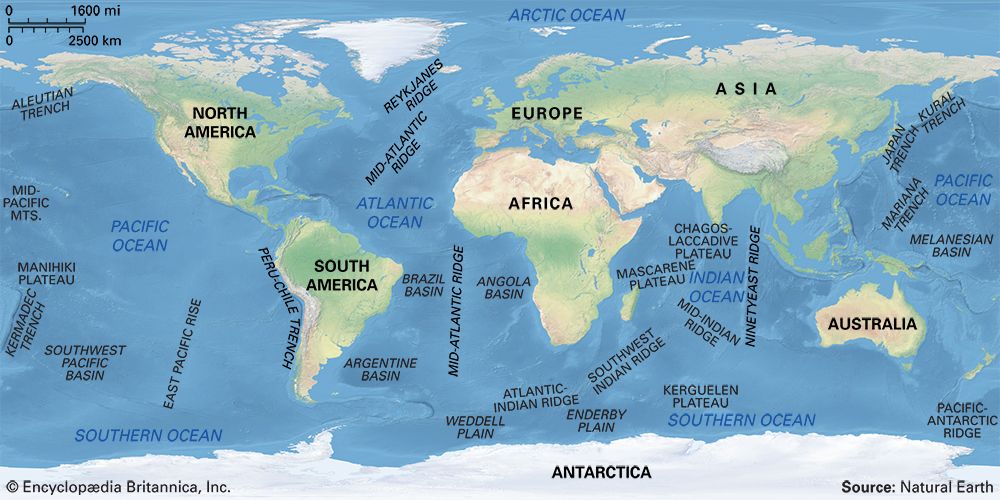
These valleys are typically narrow and long, often featuring relatively flat floors due to volcanic activity or sedimentation, with steep walls that can rise hundreds of meters. They occur both on continents and along the crests of oceanic ridges, where they serve as centers for seafloor spreading.132
Notable examples include:
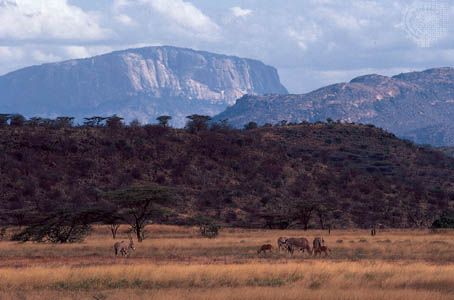
- East African Rift System: An extensive continental rift system associated with significant volcanism.42
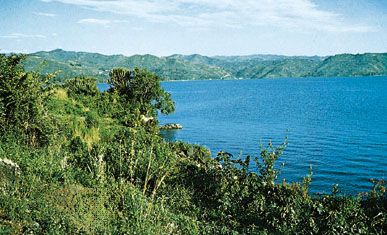
- Baikal Rift Valley: Located in Russia, it contains the world’s deepest lake.32
- Death Valley: A prominent example in the United States.32
How do tectonic plates move apart?
Tectonic plates move apart at divergent plate boundaries through a combination of complex geological forces and processes. While the exact mechanisms are still debated, scientists generally attribute this movement to the following factors:
- Mantle Convection: Heat from the decay of radioactive elements in the Earth’s interior creates convection currents in the mantle. This circulation of warm, buoyant material rising and cool, dense material sinking is believed to drive the movement of the overlying lithospheric plates.789
- Ridge Push: At mid-ocean ridges, the seafloor is elevated due to high heat flow. As the newly formed crust cools and becomes denser, gravity pulls it away from the ridge, effectively pushing the plates apart.78
- Slab Pull: In regions where an oceanic plate sinks into the mantle at a subduction zone, the weight of the dense, sinking slab can pull the rest of the plate along with it.78
As plates diverge, the reduction in pressure causes the underlying mantle to melt, producing magma. This magma rises to fill the gap, cooling to form new oceanic crust in a process known as seafloor spreading. In continental settings, this process begins with continental rifting, where the crust stretches and thins, eventually forming a rift valley before potentially evolving into a new ocean basin.101112
What is the difference between a horst and a graben?
Horsts and grabens are elongated blocks of the Earth’s crust that have been displaced vertically due to faulting. They are both bounded by steeply dipping normal faults, but they differ in their relative movement and structural orientation.1516
Feature
Description
Fault Orientation
Horst
A block of the crust that has been raised relative to the surrounding areas.
The faults generally dip away from each other.
Graben
A depressed segment of the crust that has been lowered relative to the surrounding areas.
The faults generally dip toward each other.
These features often occur together in a series, creating a landscape of alternating raised and lowered blocks. Valleys formed by grabens are commonly referred to as rift valleys, such as the Jordan–Dead Sea depression or Death Valley. Conversely, examples of horsts include the Vosges Mountains of France and the Palestine Plateau.1516
Why are volcanoes often found in rift valleys?
Volcanoes are often found in rift valleys because these regions represent areas where tectonic plates are beginning to pull apart. As the lithosphere stretches and thins, the underlying mantle is also forced to diverge, which reduces pressure on the asthenosphere.318
This reduction in pressure allows hot material from the mantle to rise to shallower depths, where it can melt and form magma. This magma then ascends through fractures in the thinning crust, leading to volcanic eruptions. In some cases, such as the East African Rift System, this process is further enhanced by the upwelling of hot material beneath large domes, which pushes the lithosphere upward, causes it to expand, and triggers extensive volcanism.35
However, not all rift valleys contain volcanoes; in regions where rifting is driven by distant tectonic forces rather than mantle upwelling, volcanic activity is often rare or entirely absent.3
Sources
- rift valley — Encyclopædia Britannica
- rift valley — Merriam-Webster
- tectonic basins and rift valleys - Rift valleys — Encyclopædia Britannica
- East African Rift System — Encyclopædia Britannica
- plate tectonics - Continental rifting — Encyclopædia Britannica
- normal fault — Encyclopædia Britannica
- plate tectonics - Divergent margins — Encyclopædia Britannica
- plate tectonics - Mantle convection — Encyclopædia Britannica
- plate tectonics - Seafloor spreading — Encyclopædia Britannica
- How do tectonic plates move? — Encyclopædia Britannica
- plate tectonics - Principles of plate tectonics — Encyclopædia Britannica
- seafloor spreading — Encyclopædia Britannica
- seafloor spreading — Merriam-Webster
- volcano - Rift volcanoes — Encyclopædia Britannica
- horst and graben — Encyclopædia Britannica
- horst — Merriam-Webster
- graben — Merriam-Webster
- volcanism — Encyclopædia Britannica
Published on · 3 min read