Tectonic Basins and Rift Valleys
A tectonic basin is a landform characterized by steep, mountainous sides and a relatively flat floor, typically formed by the movement of the Earth’s crust.
What is a tectonic basin?
A tectonic basin is a landform characterized by steep, mountainous sides and a relatively flat floor, typically formed by the movement of the Earth’s crust.1
Most tectonic basins are created through crustal extension, where the crust fractures and a block of rock drops into the gap created by diverging plates. This specific type of depression is known as a graben. Alternatively, basins can form through horizontal compression, resulting in ramp valleys or foreland basins, the latter of which occurs due to the downward flexing of the lithosphere.1
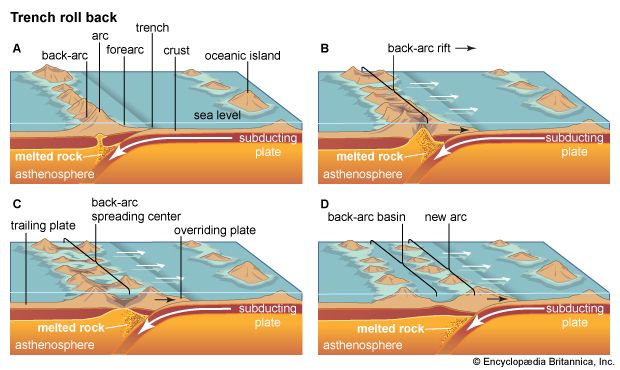
Additionally, back-arc basins form behind island arcs when subducting oceanic plates cause extension in the overlying plate, leading to seafloor-spreading processes. While these are distinct from broad, shallow structural basins—which are often formed by downwarping of bedrock—all are defined by their unique geological origins.23
How are rift valleys different from other valleys?
Rift valleys are distinct from other types of valleys, such as those carved by rivers or glaciers, because they are formed by tectonic processes rather than erosional forces.4
A rift valley is an elongated trough created by the subsidence of a segment of the Earth’s crust between normal faults. While river and glacial valleys are shaped by the movement of water or ice over time, rift valleys occur in divergence zones where plate tectonics cause lithospheric plates to separate.4
Key characteristics that differentiate them include:
- Formation: They result from crustal thinning and the dropping of rock blocks, often resembling a keystone falling from an arch.5
- Structure: They feature steep, wall-like margins—sometimes reaching heights of 1,000 meters—and relatively flat floors, which are often leveled by volcanic deposition or sedimentation.54
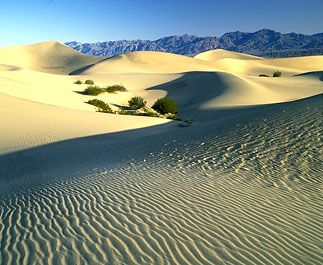
- Complexity: Unlike simple erosional valleys, rift valleys may contain horsts (raised blocks) or asymmetrical slopes formed by lithospheric tilting and flexing, as seen in Death Valley or the Baikal Rift.5
What causes tectonic basins and rift valleys to form?
Tectonic basins and rift valleys are primarily formed by the movement and deformation of the Earth’s crust. While they share similar structural characteristics, their formation is driven by distinct geological processes.1
Crustal Extension
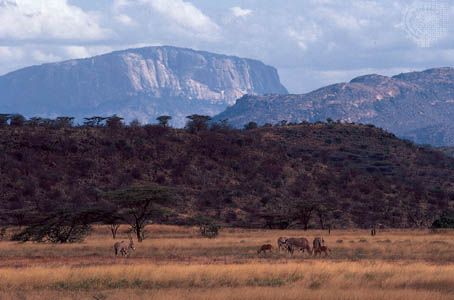
The vast majority of these features are produced by crustal extension. As lithospheric plates diverge, the brittle crust fractures, creating normal faults. A central block of crust, known as a graben, then drops into the resulting gap. This process creates the steep, wall-like margins and relatively flat floors typical of rift valleys. In some cases, such as the East African Rift System, this extension is associated with the upwelling of hot material from the asthenosphere, which bulges and stretches the lithosphere, often triggering volcanism.1654
Crustal Compression
Tectonic depressions can also result from horizontal compression, which causes crustal shortening:1
- Ramp Valleys: Formed when the margins of a valley are pushed over its floor.1
- Foreland Basins: Created by the gentle downward flexing of the entire lithosphere.1
Back-Arc Spreading
Back-arc basins form in convergent zones where a subducting oceanic plate rolls back, causing extension in the overlying plate. This initiates seafloor-spreading processes behind an island arc, thinning the crust.2
Where in the world can rift valleys be found?
Rift valleys are found across the globe, occurring both on continents and along the floors of the world’s oceans. Because they form at sites of incipient plate spreading or along divergent plate boundaries, their distribution is linked to the movement of the Earth’s crust.65
Continental Rift Valleys
On land, rift valleys are often irregular and sparse, but several prominent examples exist:
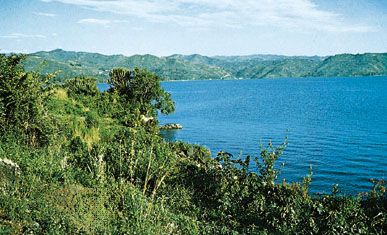
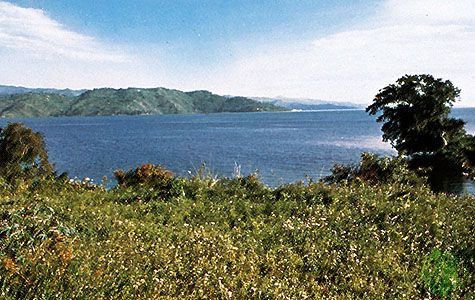
- East African Rift System: One of the most extensive systems, stretching approximately 4,000 miles from Jordan through eastern Africa to Mozambique. It includes deep lakes like Lake Tanganyika and volcanic peaks such as Kilimanjaro.64
- Baikal Rift Valley: Located in Russia, this rift contains Lake Baikal, the deepest lake in the world.68
- Death Valley: Situated in the southwestern United States, it features a steep eastern margin and is a notable example of an asymmetrical rift.68
- Rhine Rift Valley: A well-known rift located in Germany.65
- Iceland: Rift valleys are present at the divergent boundary between the North American and Eurasian plates.6
Submarine Rift Valleys
Numerous rift valleys are hidden beneath the sea, located along the crests of large oceanic ridges. These ridges serve as centers of seafloor spreading, where magma rises from the mantle to create new crust.65
Sources
- tectonic basins and rift valleys — Encyclopædia Britannica
- basin — Encyclopædia Britannica
- plate tectonics - Back-arc basins — Encyclopædia Britannica
- tectonic basins and rift valleys - Rift valleys — Encyclopædia Britannica
- rift valley — Encyclopædia Britannica
- normal fault — Encyclopædia Britannica
- subsidence — Encyclopædia Britannica
- East African Rift System — Encyclopædia Britannica
- Rift Valley — Encyclopædia Britannica
Published on · 4 min read