Robin
The term "robin" refers to several distinct subjects, primarily in the fields of ornithology and popular culture:
What is Robin?
The term “robin” refers to several distinct subjects, primarily in the fields of ornithology and popular culture:
Ornithology
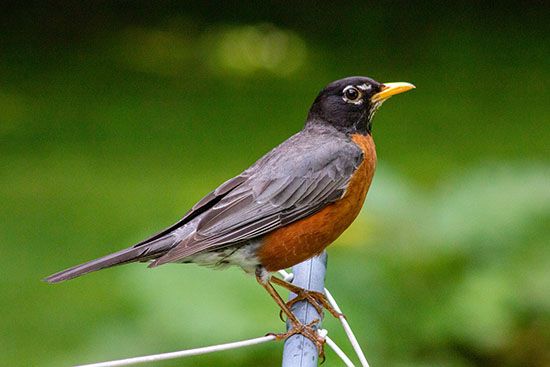
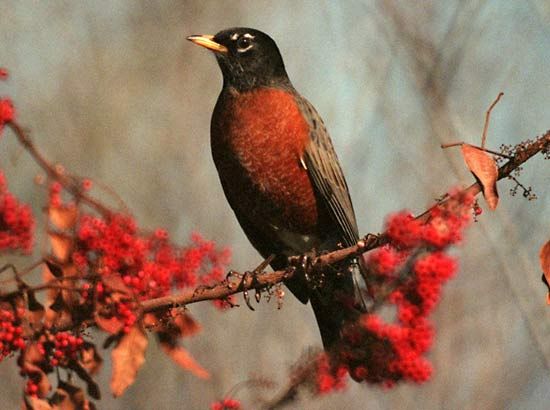
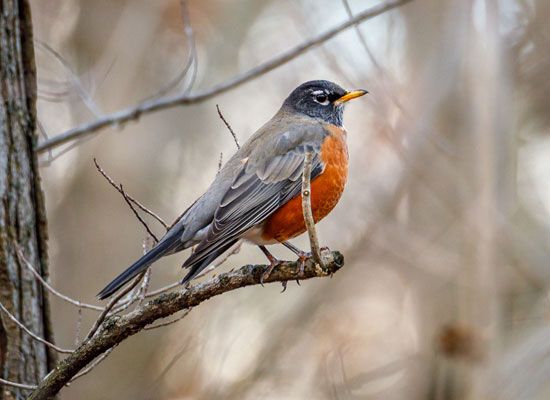
- American robin: A large, migratory thrush (Turdus migratorius) common in North America. It is known for its red-orange breast and is the state bird of Connecticut, Michigan, and Wisconsin.12
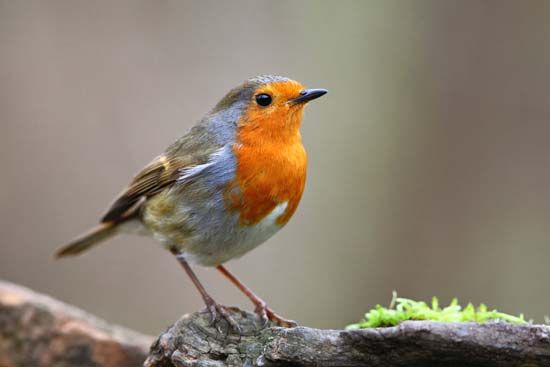
- European robin: A small, plump songbird (Erithacus rubecula) belonging to the family Muscicapidae. It is famous for its orange face and breast and is a popular symbol of Christmas in Great Britain.13
Despite their shared name and similar breast coloration, these two birds are not closely related; the American robin is a thrush, while the European robin is more closely related to flycatchers. The name “robin” is also applied to various other chat-thrushes and unrelated species, such as the Australian scarlet robin.321
Popular Culture
- Robin: A prominent DC Comics character who debuted in 1940 as the junior crime-fighting partner to Batman. Several individuals have held the mantle of Robin, including Dick Grayson, Jason Todd, Tim Drake, Stephanie Brown, and Damian Wayne.4
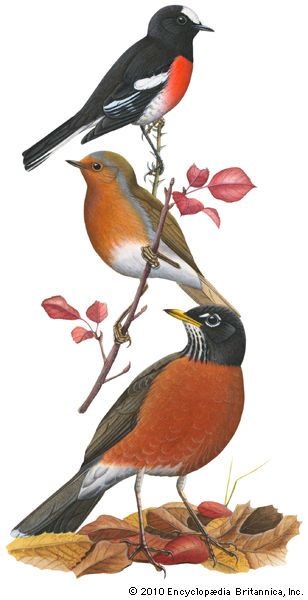
How do American and European robins differ in their family classification?
Although they share a common name and similar breast coloration, the American and European robins belong to entirely different bird families.
- American robin (Turdus migratorius): This bird is a member of the family Turdidae, which consists of thrushes.12
- European robin (Erithacus rubecula): This bird is classified in the family Muscicapidae, a group that includes Old World flycatchers.12
The naming of the American robin was a result of early colonial settlers applying the name of the familiar European bird to a North American species that shared a similar appearance. Despite this historical association, they are not closely related.12
Why are robin eggs often a distinct blue-green color?
The distinct blue-green color of American robin eggs is primarily caused by a pigment called biliverdin. This pigment is deposited on the eggshell from the mother’s bloodstream as the egg is being formed.5
One of the leading scientific theories for this coloration is that it serves as an evolutionary adaptation to protect the developing embryo from sun exposure. Because American robins often build their nests in open areas where they are exposed to direct sunlight, the blue pigment may act as a filter, reducing the amount of harmful ultraviolet (UV) radiation that penetrates the shell.53
It is worth noting that this trait is specific to the American robin; the eggs of the European robin are white. The iconic “robin’s-egg blue” shade has become so recognizable that it is frequently used to describe a specific light, greenish-blue color in other contexts.56
What are some other common songbirds found in North American gardens?
North American gardens are home to a variety of songbirds. Here are several common species often found in these environments:
- Northern Cardinal: A widespread and abundant bird, the male is easily recognized by its bright red plumage, black mask, and crest. They are nonmigratory and are frequent visitors to bird feeders, where they favor sunflower seeds.9
- Northern Mockingbird: Known for its impressive ability to mimic the songs of many other bird species, this gray bird with white-patched wings is found throughout the continental United States and Mexico.10
- Yellow Warbler: These bright yellow birds, often streaked with red or rusty brown on the breast, breed across a wide area of North America.10
- House Sparrow: One of the most familiar and abundant birds globally, this species has successfully thrived across the Americas.10
- Song Sparrow: Found across most of North America, this bird is characterized by its gray- and brown-striped head and streaked breast.10
- European Starling: Though introduced to North America, these iridescent black birds are now a common sight in many regions.10
Sources
- Robin — Encyclopædia Britannica
- European robin — Encyclopædia Britannica
- American robin — Encyclopædia Britannica
- Robin — Encyclopædia Britannica
- Why are robin eggs blue? — Encyclopædia Britannica
- Why are some eggs brown and some white? — Encyclopædia Britannica
- robin's-egg blue — Merriam-Webster
- 7 animals that lay the most unusual eggs — Encyclopædia Britannica
- Cardinal — Encyclopædia Britannica
- 15 of the Best Birdsongs (According to Britannica) — Encyclopædia Britannica
Published on · 3 min read