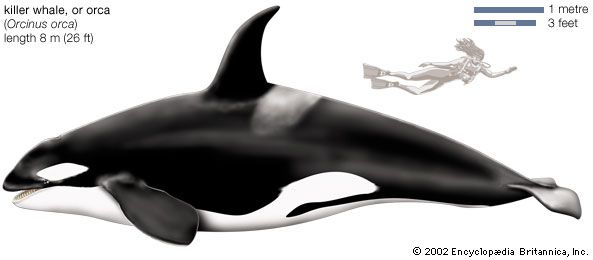
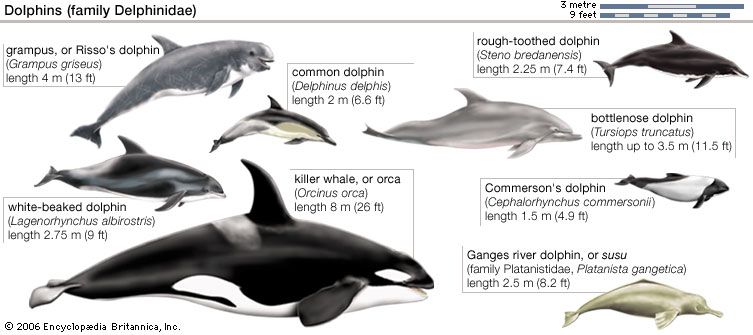
Why Are Orcas Called Killer Whales?
Orcas are called killer whales due to their reputation as powerful apex predators in the marine environment. The name originated with ancient sailors who…
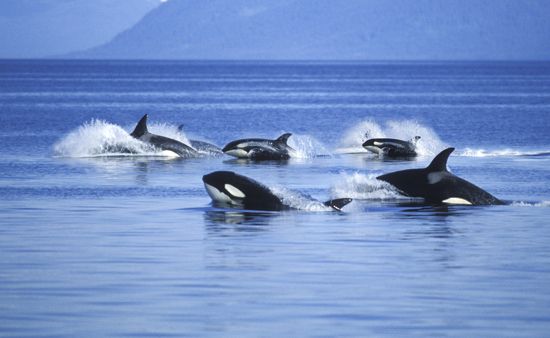
Why are orcas called killer whales?
Orcas are called killer whales due to their reputation as powerful apex predators in the marine environment. The name originated with ancient sailors who observed these animals hunting large marine prey. Impressed by their prowess, the sailors referred to them as “whale killers,” a term that eventually evolved into “killer whales”.1
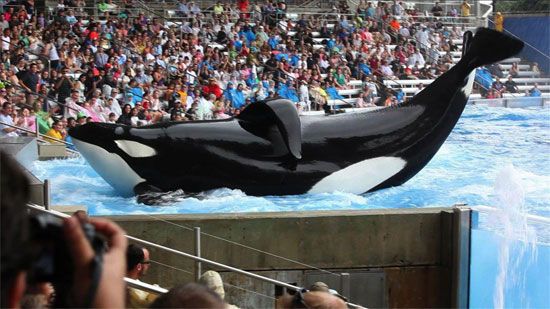
Despite this fearsome moniker, orcas are actually the largest members of the dolphin family. They are highly intelligent, social creatures known for complex hunting strategies, which they execute in groups called pods. While they are formidable carnivores that hunt fish, seals, and even other whales, there is no record of them killing humans in the wild. Furthermore, the practice of keeping these animals in captivity for entertainment is increasingly viewed as unethical in the 21st century.21
How do orcas use echolocation to hunt?
As toothed whales, orcas utilize echolocation to navigate and hunt effectively, particularly in murky water or at night when visibility is poor. This process involves generating sound and listening for the returning echoes to detect and discriminate objects.134
How the Process Works
- Sound Production: Orcas generate high-frequency sounds, primarily rapid series of clicks, using specialized structures in their nasal passages associated with the blowhole. These sounds can reach frequencies of up to 150–200 kilohertz.14
- Focusing Sound: The fatty structure in the forehead, known as the melon, helps focus these sound waves into a beam directed into the water.4
- Detection: When these sound waves strike an object, they reflect back to the orca. The animal detects these return echoes using sensitive tissues, a process enhanced by a mutated form of the protein prestin that increases sensitivity to high-frequency sounds.3
By analyzing these echoes, orcas can determine the location, size, and distance of prey, allowing them to hunt with precision.143
What are the differences between resident and transient orca pods?
In the populations of the North Pacific, particularly near British Columbia and Washington, killer whales are categorized into distinct groups, including residents and transients, based on their behavior, diet, and social structure.2
The primary differences between these pods include:
- Diet: Resident pods primarily consume fish, with a strong preference for salmon. In contrast, transient pods are mammal-eaters that prey on other cetaceans, seals, and seabirds.2
- Range and Habitat: Resident pods typically inhabit specific coastal waters, such as Puget Sound. Transient pods are characterized by their tendency to range over much larger areas of coastal waters.2
- Communication: These groups exhibit significant differences in their sound production, which is essential for their distinct social and hunting behaviors.2
These groups are part of a broader trend of genetic and behavioral divergence among killer whale populations, which also includes a third group known as “offshores.”2
Are there other animals that experience menopause like orcas?
Yes, there are other animals that experience menopause, a state in which ovulation ceases and the remainder of an individual’s life is spent in a post-reproductive condition.7
While most animal species continue to reproduce until the end of their lives, menopause is observed in a small number of toothed whale species, alongside human beings7. These species include:2
- Killer whales (Orcinus orca)
- Short-finned pilot whales (Globicephala macrorhynchus)
- False killer whales (Pseudorca crassidens)
- Belugas (Delphinapterus leucas)
- Narwhals (Monodon monoceros)
Scientists speculate that this adaptation may have evolved to allow older females to assist in the survival and rearing of their pod’s young, rather than competing for resources with their own offspring.72
Sources
- Why are orcas called killer whales? — Encyclopædia Britannica
- killer whale — Encyclopædia Britannica
- sound reception - Echolocation in other mammals — Encyclopædia Britannica
- cetacean - Sound production and communication — Encyclopædia Britannica
- Echolocation — Encyclopædia Britannica
- Movement perception - Auditory — Encyclopædia Britannica
- cetacean - Age and growth — Encyclopædia Britannica
- mammal - Populations — Encyclopædia Britannica
- Animal development - Maturity and death — Encyclopædia Britannica
- menopause — Merriam-Webster
Published on · 3 min read