Sand Wasp
A sand wasp refers to any of various solitary, stout-bodied wasps in the tribe Bembicini (subfamily Bembicinae, family Crabronidae) that construct nests by…
What is sand wasp?
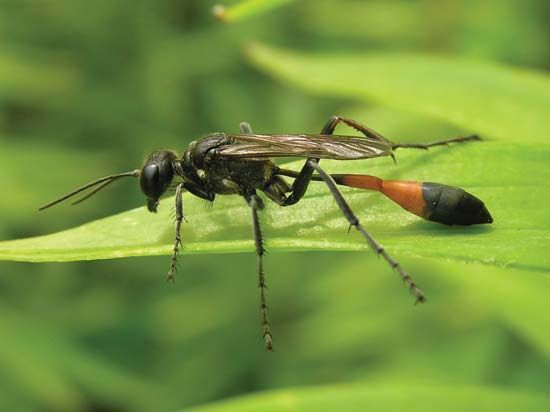
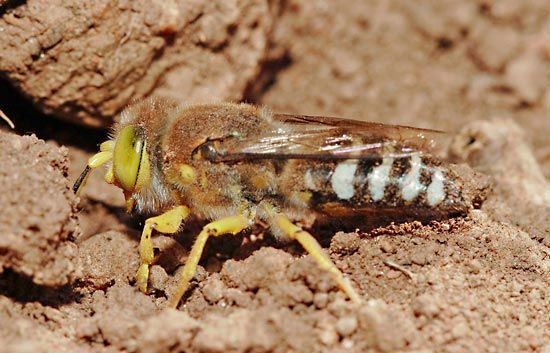
A sand wasp refers to any of various solitary, stout-bodied wasps in the tribe Bembicini (subfamily Bembicinae, family Crabronidae) that construct nests by digging burrows in the sand.12
These insects typically measure about 2 to 2.5 cm (0.8 to 1 inch) in length and are often black with white, yellow, or green markings. A key physical characteristic is their elongated, triangular labrum, which gives them the appearance of having a beak. Their nesting behavior often involves clustering multiple sand burrows together, and the larvae are fed with insects captured by the parents.1
Well-known examples include the horse-guard (Bembix carolina), often found in the southern United States hunting flies near horses, and Microbembex monodonta, which inhabits seashore environments. As solitary wasps, they differ from social species by lacking castes like queens or workers, with each female responsible for creating and provisioning her own nest.13
How do sand wasps paralyze their prey?
Sand wasps paralyze their prey by stinging them, a method used to immobilize insects so they can be safely stored in underground burrows as food for the wasp’s developing larvae.1
When a female sand wasp hunts, she typically targets specific prey—such as cicadas, leafhoppers, or other homopterans—and stings them until they cease to struggle. Once the prey is effectively paralyzed, the wasp transports it to her burrow, deposits an egg on the host, and seals the nest. This ensures that the larvae have a fresh, immobile food source available upon hatching.13
What are the differences between solitary and social wasps?
The primary distinction between solitary and social wasps lies in their lifestyle, reproductive structure, and level of cooperation. While the vast majority of the tens of thousands of described wasp species are solitary, social wasps are confined to approximately 1,000 species within the family Vespidae.5
Solitary Wasps
- Lifestyle: These wasps live and function independently. Each female is responsible for her own survival and the care of her offspring.56
- Nesting: Most solitary species build isolated nests, often by digging tunnels in the soil, though some utilize wood, plant stems, or construct mud structures.56
- Reproduction: There is no caste system. Each female mates and provisions her own nest with paralyzed prey—such as spiders or insects—to serve as food for her larvae.56
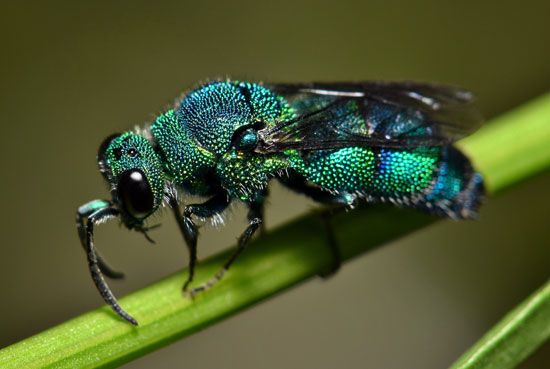
- Parasitism: Some solitary groups, such as cuckoo wasps, do not build nests at all; instead, they are parasitic, laying their eggs in the nests of other bees or wasps.56
Social Wasps
- Lifestyle: These wasps live in colonies that function as a single family unit. Individual survival is dependent on the community.53
- Caste System: Social colonies feature a division of labor among distinct castes: one or more queens (fertile females), drones (males), and sterile female workers.53
- Cooperation: Workers perform essential tasks, including nest construction, foraging, and defending the colony, while the queen focuses on egg-laying.53
- Nesting: They construct complex, often paperlike nests from chewed plant material mixed with saliva. These structures are designed to house many larvae and are often temperature-regulated by the colony.53
Why do sand wasps build their nests in clusters?
The provided search results do not contain information regarding why sand wasps build their nests in clusters. While the documents detail that most solitary wasps, including many thread-waisted wasps (Sphecidae), build isolated nests in the ground or other substrates, they do not address the specific behavioral reasons for clustering nests.53
Sources
- sand wasp — Encyclopædia Britannica
- sand wasp — Merriam-Webster
- Hymenoptera - Solitary forms — Encyclopædia Britannica
- homopteran - Associations with other insects — Encyclopædia Britannica
- wasp — Encyclopædia Britannica
- Hymenoptera - Social forms — Encyclopædia Britannica
- insect - Insect societies — Encyclopædia Britannica
Published on · 3 min read