Soapfish
A soapfish is any of approximately 24 species of marine fish belonging to the tribe Grammistini within the family Serranidae. These fish are found in…
What is soapfish?
A soapfish is any of approximately 24 species of marine fish belonging to the tribe Grammistini within the family Serranidae. These fish are found in tropical waters ranging from the Atlantic to the Indo-Pacific.1
The name “soapfish” is derived from the fish’s unique defense mechanism: when agitated, it secretes a toxic body mucus that creates a slimy, soapsuds-like froth in the water to deter predators. Additionally, some species, particularly those in the genus Rypticus, are noted for having scales that feel smooth and soapy to the touch.12
These fish are relatively small, with the largest species reaching lengths of about 30 centimeters (1 foot). The most well-known member of the group is the greater soapfish (Rypticus saponaceus), which is found in the Atlantic and is sometimes referred to as the three-spined soapfish due to its distinct dorsal spines.1
What is grammistin and how does it protect the fish?
Grammistin is a potent, skin-secreted toxin found in the mucus of soapfish, which belong to the tribe Grammistini. When these fish are agitated or threatened by a predator, they release this specialized mucus into the surrounding water.1
The substance serves as a highly effective chemical defense mechanism. Upon contact with the water, the mucus rapidly forms a slimy, soapsuds-like froth. This frothy barrier acts as a deterrent, discouraging predators from attacking or consuming the fish.1
Which other marine animals use toxins to deter predators?
Many marine animals utilize toxins as a defense mechanism to deter predators. These toxins are generally categorized as venoms (injected via a specialized apparatus) or crinotoxins (secreted into the environment through pores or skin glands).3
Venomous Marine Animals
Several species use mechanical devices to inject toxins, often causing intense pain or paralysis in attackers:
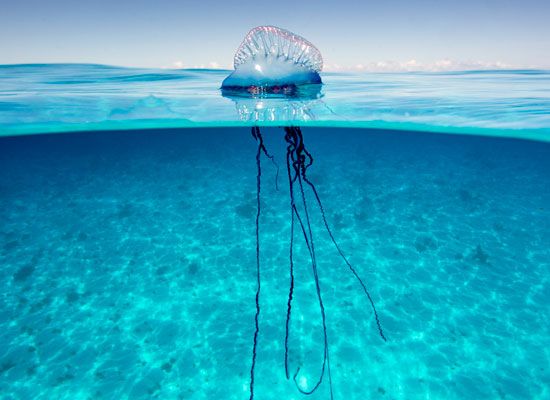
- Cnidarians: Animals like the Portuguese man-of-war and sea wasp use stinging cells to deliver potent venoms.3
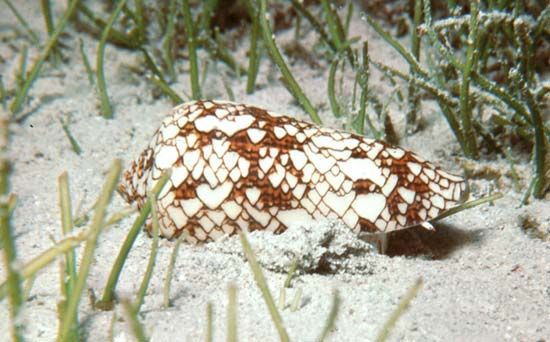
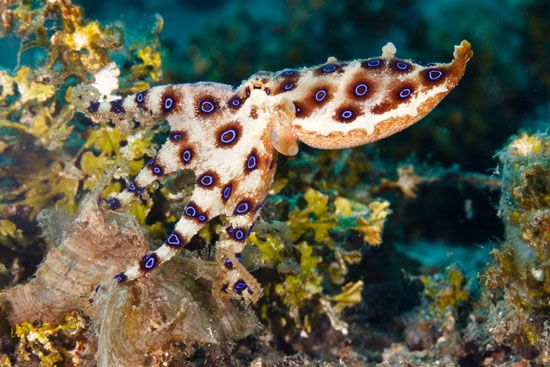
- Mollusks: The cone shell and spotted octopus possess neuromuscular poisons used for defense and hunting.3
- Fish: Lionfish, scorpion fish, stonefish, and stingrays utilize venomous fin spines or tail barbs to inflict painful wounds.345
Crinotoxic and Poisonous Marine Animals
Other animals release toxins into the water or store them in their tissues to discourage consumption:
- Sea Cucumbers: Many species exude a toxin that is lethal to small animals, and some can expel sticky filaments to ensnare or confuse predators.6
- Puffers: These fish contain a highly toxic substance called tetrodotoxin concentrated in their internal organs, making them dangerous to eat.78
- Mollusks: Certain gastropods secrete noxious chemicals or acids from their mantle cells to deter predators like sea stars.9
- Sea Lampreys: Their slime is toxic and can cause digestive distress if ingested.3
What are the main characteristics of the Serranidae family?
The Serranidae family, commonly known as sea basses, is a large and widely distributed group of carnivorous marine fishes primarily found in the shallower regions of warm and tropical seas.121314
Physical Characteristics
- Body Shape: These fishes typically have an oblong, more or less elongated, and compressed body.121314
- Scales: Their bodies are covered with ctenoid (fringed) scales.1314
- Dorsal Fin: A diagnostic feature of the family is the dorsal fin, which consists of a forward, spiny section and a hinder, soft-rayed section. These two portions are usually joined, though they may be separated by a notch.12
- Mouth and Tail: They generally possess a large mouth, and their tails are typically straight-edged or rounded.12
- Size: Serranids vary significantly in size, ranging from a few centimeters to massive specimens like the giant grouper, which can reach 2.7 meters (9 feet) and 400 kg (900 pounds).12
Biology and Behavior
- Diet: They are carnivorous, feeding on fish, crustaceans, mollusks, and other invertebrates.12
- Reproduction: Many species exhibit unique reproductive strategies. Some are hermaphroditic, possessing both male and female reproductive organs, while others may mature as one sex and later change to the other.1215
- Diversity: The family includes about 475 species, encompassing various well-known food and sport fishes such as groupers, hamlets, hinds, and black sea bass, hinds, and black sea bass.12
Sources
- soapfish — Encyclopædia Britannica
- soapfish — Merriam-Webster
- poison - Animal poisons ( zootoxins ) — Encyclopædia Britannica
- sea cucumber — Encyclopædia Britannica
- 10 of the World’s Most Dangerous Fish - Red Lionfish — Encyclopædia Britannica
- mollusk - Features of defense — Encyclopædia Britannica
- 10 of the World’s Most Dangerous Fish - Puffer — Encyclopædia Britannica
- puffer — Encyclopædia Britannica
- lionfish — Encyclopædia Britannica
- Avoidance behaviour - Protection reflexes, armour, and spines — Encyclopædia Britannica
- Chemoreception - Predator chemical cues and prey escape — Encyclopædia Britannica
- sea bass — Encyclopædia Britannica
- Serranidae — Merriam-Webster
- perciform - Life history — Encyclopædia Britannica
- scorpaeniform - Annotated classification — Encyclopædia Britannica
- serranid — Merriam-Webster
Published on · 3 min read