Selenga River
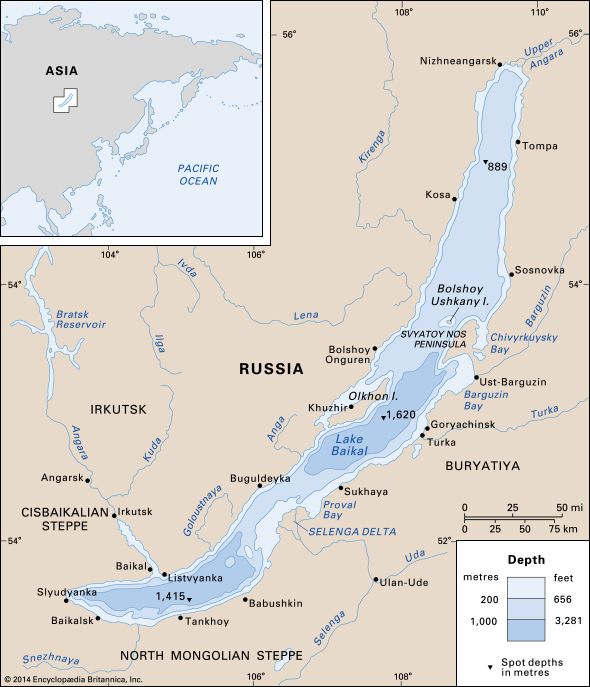
The Selenga River holds significant importance as the principal river of Mongolia and the most substantial water source for Lake Baikal in Russia. Spanning…
What historical or cultural importance does the Selenga River hold for the regions it flows through?
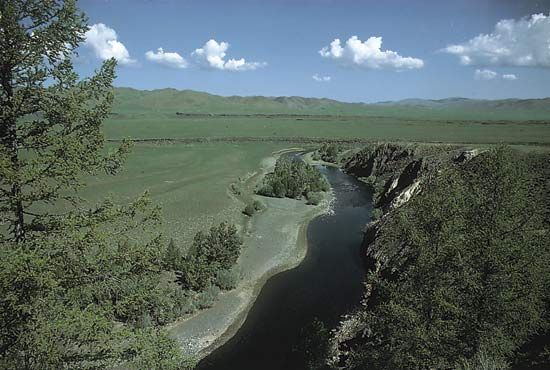
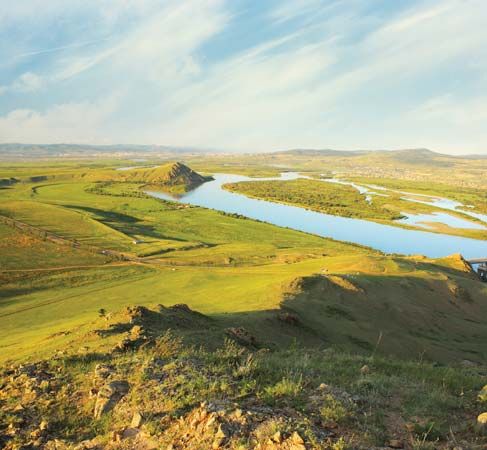
The Selenga River holds significant importance as the principal river of Mongolia and the most substantial water source for Lake Baikal in Russia. Spanning 920 miles, it serves as a vital geographic link, providing Mongolia with access to the plains of Siberia.12
Culturally and economically, the river valley is a critical transportation corridor. The Trans-Siberian Railroad follows the river’s path upstream to Ulan-Ude, the capital of the Russian republic of Buryatia, with branches extending to Sühbaatar and toward the Mongolian capital, Ulaanbaatar, via the Orhon River.1
The river also plays a role in the natural history of the region; for instance, a major earthquake in 1862 caused flooding in the northern Selenga delta, which resulted in the formation of Proval Bay in Lake Baikal. Today, the river remains essential to the hydrology of the region, draining northwest-central Mongolia and supporting diverse ecosystems before reaching the world’s oldest and deepest freshwater lake.213
What is the significance of the Selenga River for Lake Baikal?
The Selenga River is the most substantial source of water for Lake Baikal, serving as the primary contributor to the lake’s massive freshwater volume.13
Flowing through a delta into the lake, the river is central to the hydrology of the region. Its significance is highlighted by several key factors:13
- Water Influx: While more than 330 rivers and streams flow into Lake Baikal, the Selenga is the largest and most critical contributor to the lake’s water balance.3
- Geological Impact: The river’s delta has been shaped by significant seismic activity. For example, a severe earthquake in 1862 caused the inundation of approximately 77 square miles in the northern Selenga delta, which resulted in the formation of Proval Bay.3
- Environmental Context: The river basin, which spans 173,000 square miles, supports diverse ecosystems before its waters reach the world’s oldest and deepest freshwater lake.13
Where is the Selenga River located, and what are its major tributaries?
The Selenga River is located in north-central Asia, flowing through Mongolia and east-central Russia before emptying into Lake Baikal.12
The river is formed by the confluence of the Ider and Delger rivers. The Delger rises in the Sangilen Mountains on the border of Mongolia and the Russian republic of Tyva, while the headwaters of the Ider originate in the Hangayn Mountains of Mongolia.1
Throughout its course, the Selenga receives several major tributaries:1
- Mongolian tributaries: The Orhon River, Hanuy, and Egiyn rivers.1
- Russian tributaries: The Chikoy, Khilok, Uda, Dzhida, and Temnik rivers.1
The river flows northeast through Mongolia, passing Sühbaatar, before entering Russia and turning toward Ulan-Ude. It eventually reaches Lake Baikal via a delta.1
What is the total length of the Selenga River and how does it compare to other major rivers in Asia?
The Selenga River has a total length of 920 miles (1,480 km).1
While it is a significant waterway in its own right, its importance is often viewed within the context of the larger Yenisey River system Yenisey River](https://www.britannica.com/place/Yenisey-River) system. Because the Selenga flows into Lake Baikal, which in turn feeds the Angara River—a major tributary of the Yenisey—the Selenga is considered the ultimate source of the Yenisey system.15
When measured as part of this integrated system (Yenisey–Baikal–Selenga), it ranks as the fifth-longest river system in the world, with a total length of approximately 3,442 miles (5,540 km). This places it among the most extensive river networks in Asia, surpassing other major regional rivers such as the Amur, Lena, and Mekong in total system length.65
Sources
- Selenga River — Encyclopædia Britannica
- Selenga — Merriam-Webster
- Lake Baikal — Encyclopædia Britannica
- Mongolia - Drainage — Encyclopædia Britannica
- world’s longest rivers — Encyclopædia Britannica
- Yenisey River - Physical features — Encyclopædia Britannica
Published on · 3 min read