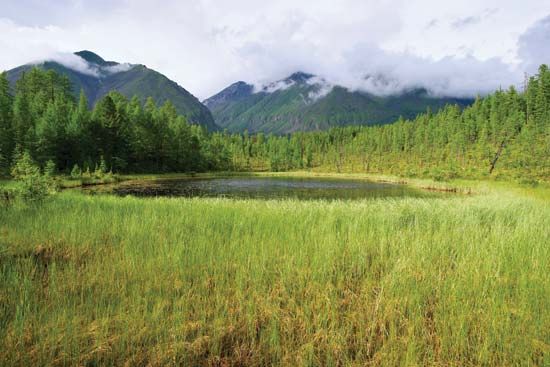
Yenisey River
The Yenisey River is a vital component of Russia's economic infrastructure, serving as a major artery for both energy production and transportation in…
How does the Yenisey River contribute to Russia’s economy, particularly in terms of transportation and energy production?
The Yenisey River is a vital component of Russia’s economic infrastructure, serving as a major artery for both energy production and transportation in central Siberia.11
Energy Production
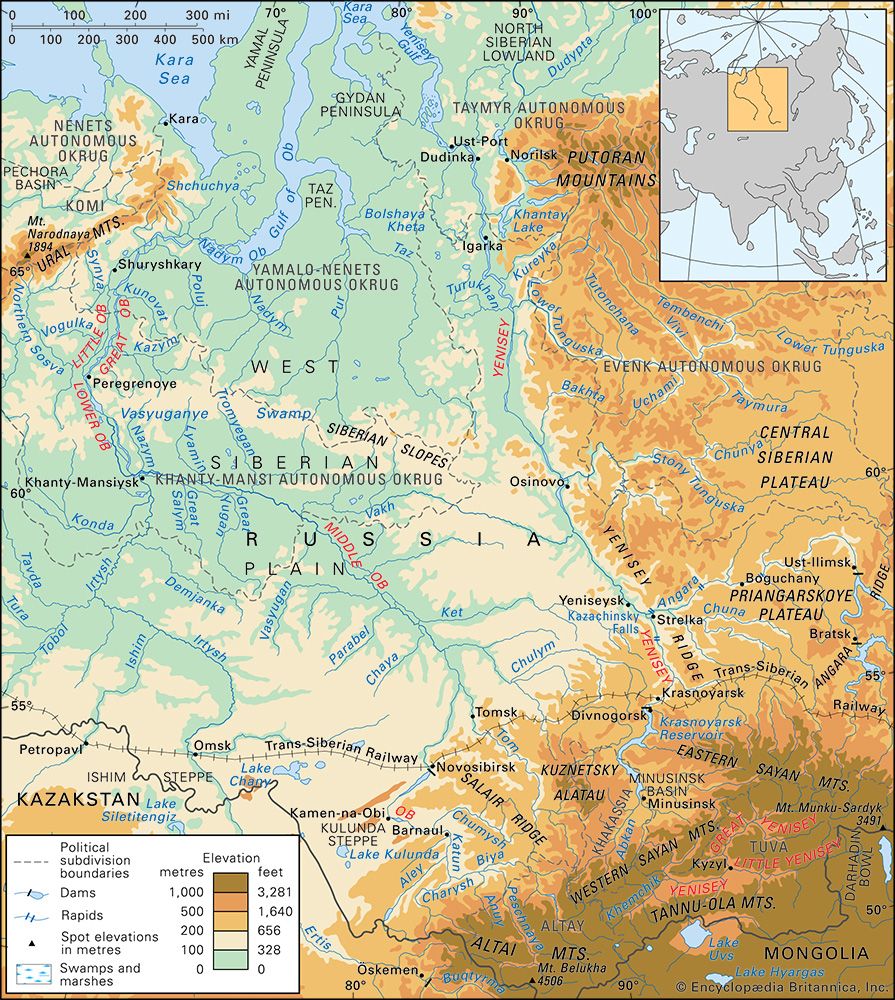
The Yenisey and its primary tributary, the Angara River, possess the greatest hydroelectric potential of any river system in Russia. This resource is heavily exploited, with major power stations located at Krasnoyarsk and Sayan on the Yenisey, and at Irkutsk, Bratsk, and Ust-Ilimsk on the Angara. These facilities have a combined generating capacity exceeding 25 million kilowatts.2
Transportation
The river is a significant navigation route between Oznachennoye and the sea. To facilitate through traffic, a ship elevator was constructed at the Krasnoyarsk Hydroelectric Station. Key ports include Krasnoyarsk, Yeniseysk, Igarka, and Dudinka. While lumber is the primary cargo, downstream traffic also transports coal, petroleum products, machinery, and bread.2
What are the major cities and industrial activities along the Yenisey River?
The Yenisey River serves as a critical economic corridor in central Siberia, supporting diverse industrial activities ranging from traditional northern practices to large-scale manufacturing in the south.13
Major Cities and Industrial Hubs
Industrial development is concentrated in the southern regions, with Krasnoyarsk serving as a primary industrial complex. The city is a major producer of aluminum and features extensive chemical industries, including the production of synthetic rubber, tires, and rayon. Its engineering sector manufactures heavy machinery such as cranes, bulldozers, and harvesters, alongside consumer goods like refrigerators and television sets.4
In the north, Norilsk is a globally significant center for the mining of nickel, platinum, and copper. Other key urban centers along the river include Irkutsk, Bratsk, Igarka, and Dudinka, the latter of which serves as a vital port linked by rail to Norilsk.12
Industrial Activities
- Energy: The river system, including the Angara River, hosts massive hydroelectric stations, such as those at Krasnoyarsk, Sayan, and Bratsk, with a combined capacity exceeding 25 million kilowatts.1
- Timber: Large-scale processing produces sawtimber, furniture, pulp, and paper, with lumber serving as a primary cargo for river transport.14
- Traditional Occupations: In the northern reaches, local populations engage in hunting, fishing, reindeer breeding, and fur farming.1
Are there any unique geological features or formations associated with the Yenisey River basin?
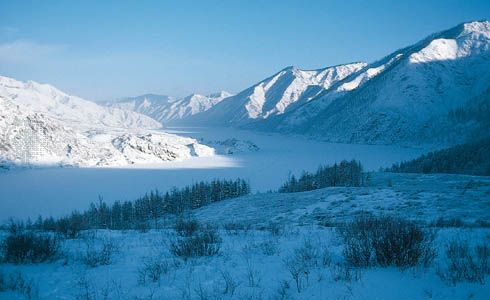
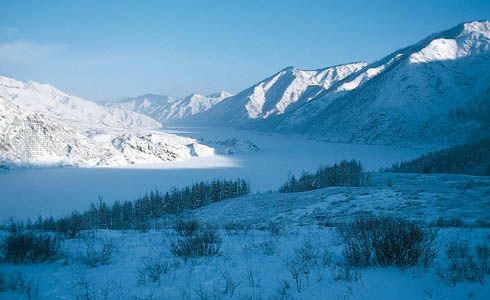
The Yenisey River basin is characterized by a diverse and rugged landscape, shaped by significant geological formations and mountain ranges. The basin spans a vast area, with only 6 to 7 percent consisting of lowlands, such as the West Siberian Plain and the North Siberian Lowland.6
Key geological features include:
- Mountain Ranges: The southern portion of the basin is dominated by complex mountain systems, including the Western and Eastern Sayan Mountains, the Hangayn, and the Baikal and Hentiyn ranges. These areas feature steep valleys and high peaks, such as Mount Munku-Sardyk, which reaches 11,453 feet.6
- Plateaus and Ridges: Much of the basin lies across the western sector of the Central Siberian Plateau. The basin is further defined by the Putorana Mountains in the northeast, as well as the Yenisey and Angara ridges.6
- Basins and Gorges: The river flows through distinct geological depressions, including the Tyva Basin and the fertile Minusinsk Basin. In several areas, the river has carved deep, scenic canyons and gorges, such as the one now submerged by the Sayano-Shushen Reservoir.6
- Hydrological Features: The basin is linked to Lake Baikal, the world’s deepest freshwater lake, via the Angara River, which acts as a major regulator of the Yenisey’s flow.62
What is the total length of the Yenisey River, and how does it compare to other major rivers in Russia?
The length of the Yenisey River varies depending on the defined source. Measured from the confluence of its headstreams at Kyzyl, the river is 2,167 miles (3,487 km) long. If the Great Yenisey is considered the source, the length is 2,540 miles (4,090 km). When including the Selenga River and the Angara River as the ultimate source, the total length reaches 3,442 miles (5,539 km).297
In comparison to other major rivers in Russia, the Yenisey is one of the longest and holds the distinction of being the largest river in the country in terms of annual runoff. It is frequently compared to the other two “gigantic” Siberian rivers:57
- Lena River: 2,734 miles (4,400 km).7
- Ob River: 2,268 miles (3,650 km), though its system with the Irtysh River extends to 3,362 miles (5,410 km).7
- Volga River: The longest river in Europe, measuring 2,193 miles (3,530 km).710
Sources
- Yenisey River - Economy — Encyclopædia Britannica
- Yenisey River — Encyclopædia Britannica
- Krasnoyarsk — Encyclopædia Britannica
- Norilsk — Encyclopædia Britannica
- Yenisey River: Top Questions — Encyclopædia Britannica
- Yenisey River - Physiography — Encyclopædia Britannica
- Yenisey River - Hydrology of the Yenisey River — Encyclopædia Britannica
- Yenisey River - Study and exploration — Encyclopædia Britannica
- Yenisey River - Physical features — Encyclopædia Britannica
- Russia - Rivers — Encyclopædia Britannica
- Volga River — Encyclopædia Britannica
Published on · 4 min read