Seychelles
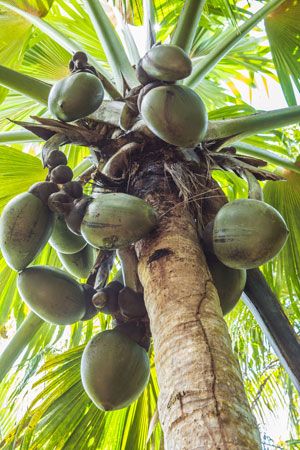
The Seychelles archipelago possesses remarkable biodiversity, featuring approximately 80 plant species unique to the islands, such as the iconic coco de mer…
How does the unique biodiversity of the Seychelles contribute to its ecosystem and tourism?
The Seychelles archipelago possesses remarkable biodiversity, featuring approximately 80 plant species unique to the islands, such as the iconic coco de mer, and a diverse array of endemic wildlife, including giant tortoises and various bird species.1
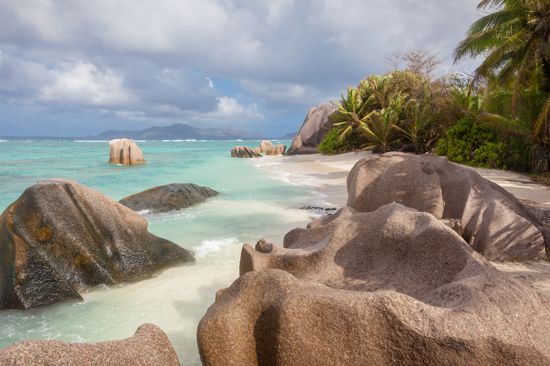
This biological richness is vital to the islands’ ecosystem stability. High species diversity enhances resilience, allowing natural communities to recover more effectively from disturbances and maintain functional stability. To protect this, the government has established significant UNESCO World Heritage sites, such as the Aldabra Islands and Vallée de Mai National Park, which serve as critical sanctuaries for endemic flora and fauna.21
This unique natural heritage is a primary driver of the tourism industry, which accounts for nearly one-fourth of the nation’s GDP. Visitors are drawn to the islands’ pristine environments for activities like scuba diving, fishing, and wildlife observation, creating a strong economic incentive to prioritize conservation efforts.31
What is the current political system in the Seychelles, and how has it evolved since independence?
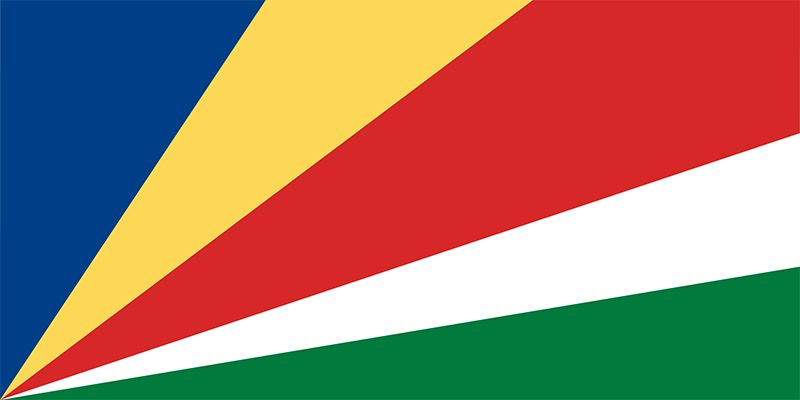
The Seychelles is currently a republic governed under a constitution that establishes the president as both the head of state and head of government. The president is directly elected for a maximum of two consecutive five-year terms and appoints a Council of Ministers to serve as an advisory body. The National Assembly consists of members serving five-year terms, with seats filled through a combination of direct elections and proportional representation for parties meeting a minimum vote threshold.4
The nation’s political trajectory has evolved significantly since it gained independence in 1976. Initially a coalition government, the country experienced a coup d’état in 1977 that brought France-Albert René to power. By 1979, a new constitution established a one-party socialist state. Following domestic and international pressure, the administration transitioned back to multiparty democracy in the early 1990s, adopting a new constitution and shifting toward a market-based economy.5
What are the main economic activities and industries in the Seychelles?
The economy of the Seychelles is a mixed developing system characterized by steady growth and a reliance on the service sector, which accounts for nearly four-fifths of the nation’s gross domestic product.66
Key Economic Sectors
- Tourism: This is the most significant industry, providing nearly one-fourth of the total GDP. The islands attract thousands of visitors annually for activities such as scuba diving, sailing, and fishing.62
- Manufacturing: Comprising about one-sixth of the GDP, this sector focuses primarily on food processing, including the production of alcoholic beverages, soft drinks, and animal feed.2
- Fishing and Agriculture: While agriculture contributes only a small fraction to the GDP due to limited arable land, the fishing industry is modern and vital. Key exports include canned tuna, frozen fish, copra, cinnamon, and vanilla.77
- Finance and Trade: The country has focused on becoming an offshore business and financial hub. Major imports include machinery, petroleum products, and foodstuffs, while trade is conducted with partners such as France, the United Kingdom, and Italy.24
Where are the Seychelles located, and what are the main islands that make up this archipelago?
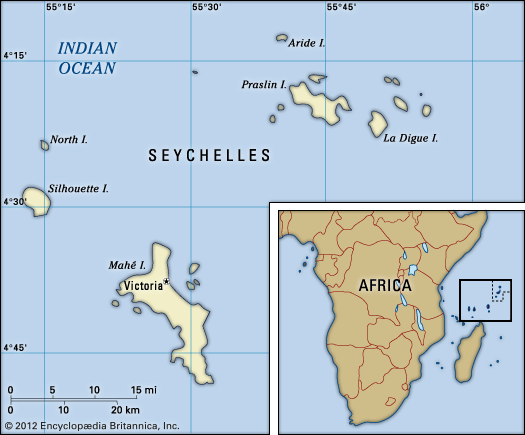
The Seychelles is an island republic situated in the western Indian Ocean, positioned between 4° and 11° S latitude and 46° and 56° E longitude. The archipelago is located approximately 1,000 miles (1,600 km) east of Kenya and about 700 miles (1,100 km) northeast of Madagascar.910
The nation comprises approximately 115 islands, which are characterized by lush tropical vegetation and diverse marine life. The most significant island is Mahé, which serves as the site of the capital city, Victoria.910
Sources
- Seychelles - Plant and animal life — Encyclopædia Britannica
- Seychelles - Services — Encyclopædia Britannica
- community ecology - Community equilibrium and species diversity — Encyclopædia Britannica
- Seychelles - Independent Seychelles — Encyclopædia Britannica
- Seychelles - Constitutional framework and local government — Encyclopædia Britannica
- Seychelles - Economy — Encyclopædia Britannica
- Seychelles - Manufacturing, finance, and trade — Encyclopædia Britannica
- Seychelles - Agriculture, forestry, and fishing — Encyclopædia Britannica
- Seychelles: Top Questions — Encyclopædia Britannica
- Seychelles — Encyclopædia Britannica
Published on · 3 min read