Vanilla
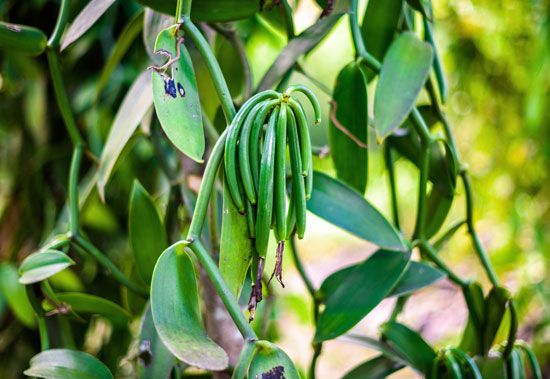
The vanilla plant, a member of the Orchidaceae family, is native to Mexico, Central America, and northern South America.
What is the origin of the vanilla plant, and where is it primarily cultivated?
The vanilla plant, a member of the Orchidaceae family, is native to Mexico, Central America, and northern South America.1
While the plant originated in these regions, it is now cultivated in various tropical areas globally. Because the plant’s flowers are naturally pollinated only by specific small bees found within their native range, growers in other regions must perform pollination artificially using a wooden needle to ensure the production of the fruit, or “beans,” used for flavoring. The commercial varieties, such as Mexican or Bourbon vanilla and Tahiti vanilla, are all thought to be derived from a single ancestral species native to the Americas.1
How does natural vanilla extract differ from artificial vanilla flavoring?
Natural vanilla extract and artificial vanilla flavoring differ primarily in their source and chemical complexity.
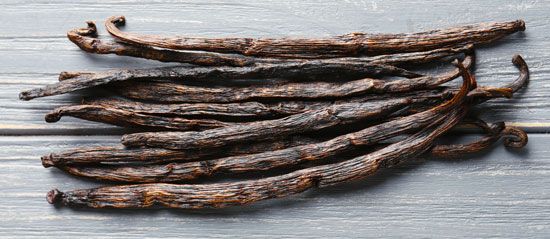
Natural Vanilla Extract This product is derived directly from cured vanilla beans. The process involves crushing the beans and extracting their essence using alcohol. While vanillin is the primary compound responsible for the characteristic aroma, natural extract contains a complex mixture of organic constituents—including vanillic acid, oleoresin, sugars, gums, alcohols, aldehydes, and esters—that contribute to a fuller, more nuanced fragrance and flavor profile.1
Artificial Vanilla Flavoring In contrast, imitation or artificial vanilla is formulated using commercially synthesized vanillin. Manufacturers create these flavorings by dissolving synthetic chemicals in solvents such as alcohol, glycerol, or propylene glycol. While synthetic vanillin mimics the primary aromatic note of the natural bean, artificial preparations lack the diverse range of secondary organic compounds found in the natural extract. Some imitation versions may also include additional synthetic ingredients, such as caramel coloring, to replicate the appearance of the natural product.12
How is vanilla used in non-food products, such as perfumes and aromatherapy?
Beyond its widespread use as a culinary flavoring, vanilla is a valued ingredient in the world of perfumery. Its rich, sweet, and complex aroma—derived from the vanillin crystals and various organic constituents found in the cured pods—makes it a popular base or middle note in many fragrances.1
In addition to fine perfumes, the distinct scent of vanilla is frequently utilized in a variety of consumer goods, including air fresheners and other scented products. While the provided information highlights its role in perfumery and general fragrance applications, it does not specifically detail its use in the practice of aromatherapy.5
How did vanilla become popular in Europe, and who introduced it there?
Vanilla was introduced to Europe following the Spanish conquest of the Aztecs in Mexico. The Spanish conquistador Hernán Cortés is credited with bringing the spice to Europe after encountering it at the court of Montezuma II, where it was used to flavor a traditional chocolate beverage known as xocoatl.1
Following its introduction, vanilla quickly gained popularity across the European continent. Its unique, sweet aroma—derived from the vanillin crystals that develop during a lengthy curing process—eventually established it as a prized ingredient in various culinary applications, including confections, ice cream, and baked goods, as well as in perfumery.1
Sources
- vanilla — Encyclopædia Britannica
- flavouring — Encyclopædia Britannica
- vanillin — Merriam-Webster
- vanillyl alcohol — Merriam-Webster
- Did you know? — Merriam-Webster
Published on · 2 min read