Shamrock
A shamrock is a trifoliate plant—meaning its leaves are divided into three leaflets—that serves as a national emblem of Ireland. Legend holds that St.…
What is a shamrock and which plant species are commonly associated with it?
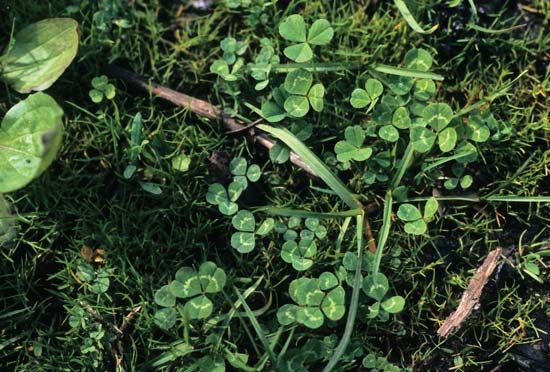
A shamrock is a trifoliate plant—meaning its leaves are divided into three leaflets—that serves as a national emblem of Ireland. Legend holds that St. Patrick used the plant to illustrate the Christian concept of the Trinity.1
While there is no scientific consensus on the “true” species, several plants are commonly associated with the name:
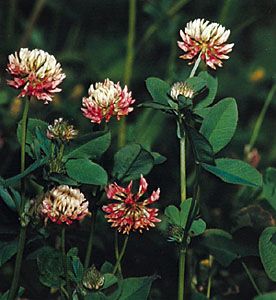
- Clovers: White clover (Trifolium repens) and suckling clover (T. dubium) are native to the British Isles and are frequently identified as the traditional shamrock. Black medic (Medicago lupulina) is also occasionally included.12
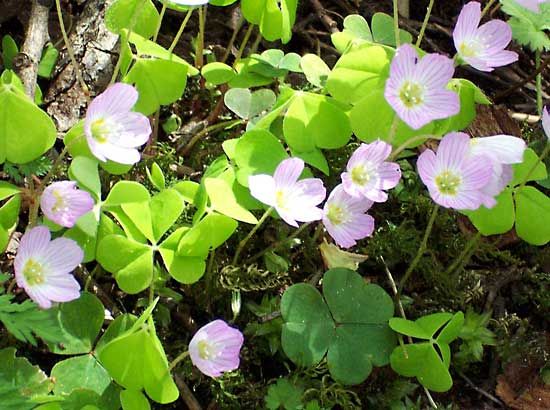
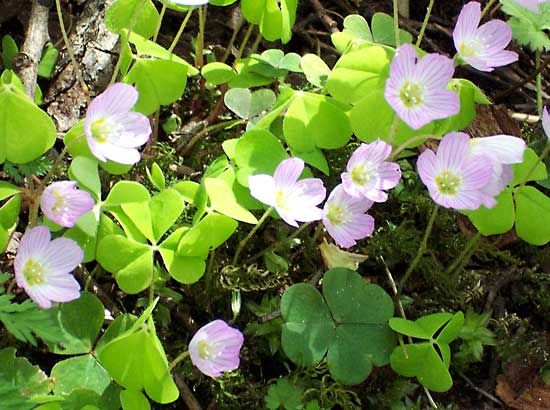
- Wood Sorrel: Wood sorrel (Oxalis acetosella) is commonly sold as a potted plant for St. Patrick’s Day.12
- Other Varieties: The purple or false shamrock (Oxalis triangularis) and the shamrock pea (Parochetus communis) are also associated with the name due to their trifoliate appearance.1
These plants belong to various families, including the pea family (Fabaceae) and Oxalidaceae.1
How has the image of the shamrock been used in Irish culture and marketing?
The shamrock serves as a primary national emblem of Ireland, deeply rooted in both cultural tradition and modern commercial practice. Historically, the plant gained significance through the legend of St. Patrick, who is said to have used its three leaflets to explain the Christian concept of the Trinity to the Irish people.31
In Irish culture, the tradition of wearing a shamrock in one’s lapel on St. Patrick’s Day has long been a staple of the holiday. This practice, alongside the broader “wearing of the green,” became a powerful symbol of Irish identity and nationalism, particularly as it was embraced by Irish immigrant communities abroad to celebrate their heritage.34
From a marketing and commercial perspective, the shamrock is a ubiquitous icon used to promote Irish culture globally. It is frequently featured in holiday-themed merchandise, decorations, and marketing campaigns. Furthermore, specific plants associated with the shamrock, such as wood sorrel, are commercially cultivated and sold as potted plants specifically for the holiday. While some traditions—such as dyeing food or beverages green—were popularized by emigrants, they have since been adopted within Ireland, often to cater to the interests of tourists and international observers.341
How did the shamrock become a symbol of Ireland and St. Patrick’s Day?
The shamrock became a symbol of Ireland and St. Patrick’s Day primarily through religious legend and cultural tradition. According to popular lore, St. Patrick, the patron saint of Ireland, used the plant’s three leaflets, joined by a single stalk, to explain the Christian doctrine of the Trinity to potential converts.351
Over time, this association solidified the shamrock as a national emblem. The tradition of wearing the plant in one’s lapel on March 17 became a hallmark of St. Patrick’s Day celebrations, serving as a visible expression of Irish identity. While the shamrock is historically linked to the saint, the broader association of the color green with the holiday and Irish nationalism developed later, influenced by Ireland’s verdant landscape and its role as a symbol of Irish culture and independence.31
Today, the shamrock remains a central icon of Irish heritage, recognized globally as a symbol of the country and its most famous feast day.31
What are the botanical characteristics of plants commonly referred to as shamrocks?
The term “shamrock” does not refer to a single scientific species but rather to several trifoliate plants—those with leaves divided into three leaflets—that share a similar appearance.1
Primary Candidates
There is no scientific consensus on the exact species of the traditional Irish shamrock, though several are commonly identified:
- Clovers: White clover (Trifolium repens) and suckling clover (T. dubium) are native to the British Isles and belong to the pea family (Fabaceae).1
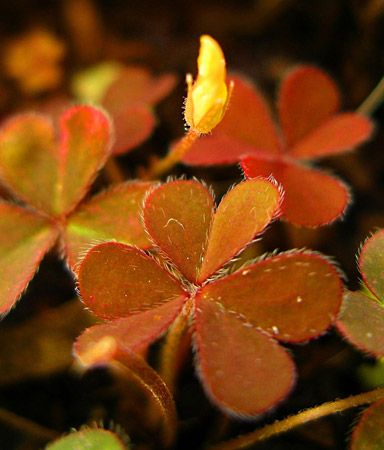
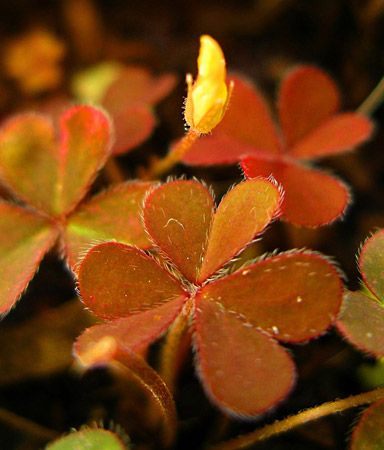
- Wood Sorrel: Wood sorrel (Oxalis acetosella) is a member of the Oxalidaceae family. It is a small, stemless plant with cloverlike leaves that arise from a creeping, scaly rootstock. Its flowers typically feature five white, purple-veined petals. Notably, the leaflets of Oxalis species fold back and droop at night.16
- Other Varieties: Black medic (Medicago lupulina) is also sometimes called a shamrock. Additionally, the purple or false shamrock (Oxalis triangularis) is a South American native popular as a houseplant, and the shamrock pea (Parochetus communis) is a creeping legume found in Africa and Asia.1
Sources
- Shamrock — Encyclopædia Britannica
- shamrock — Merriam-Webster
- Why Do We Wear Green on St. Patrick’s Day? — Encyclopædia Britannica
- St. Patrick’s Day — Encyclopædia Britannica
- St. Patrick: Top Questions — Encyclopædia Britannica
- Oxalis — Encyclopædia Britannica
Published on · 3 min read