Wood Sorrel
Wood sorrel refers to any of the numerous flowering plants belonging to the genus Oxalis within the family Oxalidaceae. These herbs are characterized by…
What is wood sorrel?
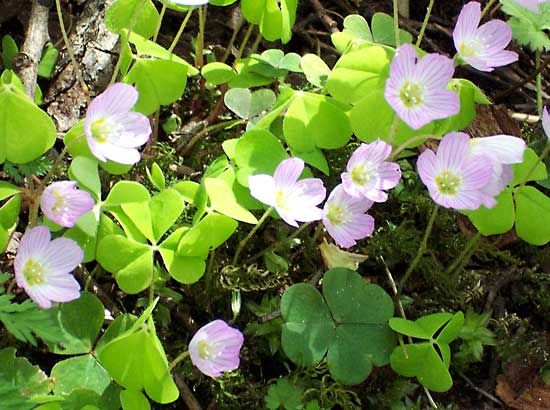
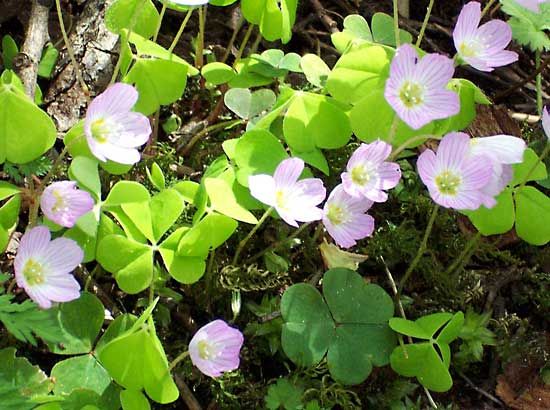
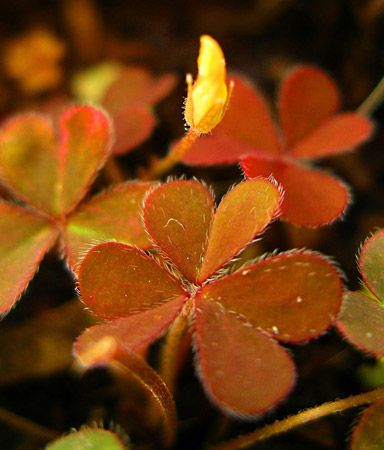
Wood sorrel refers to any of the numerous flowering plants belonging to the genus Oxalis within the family Oxalidaceae. These herbs are characterized by their cloverlike, three-parted leaves and acidic sap, which gives them a sour taste—a trait reflected in the name oxalis, derived from the Greek word for acid.1234
Common species include the European wood sorrel (O. acetosella) and the North American mountain wood sorrel (O. montana), both of which are small, stemless plants. A notable feature of these plants is that their leaflets fold back and droop at night. While the name is sometimes inaccurately applied to sheep sorrel (Rumex acetosella), which belongs to a different family, true wood sorrels are distinct for their five-petaled flowers and unique seed-dispersal mechanism, where a fleshy coat curls back to eject the seeds.1324
The name is sometimes confused with other plants, but it is scientifically reserved for the Oxalis genus. Would you like to explore the differences between wood sorrel and other edible or ornamental plants?14

Why do wood sorrel leaves fold up at night?
Wood sorrel leaves fold up at night due to a biological phenomenon known as nyctinasty. This rhythmic movement is a response to changes in light intensity and is associated with the plant’s circadian cycle.6
The mechanism behind this folding involves specialized structures called pulvini—jointlike growths located at the base of the leaflets. These structures regulate the plant’s position through changes in cellular turgor pressure. In response to darkness, chemical photoreceptors trigger water to move out of the cells within the pulvini, causing the leaves to droop or fold. When sunlight returns, the cells refill with water, allowing the leaves to return to their flat, open position. While the exact evolutionary purpose of this adaptation remains a subject of study, some research suggests it may play a role in supporting plant growth.67
What gives wood sorrel its acidic taste?
Wood sorrel derives its characteristic acidic, sour taste from the presence of oxalic acid. This organic compound, which has the chemical formula C2H2O4C_2H_2O_4, is a naturally occurring constituent of the plant.28
The name of the genus, Oxalis, is itself derived from the Greek word for acid, reflecting this defining flavor profile. While oxalic acid is found in various other plants, it was identified as a primary component of wood sorrel as early as the 17th century. It is important to note that while the leaves are often consumed, oxalic acid is a toxic substance in high concentrations, and the plant should be consumed with awareness of its chemical properties.9210
How can you tell the difference between wood sorrel and clover?
While wood sorrel and clover are often confused due to their similar appearance, they belong to entirely different plant families and possess distinct physical characteristics.
Key Differences
- Leaf Shape: Wood sorrel (Oxalis) leaves consist of three heart-shaped leaflets that meet at a central point. In contrast, true clover (Trifolium) leaves are typically oval or rounded and often feature a distinct white “V” or chevron marking on each leaflet.
- Flowers: Wood sorrel flowers are regular and feature five petals, which can be white, yellow, or purple depending on the species. Clover flowers are notably different, growing in dense, rounded clusters or spikes made up of many tiny, individual florets.12
- Taste: Wood sorrel has a distinct, sharp, acidic taste due to the presence of oxalic acid. Clover does not share this intense sour flavor profile.
- Movement: Wood sorrel exhibits nyctinasty, meaning its leaves fold up and droop at night or in response to low light, a trait not found in clover.1
Sources
- wood sorrel — Encyclopædia Britannica
- wood sorrel — Merriam-Webster
- Oxalis — Encyclopædia Britannica
- sorrel — Encyclopædia Britannica
- Oxalidaceae — Merriam-Webster
- nyctinasty — Merriam-Webster
- Why Do Plants Wilt? — Encyclopædia Britannica
- oxalic acid — Merriam-Webster
- oxalic acid — Encyclopædia Britannica
- sorrel — Merriam-Webster
Published on · 3 min read