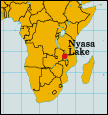
Shire River
The Shire River is the most significant river in Malawi, stretching 250 miles (402 km) in length. It serves as the sole outlet for Lake Nyasa, issuing from…
What is the geographical location and course of the Shire River in Africa?
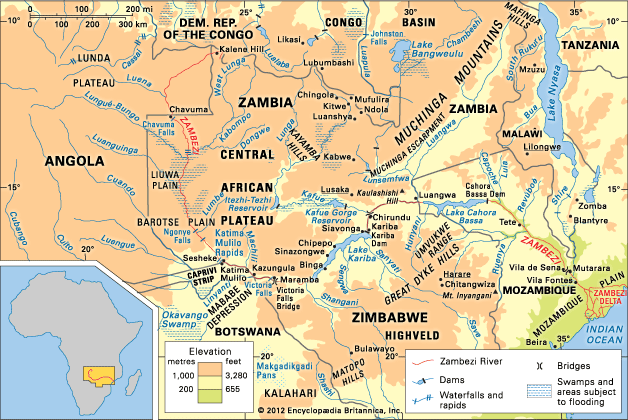
The Shire River is the most significant river in Malawi, stretching 250 miles (402 km) in length. It serves as the sole outlet for Lake Nyasa, issuing from the lake’s southern shore.1
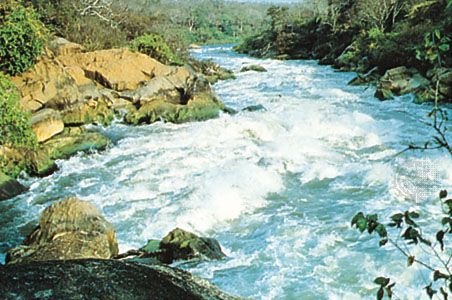
The river’s course begins by flowing into Lake Malombe before passing through a landscape of swampy banks and plateaus. In its middle valley, the river descends 1,260 feet (384 m) over a 50-mile (80-km) stretch characterized by various gorges and cataracts, including the Kholombidzo, Nkula, Tedzani, and Kapichira falls. Hydroelectric power is harnessed at the Nkula and Tedzani sites.12
Upon reaching the lower valley, the river enters a wide, marshy extension of the Mozambique coastal plain. After being joined by its chief tributary, the Ruo River, it flows through the Elephant and Ndindi marshes. The Shire eventually reaches its confluence with the Zambezi River in MozambiqueZambezi River](https://www.britannica.com/place/Zambezi-River) in Mozambique.13
What are the main tributaries of the Shire River?
The Shire River is fed by several tributaries that contribute to its flow as it travels toward the Zambezi. These can be categorized by their significance and consistency:
- Chief Tributary: The Ruo River is the largest and most significant tributary of the Shire. It rises on the slopes of the Mulanje Mountains and drains the southern portion of the eastern Shire Highlands before joining the main stream at Chiromo.15
- Perennial Tributaries: In addition to the Ruo, the Shire receives water from several minor perennial tributaries, which include:
Historically, the river’s flow was heavily dependent on the volume of the Ruo River and the levels of Lake Nyasa, though modern regulation is now managed by a dam at Liwonde.1
Are there any notable dams or hydroelectric projects on the Shire River, and what are their impacts?
The Shire River is a critical source of hydroelectric power for Malawi, with several major installations located along its middle course where the river drops significantly in elevation.16
Notable Hydroelectric Projects
The primary hydroelectric schemes on the river are situated northwest of Blantyre at the following locations:
- Nkula Falls: A key site for power generation that serves the industrial areas of the south.16
- Tedzani Falls: Operates in conjunction with Nkula to meet national power demands.16
- Kapichira Falls: Another major facility contributing to the country’s electricity supply.6
Additionally, a dam at Liwonde serves a dual purpose: it regulates the flow of water from Lake Nyasa into the hydroelectric stations downstream and provides essential flood control for the lower reaches of the river.1
Impacts and Challenges
These projects are vital for supporting industrial centers and large-scale agricultural operations, such as sugar estates. However, the reliability of these plants is frequently challenged by environmental and economic factors. Deforestation near river sources has reduced water flow into Lake Nyasa, which directly impacts the currents required for the Nkula and Tedzani plants. Consequently, Malawi has experienced power shortages, leading to load shedding and irregular electricity availability.6
What is the length of the Shire River and how does it compare to other major rivers in Africa?
The Shire River is 250 miles (402 km) long. Compared to other major African rivers, it is relatively short; for context, the Nile River spans approximately 4,132 miles (6,650 km), and the Congo River is about 2,900 miles (4,700 km) long.17
While the Shire is the most important river in Malawi and serves as the sole outlet for Lake Nyasa, it functions as a tributary itself. It flows southward to join the Zambezi River in Mozambique, which is one of the continent’s major arterial waterways. The Shire’s significance lies in its role as a vital hydroelectric and agricultural resource for Malawi, rather than its length relative to the continent’s primary river systems.127
Sources
- Shire River — Encyclopædia Britannica
- Zambezi River - Physiography — Encyclopædia Britannica
- Lake Malombe — Encyclopædia Britannica
- Lake Chilwa — Encyclopædia Britannica
- Ruo River — Encyclopædia Britannica
- Malawi - Resources and power — Encyclopædia Britannica
- 8 Amazing Physical Features of Africa — Encyclopædia Britannica
Published on · 3 min read