Siret River
The Siret River is a waterway that originates on the eastern slopes of the Carpathian Mountains in western Ukraine. It flows southward for approximately 360…
What is Siret River?
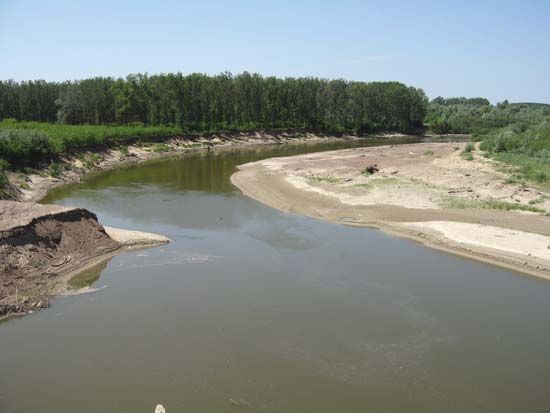
The Siret River is a waterway that originates on the eastern slopes of the Carpathian Mountains in western Ukraine. It flows southward for approximately 360 miles (575 km) through eastern Romania before joining the Danube River west of Galați.1
The river’s geography is characterized by a sinuous upper course that cuts through a wide valley, while its lower course is low and marshy. The basin covers an area of 17,000 square miles (44,000 square km), and the river is navigable primarily by small craft. Among its tributaries, the Bistrița River is notable for providing the greatest volume of water and supporting hydroelectric stations.1
While some sources may cite varying lengths due to measurement differences, the river remains a significant drainage feature of the Eastern Carpathians.12
What are the Carpathian Mountains?
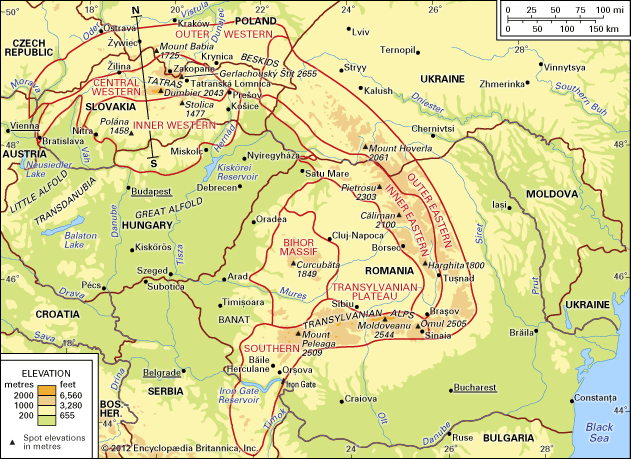
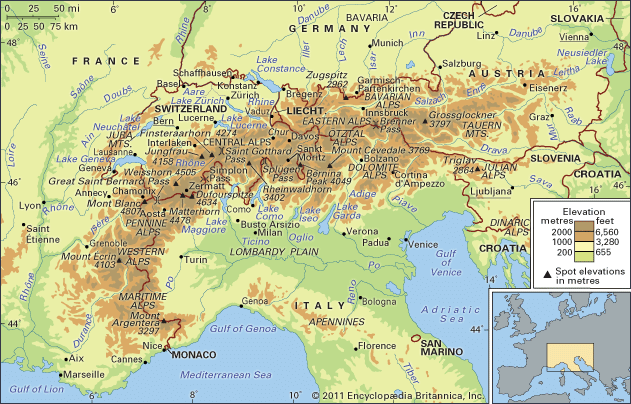
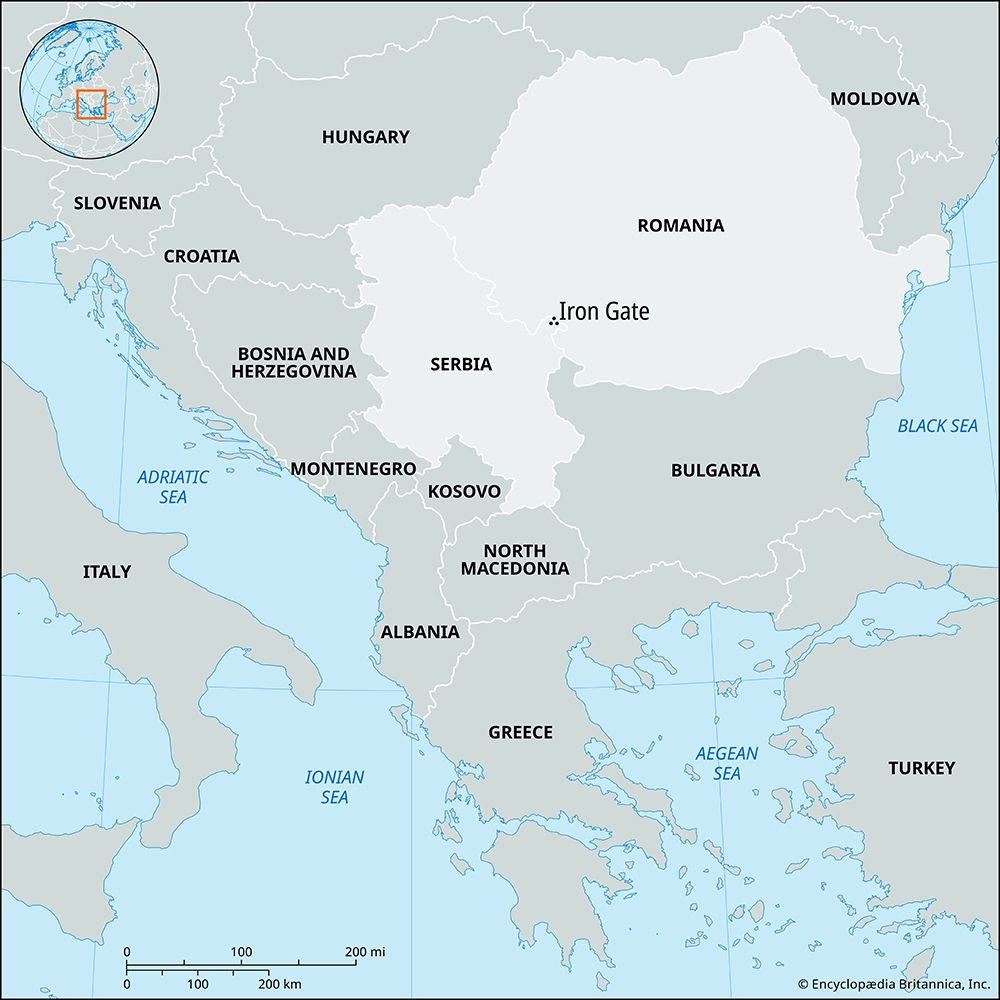
The Carpathian Mountains are a geologically young, arcuate mountain chain in Europe that serves as the eastward continuation of the Alps. Spanning approximately 900 miles (1,450 km), the range forms a wide crescent from the Danube Gap near Bratislava, Slovakia, to the Iron Gate on the Danube River in Romania.3
Unlike the more compact Alps, the Carpathians are characterized by a series of mountain blocks separated by basins, covering about 80,000 square miles (200,000 square km). They are generally divided into the Western Carpathians and the Southeastern (Eastern) Carpathians. The range features diverse geological structures, including flysch deposits, crystalline and metamorphic rock cores, and volcanic chains. While the highest peak, Gerlachovský Štít, reaches 8,711 feet (2,655 meters), the mountains are generally lower than the Alps and were shaped primarily by running water rather than extensive glaciation.34
The region is rich in biodiversity, including primeval beech forests and various wildlife, and serves as a significant center for tourism, mineral spas, and recreation.56
How do rivers contribute to the Danube River system?
The Danube River system is supported by a dense, branching network of approximately 300 tributaries, which are essential to its hydrology and economic utility.9
Contribution to Runoff and Basin Growth
The river basin expands significantly as it collects water from these tributaries. More than half of the entire basin is drained by right-bank tributaries, which originate in the Alps and other mountain regions, contributing up to two-thirds of the total river runoff. Major tributaries such as the Sava and the Tisza cause substantial increases in the river’s volume, with the Inn River notably carrying more water than the Danube itself at their confluence.9
Geographic and Economic Impact
Tributaries originating in the Carpathian Mountains—including the Váh, Olt, Siret, and Prut—play a vital role in the river’s regime. Beyond water volume, these tributaries facilitate:10
- Navigation: Over 30 tributaries are navigable, supporting the movement of freight across ten bordering countries.911
- Energy: Many tributaries are tapped for hydroelectricity, with storage basins constructed to manage seasonal rain-snow runoff and mitigate flood risks.1011
- Resource Management: The river system provides water for industrial use, residential supplies, and irrigation, though pollution remains a significant challenge to these uses.11
What is the role of hydroelectric power in river management?
Hydroelectric power plays a central role in river management by utilizing dams to regulate water flow, generate electricity, and manage water resources.121314
Key Functions in River Management
- Energy Generation: By impounding rivers, dams create a “head”—a difference in elevation—that allows falling water to drive turbines and generators. This provides a renewable energy source that can be adjusted to meet varying power demands.1415
- Flow Regulation and Flood Control: Reservoirs created by dams impound water during periods of high flow, helping to prevent flood disasters. This stored water can then be released gradually during low-flow periods or [droughts].13
- Pumped Storage: To manage peak demand, some systems use pumped-storage to move water to higher reservoirs during off-peak hours, effectively storing energy as potential energy for later use.1514
Environmental and Social Considerations
While hydroelectric power is a clean, renewable resource, it significantly alters river ecosystems. Dams can block the migration of spawning fish, trap sediment that would otherwise nourish downstream areas, and lead to the displacement of human communities and the loss of natural landscapes. Consequently, modern river management involves a contentious balance between utilizing these structures for economic and energy needs and addressing their profound environmental impacts.1614121317
Sources
- Siret River — Encyclopædia Britannica
- Siret — Merriam-Webster
- Carpathian Mountains - Physiography of the Carpathian Mountains — Encyclopædia Britannica
- Carpathian Mountains - Geology — Encyclopædia Britannica
- Carpathian Mountains - Plant and animal life — Encyclopædia Britannica
- Carpathian Mountains — Encyclopædia Britannica
- Carpathian Mountains - Transportation — Encyclopædia Britannica
- Carpathian Mountains - Tourism — Encyclopædia Britannica
- Danube River - Physiography — Encyclopædia Britannica
- Carpathian Mountains - Drainage of the Carpathian Mountains — Encyclopædia Britannica
- Danube River - The economy — Encyclopædia Britannica
- Did you know? — Merriam-Webster
- dam - Rise of environmental and economic concerns — Encyclopædia Britannica
- reservoir — Encyclopædia Britannica
- river - Environments of deposition — Encyclopædia Britannica
- dam - Reservoirs — Encyclopædia Britannica
- turbine - Pumped storage — Encyclopædia Britannica
- hydroelectric power — Encyclopædia Britannica
Published on · 3 min read