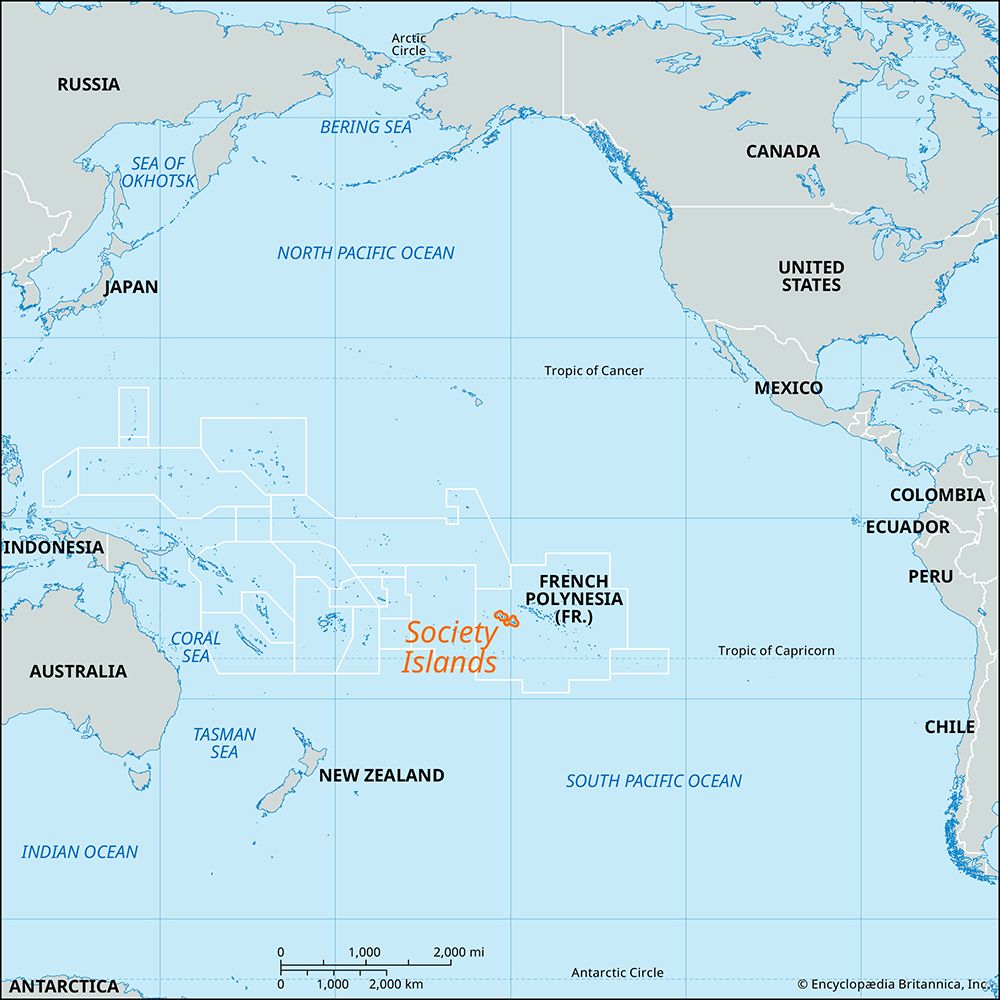
Society Islands
Many traditional practices in the Society Islands were significantly altered or suppressed following the arrival of missionaries in the late 18th century and…
What traditional Polynesian customs and practices are still observed in the Society Islands today?
Many traditional practices in the Society Islands were significantly altered or suppressed following the arrival of missionaries in the late 18th century and the subsequent influence of European and North American culture. However, there has been a renewed focus on preserving and revitalizing Polynesian culture in recent decades.123
Current observations and survivals include:
- Language: The Tahitian language has seen increased usage and was elevated to an official language status in the late 20th century.1
- Music: Modern Tahitian himene—contrapuntal compositions often featuring multiple voices—retain indigenous structural elements derived from traditional polyphonic chanting, though they are now hybrid forms that incorporate both Polynesian and European influences.2
- Cultural Preservation: Efforts to maintain heritage are supported by ethnographic institutions and learned societies in Papeete, which work to document and protect traditional knowledge.1
- Arts: While many traditional arts were once reduced to folklore, there is ongoing interest in traditional practices such as tattooing and music, which are increasingly recognized as vital components of the islands’ identity.1
Which are the most populated islands in the Society Islands, and what are their main urban centers?
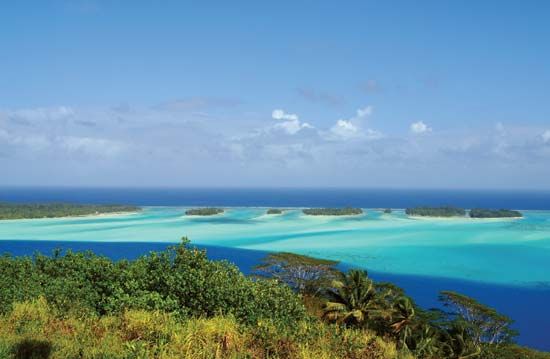
The Society Islands are the most populous group in French Polynesia, accounting for nearly nine-tenths of the territory’s total population. The majority of these residents live on the island of Tahiti, which serves as the primary hub for the region.1011
Major Islands and Urban Centers
- Tahiti: As the largest island in the group, Tahiti is the most significant center of population and commerce. Its main urban center is Papeete, which serves as the capital of French Polynesia and the administrative headquarters for the Îles du Vent (Windward Islands) subdivision. Rapid urban growth has also expanded into surrounding suburbs such as Faaa, Punaauia, Pirae, and Mahina.121113
- Moorea: Located near Tahiti, this high island is the second largest of the Windward group. While it is a major tourist destination, its population is significantly smaller than that of Tahiti. Its settlements include the chief village of Afareaitu on the east coast and Haapiti on the west.1214
- Raiatea: Situated in the Îles Sous le Vent (Leeward Islands), Raiatea is the largest and most densely populated island in that western subgroup. Its main port and urban center is Uturoa.10
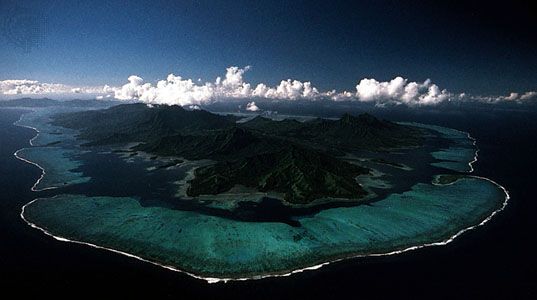
How did the Society Islands get their name, and what is their historical significance?
The Society Islands received their name from Captain James Cook, who visited the archipelago in 1769 during a scientific expedition commissioned by the Royal Society of London.16
Historical Significance
The islands have played a pivotal role in Pacific history due to their status as a focal point for early European exploration and missionary activity:
- Exploration Hub: Following visits by Samuel Wallis in 1767 and Louis-Antoine de Bougainville in 1768, the islands became a primary destination for 18th-century scientific voyages. Cook’s 1769 expedition, which aimed to observe the transit of Venus, solidified the islands’ importance in global navigation and scientific study.1615
- Missionary Influence: In 1797, the London Missionary Society began work in Tahiti. The conversion of local leaders, such as Pomare II, led to the creation of “missionary kingdoms” that adopted European-style legal codes and political structures.17
- Colonial Transition: The islands transitioned from indigenous governance to a French protectorate in 1842, eventually becoming a colony in 1881 and a core part of French Polynesia in the 20th century.1617
How has French colonial influence shaped the modern Society Islands?
French colonial influence has profoundly shaped the modern Society Islands, transforming their political, social, and economic landscape over the last two centuries.
Political and Administrative Integration
Following the establishment of a protectorate in 1842 and formal colonization in 1881, the islands were integrated into the French administrative system. Today, they function as part of an overseas collectivity of France. This status provides a unique governance structure where the French president is the head of state, represented by a high commissioner, while the local government is led by a president elected by the French Polynesia Assembly.
Cultural and Social Transformation
The traditional social structures of the islands, once based on extended families and hereditary chieftainships, were largely dismantled under European influence. Through a policy of assimilation, the local population became deeply influenced by French culture, language, and religion, particularly following the arrival of missionaries in the late 18th century. Education is now modeled after the French system, with French serving as a primary medium of instruction alongside local traditions.1620
Economic Shifts
The French presence significantly altered the economy. The mid-20th century saw massive infrastructure development, including the construction of the modern port in Papeete and an international airport, which facilitated the growth of tourism as the primary economic activity. Furthermore, the French military’s long-term nuclear testing program in the region created a period of economic dependence on military spending. The legacy of these tests remains a sensitive issue, involving ongoing debates regarding public health, environmental remediation, and the quest for political self-determination.921
Sources
- Tonga - Cultural life — Encyclopædia Britannica
- French Polynesia - Cultural life — Encyclopædia Britannica
- Oceanic music and dance - Polynesia — Encyclopædia Britannica
- Oceanic music and dance - The Society Islands — Encyclopædia Britannica
- Oceanic art and architecture - The Society Islands — Encyclopædia Britannica
- Polynesian culture - Socialization and education — Encyclopædia Britannica
- Polynesian culture - Gardening of Polynesian culture — Encyclopædia Britannica
- Polynesian culture - Fishing — Encyclopædia Britannica
- Tahiti — Encyclopædia Britannica
- Îles du Vent — Encyclopædia Britannica
- French Polynesia - Relief — Encyclopædia Britannica
- French Polynesia — Encyclopædia Britannica
- Moorea — Encyclopædia Britannica
- Papeete — Encyclopædia Britannica
- Society Islands — Merriam-Webster
- Society Islands — Encyclopædia Britannica
- Îles Sous le Vent — Encyclopædia Britannica
- Pacific Islands - The 18th century — Encyclopædia Britannica
- Pacific Islands - Missionary activity — Encyclopædia Britannica
- French Polynesia - Government and society — Encyclopædia Britannica
- French Polynesia - Economy of French Polynesia — Encyclopædia Britannica
- Guadeloupe - Education — Encyclopædia Britannica
- French Polynesia - History of French Polynesia — Encyclopædia Britannica
Published on · 4 min read