Clionid
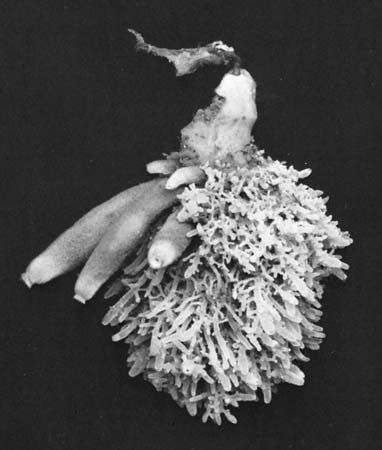
A clionid is a member of the sponge family Clionidae, which belongs to the class Demospongiae. These organisms are notable for their ability to bore into and…
What is clionid?
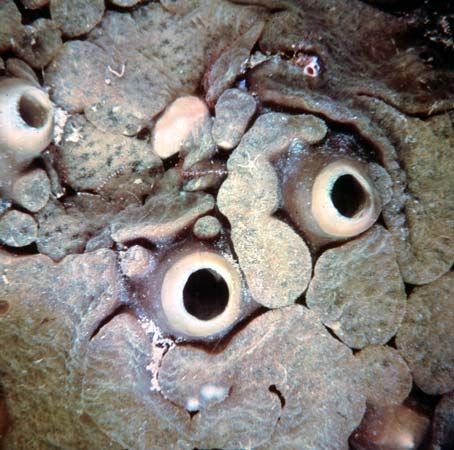
A clionid is a member of the sponge family Clionidae, which belongs to the class Demospongiae. These organisms are notable for their ability to bore into and dissolve calcium-containing materials, such as limestone, coral, and mollusk shells.12
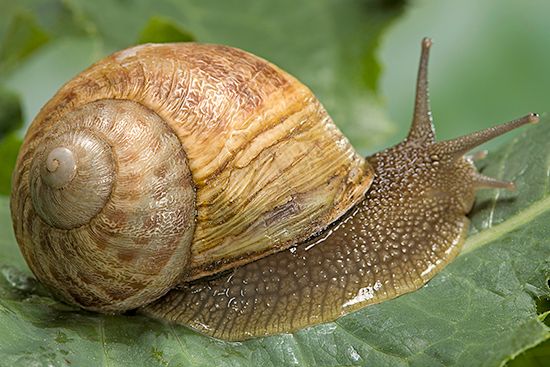
Clionids inhabit oceans worldwide, where they play an important ecological role by breaking down shells that would otherwise accumulate on the seafloor. They excavate galleries within calcareous substrates through a combination of chemical and mechanical actions, removing small, uniform chips of calcium carbonate. While this process is natural, it can weaken coral reefs, limestone breakwaters, and commercially significant shells like those of oysters. Notably, the name Clionidae is also used to refer to a family of gastropods.12
How do sponges contribute to the health of coral reefs?
Sponges play complex roles in the ecology of coral reefs. While they are often essential components of the marine benthos, their impact on reef health is multifaceted:
- Habitat and Biodiversity: Sponges provide critical shelter and nourishment for a vast array of organisms, including crustaceans, nematode and polychaete worms, and brittle stars. A single large sponge can host thousands of individual organisms, significantly increasing the biodiversity of the reef environment.34
- Symbiotic Relationships: Many sponges maintain symbiotic associations with algae. The sponge provides the algae with protection and metabolic benefits, while the algae can offer the sponge oxygen and serve as a food source. In some cases, these algae also provide structural support or protective pigments.32
- Structural Impact: Certain species, particularly clionid sponges, bore into calcium carbonate structures like coral reefs. While this is a natural process, it can weaken the reef structure, making it more susceptible to wave abrasion.2
What are the main differences between Demospongiae and other sponge classes?
The class Demospongiae is the most diverse and widely distributed group of sponges, comprising the majority of living species. They are distinguished from the other two classes of sponges—Calcarea and Hexactinellida—primarily by their skeletal composition and structure.56
Key Differences in Skeletal Composition
- Demospongiae: Their skeletons are composed of siliceous spicules (which are 1- or 4-rayed), spongin fibers, or a combination of both. In some species, the skeleton is entirely absent or consists solely of spongin fibers, such as in commercial bath sponges.567
- Calcarea: These sponges are characterized by a skeleton composed exclusively of calcium carbonate spicules.6
- Hexactinellida: Often called glass sponges, they possess a skeleton made of 6-rayed (hexactinal) siliceous spicules and notably lack spongin entirely.6
Ecological and Structural Variation
While Calcarea are generally small and restricted to shallower waters, Demospongiae exhibit immense variation in form and size, ranging from thin encrustations to massive structures reaching 2 meters in diameter. They are found in diverse environments, from intertidal zones to deep-sea trenches, and include the only group of sponges that have colonized freshwater habitats (the family Spongillidae). Additionally, while most sponges rely on water-current systems for filter feeding, some Demospongiae have evolved to be carnivorous, lacking a water-current system entirely.6
How do sponges obtain food from their environment?
Sponges primarily function as filter feeders, utilizing a sophisticated water-current system to obtain nutrients from their environment.1011
The Feeding Process
- Water Circulation: Sponges lack specialized organs for feeding. Instead, they rely on the continuous beating of flagella located on specialized cells called choanocytes. This movement draws water into the sponge through pores and incurrent canals, creating a flow that carries food particles and oxygen into the internal chambers.1011
- Particle Capture: As water passes through the system, choanocytes capture suspended food particles, including bacteria, microorganisms, and organic debris. Sponges may also absorb dissolved organic substances directly from the water.10
- Digestion: Once captured, food particles are transferred by specialized cells known as thesocytes throughout the sponge. Intracellular digestion occurs within both the choanocytes and the thesocytes.10
Alternative Feeding Strategies
While most sponges are filter feeders, there are exceptions:
- Carnivory: Certain cladorhizid sponges have evolved to be carnivores, capturing prey using numerous hairs that cover their bodies.10
- Symbiosis: Many sponges maintain symbiotic relationships with algae. They can derive nutrition by consuming algal waste products or dying algae.12
Sources
- clionid — Encyclopædia Britannica
- sponge - Habitats — Encyclopædia Britannica
- sponge - Associations with other organisms — Encyclopædia Britannica
- sponge - Importance — Encyclopædia Britannica
- sponge - Evolution and paleontology — Encyclopædia Britannica
- Demospongiae — Merriam-Webster
- sponge - Annotated classification — Encyclopædia Britannica
- sponge - Other types — Encyclopædia Britannica
- sponge - Sexual reproduction — Encyclopædia Britannica
- sponge - Feeding and digestion — Encyclopædia Britannica
- sponge - Form and function — Encyclopædia Britannica
- Feeding behaviour - Types of food procurement — Encyclopædia Britannica
Published on · 3 min read