Sutlej River
Major infrastructure projects along the Sutlej River have been central to regional development, primarily serving irrigation, flood control, and…
What are some of the major dams and irrigation projects along the Sutlej River, and how have they impacted local communities?
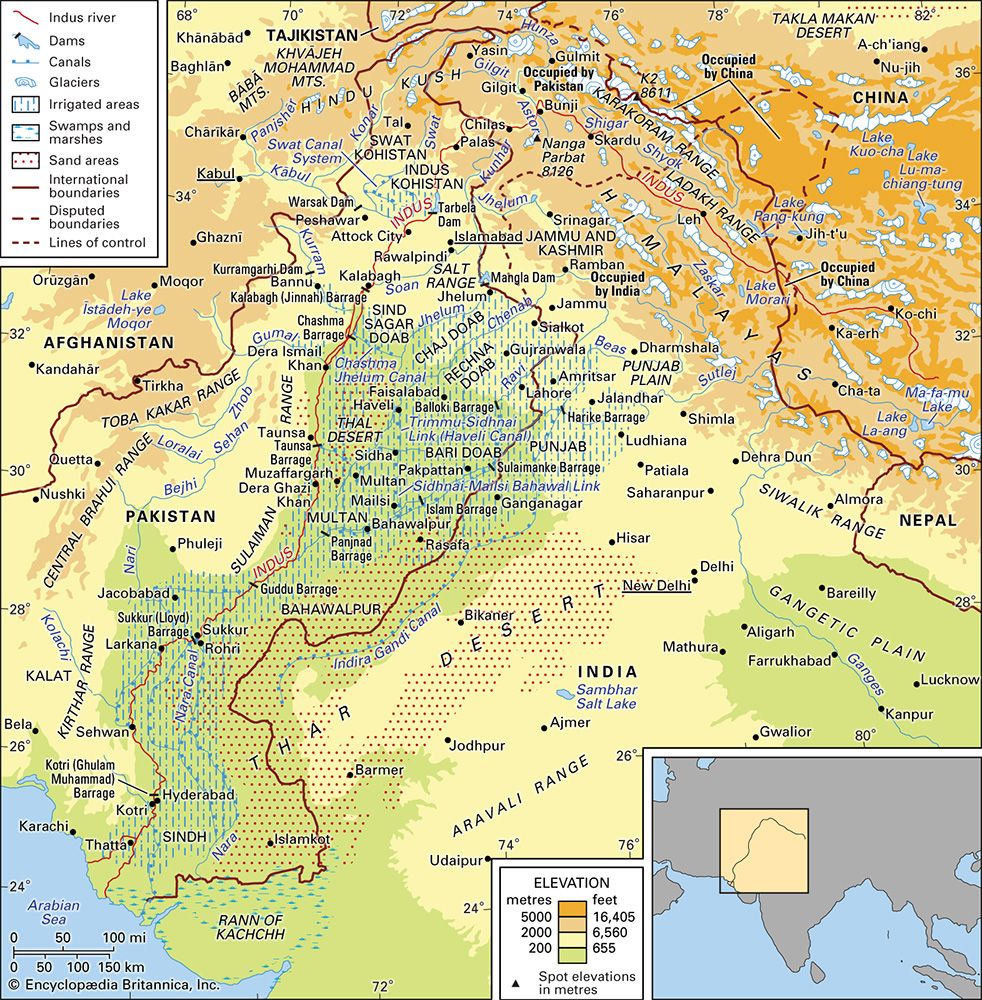
Major infrastructure projects along the Sutlej River have been central to regional development, primarily serving irrigation, flood control, and hydroelectric power generation. Key works include the Bhakra-Nangal Project, the Sirhind Canal, and the Sutlej Valley Project. Additionally, the Harike Barrage at the confluence of the Beas and Sutlej rivers channels water into the Indira Gandhi Canal, which sustains agriculture across vast desert regions in Rajasthan.123
These projects have significantly transformed local economies by enabling large-scale agriculture and industrial progress. However, such infrastructure also presents serious environmental and social challenges. Improperly managed canal irrigation can lead to waterlogging and soil salinization, where rising water tables and salt accumulation render land unsuitable for cultivation. Furthermore, while large dams are often viewed as symbols of modernization, they have faced criticism for causing ecological damage and displacing communities, thereby destroying traditional livelihoods. Addressing these impacts requires careful drainage management to preserve the long-term viability of the land.23
How do local communities along the Sutlej River use the river for transportation and trade?
The provided search results do not contain information regarding the use of the Sutlej River for transportation or trade. While the river is extensively utilized for irrigation and hydroelectric power, the available documentation focuses on these agricultural and industrial applications rather than navigation or commercial transport.
How has the Indus Waters Treaty affected the management and use of the Sutlej River?
The Indus Waters Treaty, signed in 1960 between India and Pakistan, fundamentally altered the management of the Sutlej River by resolving a long-standing dispute over water rights following the 1947 partition of British India.631
Prior to the treaty, the irrigation infrastructure of the Sutlej Valley was bifurcated, with headworks located in India and canals running through Pakistan, leading to significant supply disruptions. The 1960 agreement resolved this by assigning the flow of the three eastern rivers—the Ravi, Beas, and Sutlej—exclusively to India, while granting Pakistan exclusive rights to the western rivers (the Indus, Jhelum, and Chenab).613
Under this framework, India has utilized the Sutlej for extensive development, constructing major infrastructure such as the Bhakra-Nangal Project and the Harike Barrage. The latter channels water into the Indira Gandhi Canal, which is vital for irrigating vast desert regions in Rajasthan. While the treaty provided a stable framework for decades, recent geopolitical tensions have led to challenges, including India’s 2025 announcement to hold the treaty in abeyance following security incidents.631
What historical and cultural significance does the Sutlej River hold in South Asian civilization?
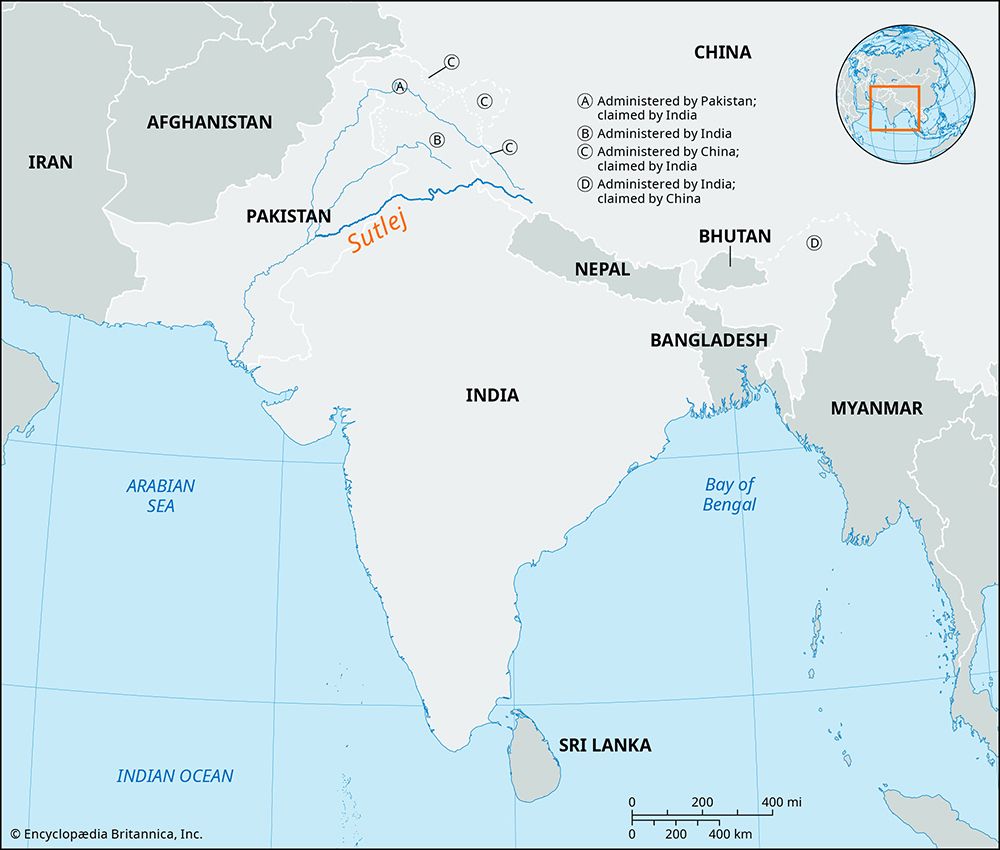
The Sutlej River holds significant historical importance as one of the five major tributaries that define the Punjab region, a name derived from the Persian words for “Five Rivers.” Rising in the Himalayas of Tibet, the river has been a central feature of the landscape since the dawn of the Indus civilization approximately 4,500 years ago.18
Historically, the river has been dynamic; evidence indicates that the Sutlej, along with other tributaries of the Indus River, has shifted its course over the centuries, influencing the settlement patterns and agricultural development of the region. In modern times, its cultural and economic significance is tied to its role as a vital water source. The river’s management became a focal point of regional history following the 1947 partition, eventually leading to the Indus Waters Treaty in 1960, which solidified its role in the development of large-scale irrigation projects like the Bhakra-Nangal Project.81
Sources
- Sutlej River — Encyclopædia Britannica
- water infrastructure in India - Dams — Encyclopædia Britannica
- Indus River - Irrigation of the Indus River — Encyclopædia Britannica
- Rajasthan - Agriculture — Encyclopædia Britannica
- Ganges River - Navigation — Encyclopædia Britannica
- Indus Waters Treaty: Top Questions — Encyclopædia Britannica
- Indus Waters Treaty — Encyclopædia Britannica
- Indus River - Hydrology of the Indus River — Encyclopædia Britannica
- Sutlej — Merriam-Webster
Published on · 3 min read