Sweet Gum
Sweet gum trees (genus Liquidambar) are valued for both their timber and their aromatic resins.
What are some common uses for sweet gum wood and resin?
Sweet gum trees (genus Liquidambar) are valued for both their timber and their aromatic resins.1
Uses of Sweet Gum Wood
The heartwood of the American sweet gum, often referred to as red gum or satin walnut, is a hard, reddish-brown wood. Due to its quality and appearance, it is commonly utilized in the manufacturing of fine furniture.12
Uses of Sweet Gum Resin
The trees are tapped to collect a fragrant balsam known as liquidambar or storax. These resins have several traditional and commercial applications:13
- Medicinal: Storax is used as an expectorant.3
- Perfumery: The fragrant nature of the resin makes it a useful ingredient in the production of perfumes.3
While the American sweet gum provides a useful balm, the most fragrant variety is typically collected from the Oriental, or Turkish, sweet gum (L. orientalis). Additionally, many species within the genus are cultivated as ornamental trees for their attractive foliage.13
How tall can sweet gum trees grow, and what is their typical lifespan?
The American sweet gum (Liquidambar styraciflua) is a large tree that can reach heights of up to 45 meters (150 feet) when growing in moist lowlands, though it typically reaches about half that height at maturity.1
Regarding their lifespan, the provided search results do not contain information about the typical longevity of sweet gum trees.
How do sweet gum trees contribute to fall foliage colors?
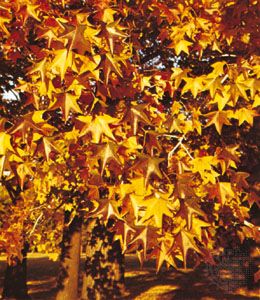
Sweet gum trees (genus Liquidambar) are widely cultivated as ornamental trees specifically for their showy and vibrant fall foliage.1
The American sweet gum (Liquidambar styraciflua) is particularly noted for its handsome leaves, which transition into a striking scarlet color during the autumn months. This dramatic change in leaf pigmentation is a primary reason the species is favored in landscaping and garden design. While other species within the genus are also grown for their aesthetic appeal, the American variety is distinct for the intensity of its autumnal display.1
What is a sweet gum tree and where is it commonly found?
A sweet gum is a deciduous tree belonging to the genus Liquidambar, which is the sole genus within the family Altingiaceae. These trees are characterized by their alternate, three- to seven-lobed palmate leaves, corky twigs, and distinctive spiny, round brown fruits that often persist through the winter.12
Sweet gums are native to regions across North America and Asia. The American sweet gum (Liquidambar styraciflua) is a prominent species found in North America, often valued for its timber and vibrant scarlet fall foliage. Other notable species include the Oriental, or Turkish, sweet gum (L. orientalis) and the Formosan gum (L. formosana), which is commonly cultivated in mild climates. Beyond their ornamental use, these trees are historically significant as sources of resin and high-quality wood used in furniture making.12
Sources
- sweet gum — Encyclopædia Britannica
- sweet gum — Merriam-Webster
- storax — Merriam-Webster
- Color Words to Describe Autumn Leaves | Gamboge — Merriam-Webster
Published on · 2 min read