Myriapod
Myriapods—a group comprising millipedes, centipedes, pauropods, and symphylans—appeared early in geological history and have evolved relatively little since…
How have myriapods evolved over time, and what is their evolutionary relationship to other arthropods?
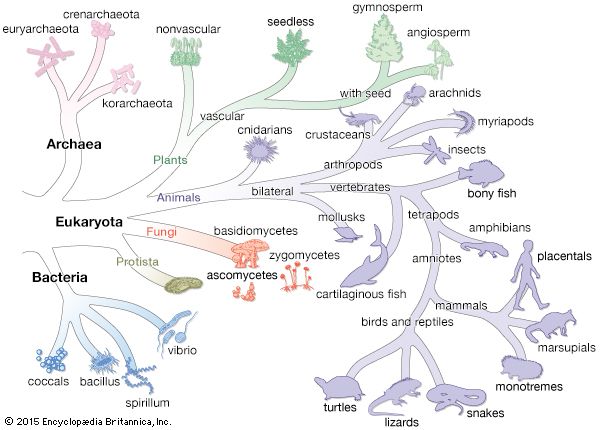
Myriapods—a group comprising millipedes, centipedes, pauropods, and symphylans—appeared early in geological history and have evolved relatively little since their emergence. While myriapod-like fossils date back to the Devonian Period, a clear fossil record for these groups is primarily established in the Carboniferous Period4.1
The evolutionary relationships within the phylum Arthropoda remain a subject of scientific debate. Traditionally, myriapods and insects were considered closely related due to shared terrestrial adaptations and body plans. However, modern molecular evidence suggests more complex lineages: some studies link insects more closely to crustaceans, while others associate myriapods with arachnids and horseshoe crabs. Additionally, some researchers propose that insects may have originated from an early symphylan-like ancestor, as symphylans exhibit several features required for the ancestral insect form. Because of these uncertainties, there is little consensus on how the major lines of arthropod evolution—trilobites, chelicerates, crustaceans, and myriapods—are related to one another.2345
What are some examples of well-known myriapod species?
Myriapods include a diverse range of species across several classes. Below are some well-known examples:
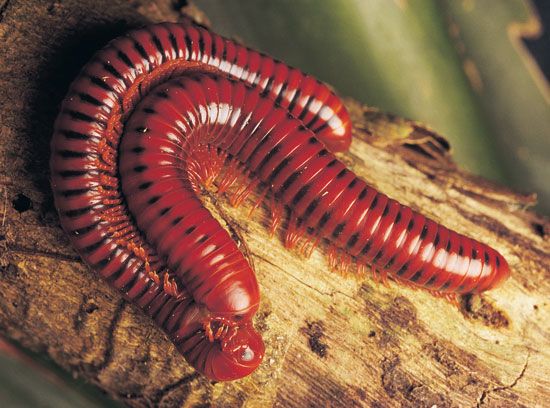
Millipedes (Class Diplopoda)
- Julus terrestris: A 25-mm species native to Europe that has been introduced to North America.8
- Oxidus gracilis: Commonly known as the greenhouse millipede, this species is often brightly colored and lacks eyes.8
- Narceus americanus: A conspicuous black-and-red millipede found in southeastern U.S. forests, reaching lengths of about 100 mm.8
- Archispirostreptus gigas: The giant African millipede, which is the largest extant species, growing up to 280 mm in length.8
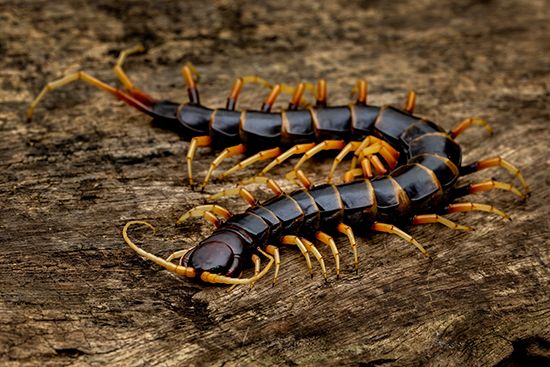
Centipedes (Class Chilopoda)
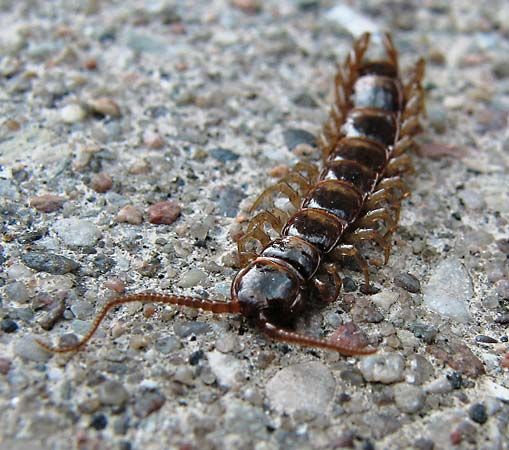
- House centipede (Scutigera coleoptrata): A common, long-legged species found in dwellings across Europe and North America, known for preying on insects like flies and roaches.19
- Scolopendra gigantea: A giant tropical centipede that can reach 280 mm and is capable of inflicting severe bites.1
- Soil centipedes (Order Geophilomorpha): Burrowing centipedes that move through soil by expanding and contracting their bodies.1
What is the largest known myriapod species, and how big can it grow?
The largest extant myriapod species is the giant African millipede (Archispirostreptus gigas), which can reach lengths of up to 280 mm (11 inches).8
However, in terms of historical records, the extinct invertebrate Arthropleura—a relative of modern centipedes and millipedes that lived during the Carboniferous Period—is considered one of the largest arthropods to have ever existed. Estimates based on fossilized armor segments suggest that this creature could have grown to more than 2 meters (6.6 feet) in length.8
What is the typical habitat and distribution of myriapods around the world?
Myriapods, a group that includes millipedes, centipedes, pauropods, and symphylans, are distributed worldwide but are most abundant and diverse in tropical and temperate forests.19
Habitat Preferences
Myriapods are highly dependent on stable conditions of moisture and shelter, as they generally lack the ability to tolerate seawater and have limited migratory capabilities. Their preferred habitats include:1
- Forests: They are most commonly found in leaf mold and forest floors, where they play a vital role in breaking down dead plant material.18
- Ground Cover: Many species remain hidden during the day under stones, bark, and ground litter.13
- Open and Arid Environments: While they thrive in forests, some species of millipedes and a larger number of centipedes inhabit grasslands, semiarid regions, and even desert conditions.1
- Human Dwellings: Occasionally, certain species are found in the dark corners of houses and other buildings, with the house centipede being the most common example in such environments.113
Because they are sensitive to environmental changes, myriapods serve as important indicators of land-water relationships and provide valuable insights into geographic dispersal.1
Sources
- myriapod — Encyclopædia Britannica
- arthropod — Encyclopædia Britannica
- insect - Origin of insects — Encyclopædia Britannica
- arthropod - Evolution and paleontology — Encyclopædia Britannica
- apterygote - Evolution and paleontology — Encyclopædia Britannica
- arthropod - Critical appraisal — Encyclopædia Britannica
- arthropod - Reproductive system and life cycle — Encyclopædia Britannica
- millipede — Encyclopædia Britannica
- centipede — Encyclopædia Britannica
- pauropod — Encyclopædia Britannica
- house centipede — Merriam-Webster
- arthropod - Size range — Encyclopædia Britannica
- arthropod - Distribution and abundance — Encyclopædia Britannica
Published on · 3 min read