Tegu
Tegu lizards are native to South America. They are highly adaptable reptiles that inhabit a wide variety of environments, including the Amazon Rainforest…
Where are tegu lizards native to, and in which habitats do they typically live?
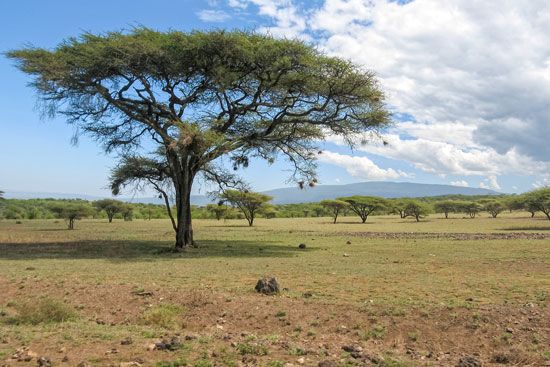
Tegu lizards are native to South America. They are highly adaptable reptiles that inhabit a wide variety of environments, including the Amazon Rainforest, savannas, and deciduous semiarid thorn forests.1
While they are naturally found in these tropical regions, some species—specifically the black-and-white tegu—have been introduced to other areas, such as Florida, where they are considered an invasive species due to their impact on local ecosystems.1
What are the main physical characteristics of tegu lizards?
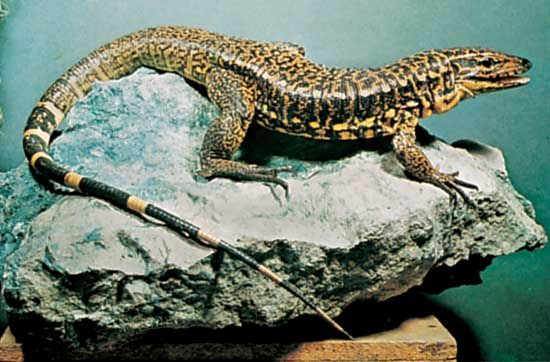
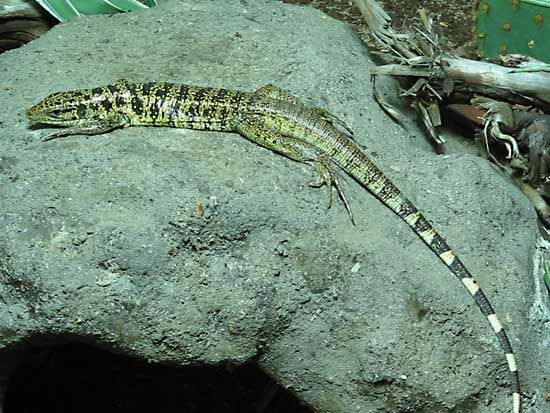
Tegu lizards, belonging to the genus Tupinambis, are large, carnivorous reptiles characterized by a streamlined body shape, a long tail, and powerful legs. Most species reach approximately 1 metre (3 feet) in length, though the black-and-white tegu (T. merianae) can grow up to 1.3 metres (about 4 feet).1
Their physical appearance is defined by several key features:
- Coloration: The background color of most tegus is black. Depending on the species, they may feature yellow, reddish, or white bands across the back, or broad lines extending down the body with irregular markings on the top surface.1
- Scales: Their scales are small, square, and arranged in regular, orderly rings around the body.1
- Sensory Organs: Like other teiids, tegus possess a specialized Jacobson’s organ—a chemoreceptor located on the roof of the mouth—which they use alongside their tongue to detect and discriminate chemical cues from prey and other lizards.1
These lizards are well-adapted for their environment, utilizing their robust build for survival in diverse habitats ranging from rainforests to semiarid thorn forests.1
How do tegu lizards compare to other large lizard species, such as monitor lizards or iguanas?
Tegu lizards (family Teiidae) and other large lizards, such as monitor lizards (family Varanidae) and iguanas (family Iguanidae), exhibit significant differences in their evolutionary history, physical traits, and ecological roles.
Evolutionary and Taxonomic Distinctions
- Tegus: Belong to the clade Autarchoglossa, which includes active foragers that utilize a well-developed chemosensory system and an extensible, hydrostatic tongue to detect chemical cues in their environment. They are native exclusively to the New World.7
- Monitor Lizards: Part of the infraorder Anguimorpha, monitor lizards are restricted to the Old World tropics and subtropics. They include the largest living lizard, the Komodo dragon, which can exceed 3 metres (10 feet) in length.72
- Iguanas: Members of the infraorder Iguania, iguanas are primarily found in the Americas. Unlike tegus and monitors, iguanids possess a fleshy, non-extensible tongue and typically use a “sit-and-wait” strategy to capture prey, rather than active foraging.87
Physical and Behavioral Comparisons
Feature
Tegus
Monitor Lizards
Iguanas
Tongue
Extensible, used for chemosensation
Extensible, used for chemosensation
Fleshy, non-extensible
Foraging
Active foragers
Active foragers
Sit-and-wait predators
Distribution
New World (Americas)
Old World (Africa, Asia, Australia)
Primarily Americas
Size Range
Up to 1.2 metres
Up to 3+ metres
Up to 2 metres
While both tegus and monitors are large, predatory lizards that can impact human livelihoods by preying on farm animals or eggs, they occupy different geographic regions and belong to distinct evolutionary lineages.27
Are there different species of tegu lizards, and if so, how do they differ?
There are approximately seven recognized species within the genus Tupinambis, though the taxonomy of these lizards continues to evolve as researchers identify new varieties. While they share a common genus and general physical traits—such as a streamlined body, powerful legs, and a long tail—they exhibit variations in size and coloration.1
Key Species and Variations
- Black-and-white tegu (T. merianae): This is the largest known species, capable of reaching lengths of up to 1.3 metres (about 4 feet). It is well-known for its distinct black-and-white coloration and has become a notable invasive species in Florida due to the pet trade.1
- Recent Discoveries: The diversity of the genus is highlighted by the relatively recent discovery of species such as T. longilineus and T. quadrilineatus, which were formally described in the mid-1990s. Scientists believe there are additional species that have yet to be formally classified.1
Shared Characteristics
Across all species, tegus generally display a black background color. Variations occur in the patterns of yellow, reddish, or white markings, which may appear as bands across the back or as broad lines running down the length of the body.1
We could dive deeper into the specific habitats these species occupy or discuss the impact of the commercial hide trade on their populations.
Sources
- tegu — Encyclopædia Britannica
- lizard - General features — Encyclopædia Britannica
- reptile - Central and South America — Encyclopædia Britannica
- Integument - Reptiles — Encyclopædia Britannica
- lizard - Embryonic development and sex determination — Encyclopædia Britannica
- Sexual dimorphism — Encyclopædia Britannica
- iguanid — Encyclopædia Britannica
- Are iguanodons and iguanas related? — Encyclopædia Britannica
- lizard - Annotated classification — Encyclopædia Britannica
Published on · 3 min read