Therapsid
While the Permian-Triassic extinction event caused a sharp reduction in the diversity of many tetrapod groups, including the loss of 80 percent of early…
How did therapsids survive the Permian-Triassic extinction event?
While the Permian-Triassic extinction event caused a sharp reduction in the diversity of many tetrapod groups, including the loss of 80 percent of early reptilian families, therapsids managed to survive the boundary crisis.1
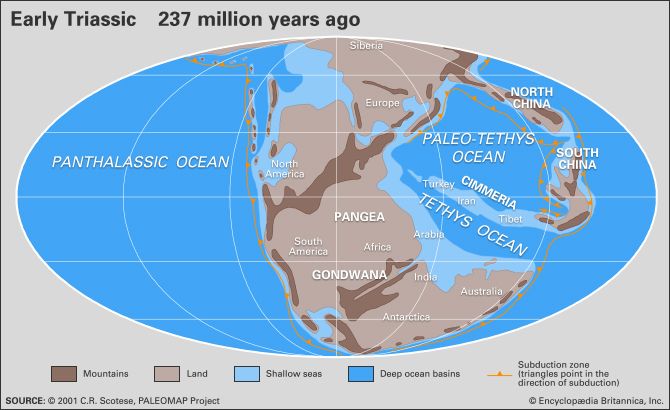
Their survival is often attributed to their advanced physiological traits. Therapsids were highly diversified and possessed skeletal structures and dentition that were remarkably similar to those of mammals. Notably, their success in the relatively high paleolatitudes of Gondwana suggests that they may have been capable of maintaining an elevated body temperature, a physiological advantage that likely helped them endure the environmental shifts of the period.2
Despite surviving the initial extinction, the group faced subsequent pulses of extinction in the Late Permian and eventually became virtually extinct by the end of the Triassic Period, potentially due to competition from more efficient predators such as thecodonts.1
What are the key characteristics that define therapsids?
Therapsids are a major clade of tetrapods that flourished during the Permian and Triassic periods. Often referred to as “mammal-like reptiles,” they are actually a distinct lineage that served as the evolutionary stock from which mammals emerged.12
Key characteristics defining therapsids include:
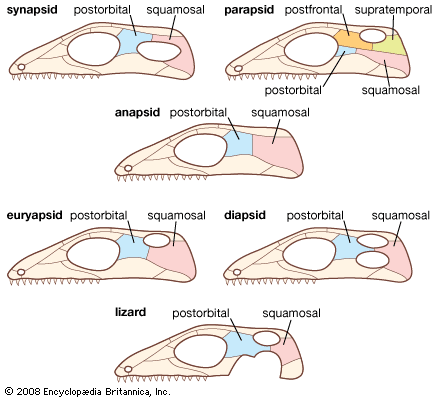
- Skull Structure: Like mammals, the therapsid skull featured a single opening in the temporal region, which was bounded below by a bony arch. In more advanced forms, a bony palate developed in the roof of the mouth, a feature also found in mammals.1
- Dentition: Most species exhibited differentiated teeth, including nipping incisors, large stabbing canines, and grinding cheek teeth, mirroring the specialized dentition of mammals.12
- Locomotion: Their limbs and limb girdles were specifically modified to support four-footed locomotion.1
- Physiology: Evidence from their success in high paleolatitudes suggests that therapsids may have been capable of maintaining an elevated body temperature, distinguishing them from typical ectothermic reptiles.2
- Jaw Anatomy: While they share many mammalian traits, their lower jaw remained primitive, composed of multiple bones rather than the single dentary bone found in mammals.16
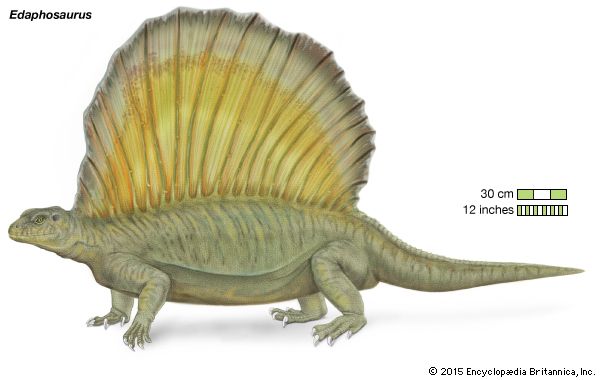
What major subgroups existed within the therapsid order?
The order Therapsida was a diverse group of tetrapods that included several distinct subgroups, categorized primarily by their dietary habits and evolutionary specializations:
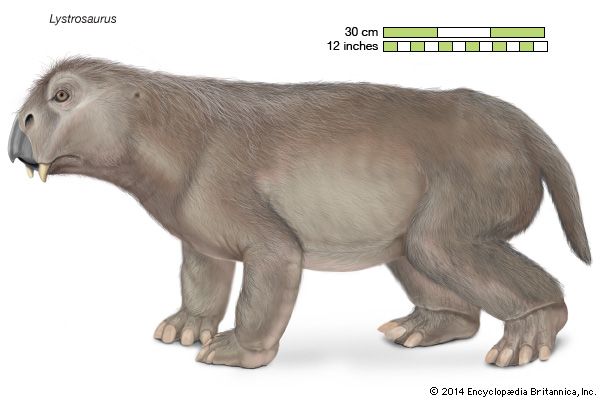
- Dicynodonts: A notable side branch of herbivorous therapsids, often called “two-tuskers.” They were characterized by the retention of upper canines, while their other teeth were replaced by a horny bill.1
- Gorgonopsians: Carnivorous therapsids that were particularly characteristic of the Permian Period.1
- Therocephalians: Another group of carnivorous therapsids that flourished during the Permian.1
- Cynodonts: Advanced representatives that appeared in the Triassic Period. This group is of particular evolutionary significance as it is the stock from which mammals eventually emerged.19
- Bauriamorphs: Advanced carnivorous therapsids that were also present during the Triassic.1
- Deinocephalians: A suborder of therapsids known from Permian fossils in southern Africa and Russia. They were notable for their massive skulls and heavy legs, with some species exceeding the size of a modern rhinoceros.1011
What significant adaptations did therapsids develop over time?
Over time, therapsids developed several significant adaptations that bridged the gap between primitive ancestors and modern mammals. These evolutionary changes occurred as a mosaic, with various features emerging at different rates to support more active lifestyles.113
Key adaptations included:
- Dentition: Therapsids evolved specialized, heterodont teeth, moving away from uniform tooth structures to a system featuring nipping incisors, large stabbing canines, and grinding cheek teeth.113
- Locomotion: They improved the mechanics of movement by shifting the plane of their limbs closer to the trunk, which allowed for more efficient, four-footed locomotion compared to the sprawling posture of earlier reptiles.113
- Skull and Palate: A major development was the formation of a bony secondary palate. This structure separated the oral and nasal cavities, allowing these animals to breathe while eating or suckling.113
- Musculature: The temporal musculature, which is responsible for closing the jaw, expanded significantly, providing greater power for feeding.13
- Physiological Shifts: While difficult to track in the fossil record, there is evidence that advanced therapsids began developing traits associated with endothermy, such as higher metabolic rates, which supported sustained activity levels.13
Sources
- therapsid — Encyclopædia Britannica
- Permian Period - Emergence of important reptiles — Encyclopædia Britannica
- Triassic Period - Terrestrial reptiles and the first mammals — Encyclopædia Britannica
- Permian extinction - Temperature crises — Encyclopædia Britannica
- Permian Period - Temperature crises — Encyclopædia Britannica
- reptile - Skull and dentition — Encyclopædia Britannica
- dinosaur - Ectothermy and endothermy — Encyclopædia Britannica
- Why are reptiles cold-blooded? — Encyclopædia Britannica
- cynodont — Encyclopædia Britannica
- dinosaur - Classification — Encyclopædia Britannica
- Deinocephalia — Merriam-Webster
- Dinocephalia — Merriam-Webster
- mammal - The evolution of the mammalian condition — Encyclopædia Britannica
- mammal - Teeth — Encyclopædia Britannica
- dinosaur - The plant eaters — Encyclopædia Britannica
- dinosaur - Clues to dinosaurian metabolism — Encyclopædia Britannica
- palate — Encyclopædia Britannica
Published on · 4 min read