Thecodontian
"Thecodontian" is an archaic term formerly used to describe a group of primitive archosaurs from the Triassic Period. The name is derived from the Greek for…
What is thecodontian?
“Thecodontian” is an archaic term formerly used to describe a group of primitive archosaurs from the Triassic Period. The name is derived from the Greek for “socket-toothed,” referring to the characteristic way their teeth were set in sockets rather than in shallow grooves.12
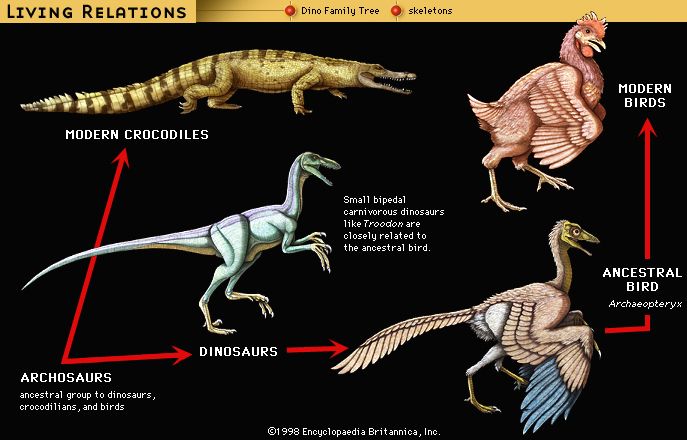
Historically, these reptiles were thought to represent the ancestral stock from which all other archosaurs—including dinosaurs, birds, pterosaurs, and crocodiles—evolved. While the term “thecodont” or the order “Thecodontia” appears in older scientific literature, it is now considered an outdated classification because it grouped together a diverse array of early archosaurs that do not necessarily form a single, exclusive evolutionary lineage. Modern paleontology instead focuses on the specific phylogenetic relationships within the two main branches of archosaurs: the Pseudosuchia and the Ornithosuchia.1342
What are the main characteristics of archosaurs?
Archosaurs, known as “ruling reptiles,” are a diverse subclass that includes crocodiles, birds, dinosaurs, and pterosaurs. They are defined by several distinct anatomical features that distinguish them from other reptiles.4
Key Characteristics
- Skull Openings: Archosaurs possess an antorbital fenestra (an opening on the snout in front of the eye) and a mandibular fenestra (an opening in the lower jaw).4
- Dentition: Unlike other living reptiles, whose teeth are set in shallow grooves, archosaur teeth are firmly set in sockets.4
- Body Proportions: Most members of the group are characterized by long hind legs and shorter forelimbs.4
- Reproduction: While most are egg-layers, there is evidence that some species were capable of giving birth to live young.4
Evolutionary Branches
Archosaurs are divided into two primary branches based on their ankle structure and locomotion:
- Pseudosuchia: Includes crocodiles and their relatives. They typically have a flexible ankle joint allowing for a sprawling gait or a “high walk” and are generally quadrupedal.4
- Ornithosuchia: Includes birds, dinosaurs, and pterosaurs. Their ankles move in a single plane, facilitating an upright, typically bipedal gait.4
How did thecodont teeth differ from other reptiles?
The term “thecodont” literally translates to “socket-toothed,” which describes the primary way these primitive archosaurs differed from many other reptiles.1
While other living reptiles typically have teeth set in shallow grooves along the jaw, thecodonts—and indeed all archosaurs—possess teeth that are firmly anchored within distinct sockets in the jawbone. In contrast, many modern reptiles, such as lizards, commonly exhibit other modes of tooth implantation, such as pleurodonty (where teeth are fused to the inner side of the jaw wall) or acrodonty (where teeth are fused to the crest of the bone).74
Why are thecodonts considered ancestors to dinosaurs and birds?
The term “thecodont” is an archaic classification that was once used to describe a group of primitive archosaurs believed to be the ancestral stock for all other archosaurs, including dinosaurs, birds, and pterosaurs.1
Modern paleontology recognizes that “thecodontian” is not a distinct evolutionary group but rather a name for the basal, or most primitive, members of the Archosauria subclass. These early archosaurs are considered ancestral because they possessed the foundational anatomical features that define the entire lineage, such as:4
- Socketed teeth: The defining characteristic from which the name “thecodont” (socket-toothed) is derived.14
- Diapsid skull: A skull structure featuring two large openings behind the eye.4
- Mandibular fenestra: An additional opening located in the lower jaw.4
Because these traits are shared by dinosaurs and birds, early researchers hypothesized that these primitive “thecodonts” represented the ancestral lineage from which more specialized archosaurs evolved. As the fossil record has improved, scientists now view this transition as a complex, stepwise evolutionary process rather than a simple descent from a single “thecodont” group.4
Sources
- thecodontian — Encyclopædia Britannica
- bivalve - Critical appraisal — Encyclopædia Britannica
- thecodont — Merriam-Webster
- archosaur — Encyclopædia Britannica
- Thecodontia — Merriam-Webster
- tritylodont — Encyclopædia Britannica
- lizard - Dentition — Encyclopædia Britannica
- dinosaur - Dinosaur ancestors — Encyclopædia Britannica
- tetraodontiform - Critical appraisal — Encyclopædia Britannica
Published on · 3 min read