Toothed Whale
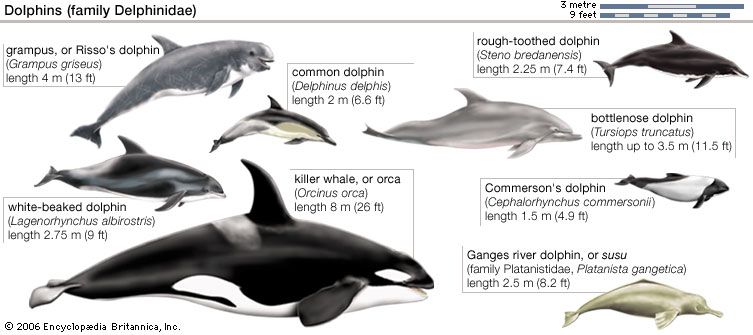
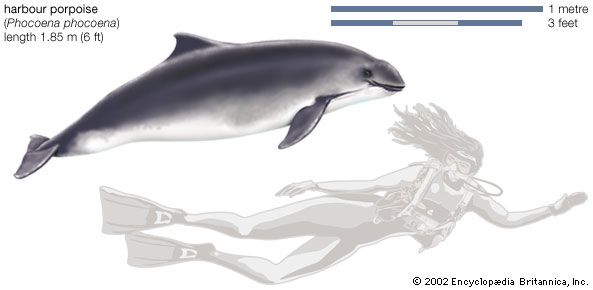
Toothed whales—a group that includes dolphins, porpoises, and sperm whales—utilize echolocation as a sophisticated form of biological sonar to navigate and…
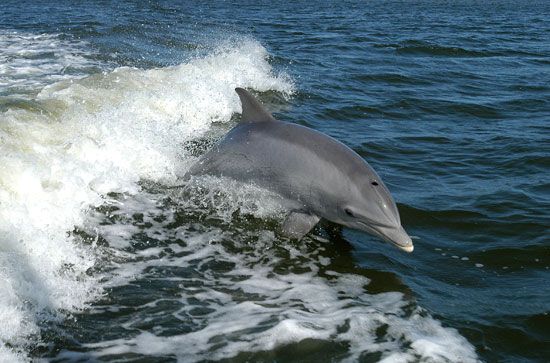
How do toothed whales use echolocation, and why is it important for their survival?
Toothed whales—a group that includes dolphins, porpoises, and sperm whales—utilize echolocation as a sophisticated form of biological sonar to navigate and hunt in the ocean.123
How It Works
Toothed whales produce high-pitched clicking sounds by passing air through phonic lips in their nasal passages beneath the blowhole. These sounds are focused through the melon, a fatty organ on the forehead, and projected into the water. When these sound waves strike an object, they bounce back as echoes. The whale receives these returning vibrations through an acoustic window in its lower jaw, which conveys the energy to the inner ear. Because sound travels faster in water than in air, these animals use high frequencies—ranging from 5,000 to 150,000 hertz—to achieve precise object discrimination.435
Importance for Survival
Echolocation is vital for survival in the vast, often featureless, or murky marine environment. It allows whales to:23
- Navigate: Map their surroundings and avoid obstacles.12
- Hunt: Locate and track prey, such as fish or squid, even in total darkness or poor visibility.423
- Discriminate: Determine an object’s size, shape, and distance with high accuracy.26
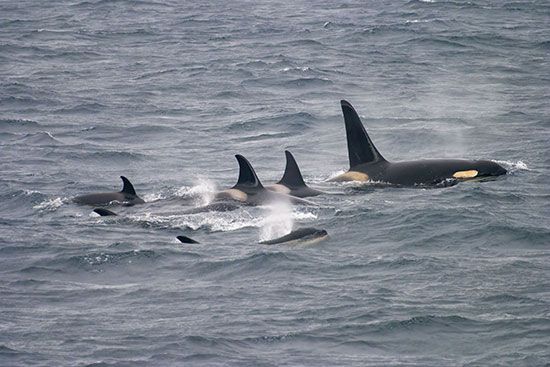
What is the social structure of toothed whale pods?
Toothed whales, including dolphins and sperm whales, live in social groups commonly referred to as pods, schools, herds, or gams. These groups are characterized by a high degree of flexibility and complex social dynamics.789
Social Structure and Dynamics
- Flexible Membership: Pods often exhibit fluid membership, where individuals form long-term bonds but may join or leave groups over time. While some groups, such as those of sperm whales, typically consist of 15 to 20 individuals, these pods can occasionally coalesce into much larger aggregations numbering over 1,000.978
- Family and Alliances: The core of these groups is often a mother and her calf, which may expand into a nuclear family or a cluster of closely related individuals. In some dolphin populations, females cooperate to care for calves in a shared “nursery” arrangement, while males may form alliances to assist with mating and defense.79
- Communication and Memory: These animals possess exceptional social memory, allowing them to recognize individuals even after decades of separation. They use complex communication systems, including “signature whistles” that function like names to identify individuals to others. Sperm whales, specifically, communicate using series of clicks called codas, with evidence suggesting that different communities develop unique regional dialects and can even share defensive behaviors with other pods.98
- Cooperative Behavior: Social structure is reinforced through epimeletic behavior, where healthy members support sick or injured individuals. Furthermore, play is a significant social activity that allows younger members to practice behaviors, such as aggression, that are essential for their future social roles.7
How do different species of toothed whales communicate with each other?
Toothed whales communicate through a sophisticated array of sounds produced by passing air through nasal passages rather than using a larynx like baleen whales. Their vocalizations, which typically range from 5 to 150 kilohertz, serve various social and environmental purposes.127
Communication Methods
- Signature Whistles: Many dolphins develop unique “signature whistles” that function similarly to human names, allowing individuals to identify themselves to others in their group.4
- Codas: Sperm whales communicate using rhythmic patterns of clicks known as codas. Recent research suggests these patterns may function like a phonetic alphabet. These whales exhibit complex social interactions, such as rubato—where they adjust the tempo of a coda in response to others—and ornamentation, where they add extra clicks to the end of a sequence.7
- Diverse Vocalizations: Beyond clicks and whistles, toothed whales produce various sounds including grunts, moans, and squeaks. The specific meaning of these signals often depends on their pitch, rate, and structure.7
While these sounds facilitate social bonding and information sharing, toothed whales also use high-frequency clicks for echolocation to navigate and hunt, distinguishing these signals from purely communicative ones.1243
How have toothed whales adapted to deep-sea diving, and what unique physiological features do they possess?
Toothed whales, such as sperm whales and beaked whales, have evolved remarkable physiological adaptations to survive the extreme pressures and oxygen demands of deep-sea diving.131014
Physiological Adaptations
- Oxygen Storage: These mammals possess significantly higher concentrations of myoglobin in their muscles compared to terrestrial animals. This protein acts as an efficient oxygen-storage unit, allowing them to remain submerged for extended periods—sometimes over an hour—by providing a steady supply of oxygen to working muscles.148
- Pressure Tolerance: Unlike humans, who suffer from thoracic squeeze at depth, toothed whales have evolved elastic chest cavities that prevent lung collapse or tissue damage under intense pressure. Their bodies are also adapted to manage gases in the bloodstream more conservatively during descent and ascent.14
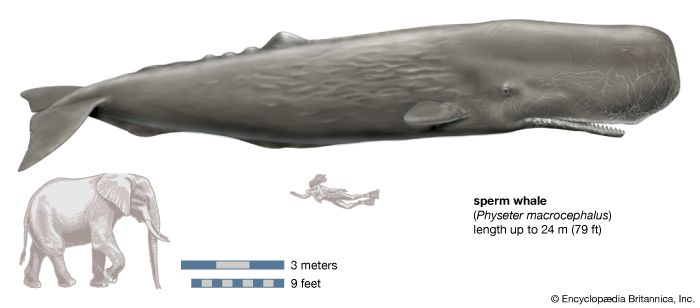
- The Spermaceti Organ: Unique to sperm whales, this massive, fluid-filled structure may assist in diving by acting as a buoyancy regulator. By manipulating the temperature and density of the oil within, the whale may be able to adjust its buoyancy to facilitate efficient movement during deep dives.10
- Respiratory Efficiency: These whales have developed specialized breathing patterns, often spending short periods at the surface to rapidly exchange air before embarking on prolonged, deep-sea foraging trips.131015
Sources
- sound reception - Echolocation in other mammals — Encyclopædia Britannica
- Echolocation — Encyclopædia Britannica
- Why do whales sing? — Encyclopædia Britannica
- whale vocalization — Encyclopædia Britannica
- Simocetus — Encyclopædia Britannica
- bat - Orientation — Encyclopædia Britannica
- How intelligent are dolphins? — Encyclopædia Britannica
- What do whales eat? — Encyclopædia Britannica
- cetacean - Social behaviour — Encyclopædia Britannica
- sperm whale — Encyclopædia Britannica
- cetacean - Feeding — Encyclopædia Britannica
- cetacean - Sound production and communication — Encyclopædia Britannica
- How long can whales hold their breath? — Encyclopædia Britannica
- cetacean - Locomotor adaptations — Encyclopædia Britannica
- Do whales have teeth? — Encyclopædia Britannica
- cetacean - Feeding adaptations — Encyclopædia Britannica
- cetacean - Breathing and diving — Encyclopædia Britannica
- thoracic squeeze — Encyclopædia Britannica
- Myoglobin — Encyclopædia Britannica
Published on · 5 min read