Tournaisian Stage
The Tournaisian Stage is the lowest and first of three intercontinental stages of the Mississippian Subsystem, which is part of the Carboniferous Period)…
What is the Tournaisian Stage, and where does it fit in the geological time scale?
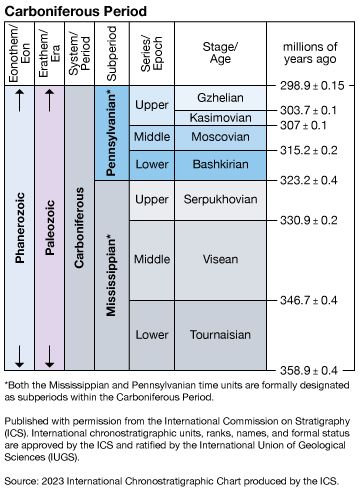
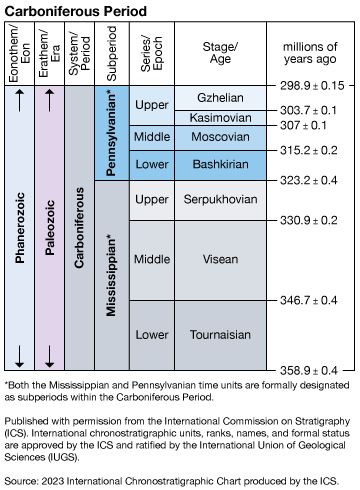
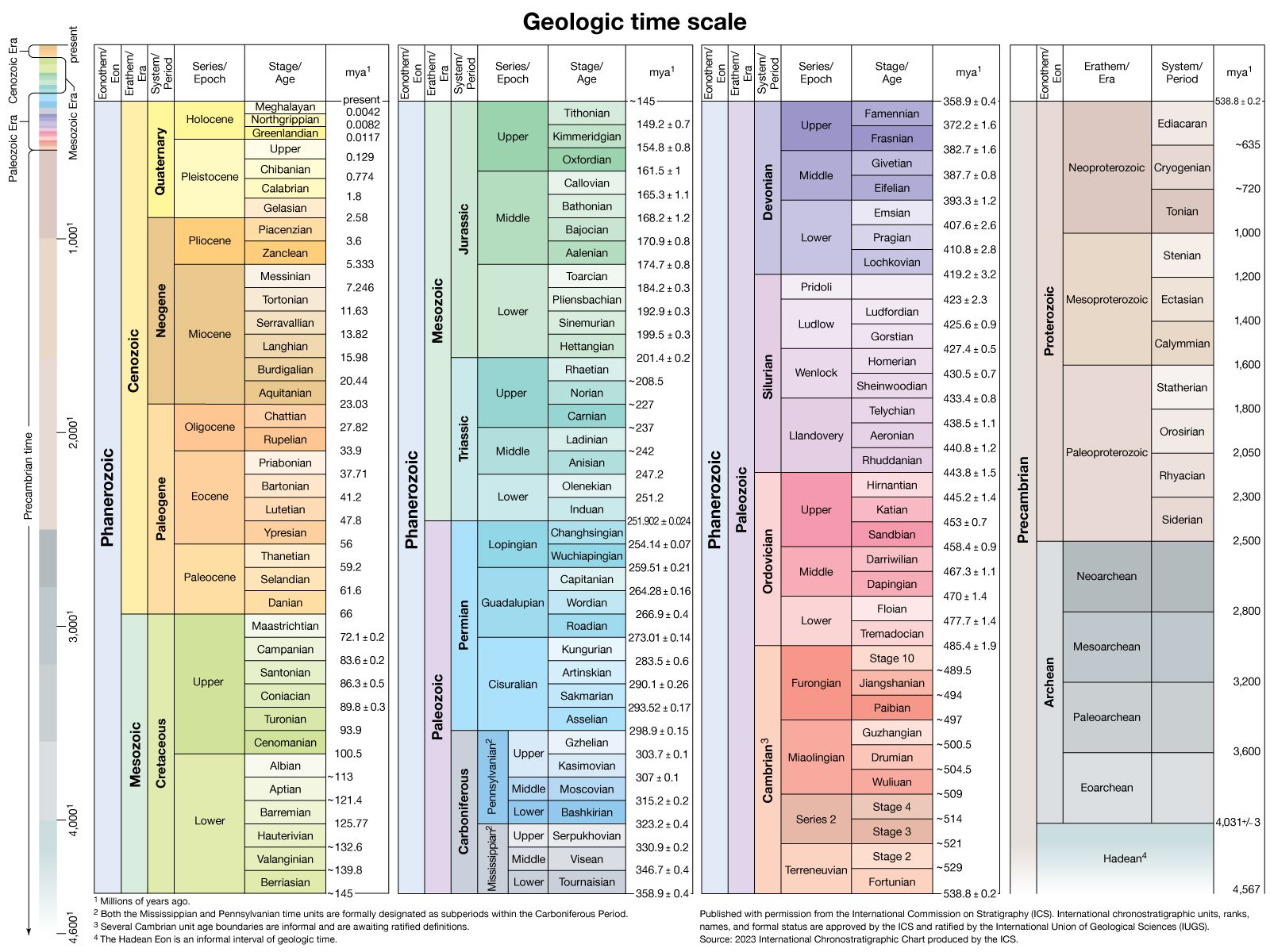
The Tournaisian Stage is the lowest and first of three intercontinental stages of the Mississippian Subsystem, which is part of the Carboniferous Period), which is part of the Carboniferous Period. It encompasses all rocks deposited during the Tournaisian Age, which occurred approximately 358.9 million to 346.7 million years ago.1
The stage is named after limestone exposures near Tournai, Belgium. Geologically, it follows the Famennian Stage of the Devonian Period and is succeeded by the Viséan Stage. The base of the Tournaisian is defined by the first appearance of the conodont Siphonodella sulcata, a marker ratified by the International Commission on Stratigraphy.1
The Carboniferous Period itself is a major interval of the Paleozoic Era, known for its coal-bearing strata and the transition of marine environments as sea levels fluctuated.23
What are the key characteristics of the rocks and fossils found in Tournaisian strata?
Tournaisian strata are characterized by specific lithological and paleontological features that define the beginning of the Carboniferous Period.
Rock Characteristics
The stage is named for its type locality near Tournai, Belgium, where the strata consist primarily of fine-grained limestone interspersed with shaly intervals. These deposits represent the marine environments prevalent during the early Mississippian Subperiod.1
Fossil Assemblages
The base of the Tournaisian is marked by the first appearance of specific index fossils, which allow geologists to correlate these rocks globally:
- Conodonts: The primary marker is the primitive chordate Siphonodella sulcata, which appears in sequence with its evolutionary precursor, S. praesulcata.1
- Ammonoids: The appearance of the ammonoid Gattendorfia is closely associated with the base of the stage.1
- Microfossils: The strata contain smaller calcareous foraminifers and palynomorphs, which are microscopic remains of various plant and animal structures.1
The transition to the overlying Viséan Stage is marked by the appearance of the foraminifer Eoparastaffella simplex and the conodont Gnathodus homopunctatus.1
How does the Tournaisian Stage compare to the stages that come before and after it?
The Tournaisian Stage serves as a critical transitional interval in the geological record, marking the beginning of the Carboniferous Period and the Mississippian Subsystem. Its position relative to the preceding and succeeding stages is defined by distinct biological and stratigraphic markers.
Comparison with Adjacent Stages
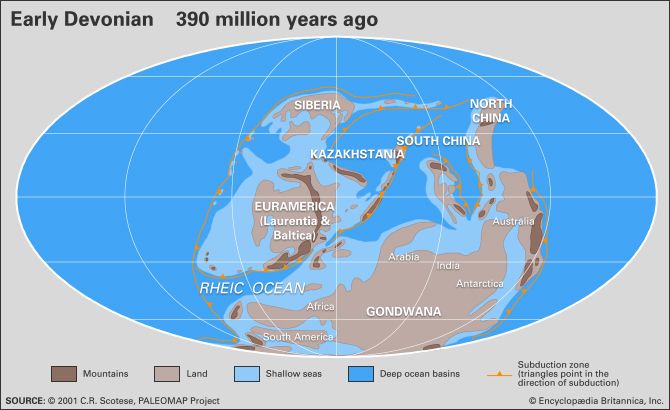
- Preceding Stage (Famennian): The Tournaisian follows the Famennian Stage, which was the final division of the Devonian Period. The boundary between these two is marked by a significant evolutionary shift in conodont populations, specifically the first appearance of Siphonodella sulcata and its precursor S. praesulcata, which signals the start of the Carboniferous.14
- Succeeding Stage (Viséan): The Tournaisian is succeeded by the Viséan Stage. The transition is identified by the first appearance of the foraminifer Eoparastaffella simplex and the conodont Gnathodus homopunctatus. While the Tournaisian is characterized by fine-grained limestones, the Viséan is often associated with different facies, such as the marbre noir (black limestone) found in parts of Belgium.15
While the Famennian was defined by major extinction events and anoxic conditions, the Tournaisian represents the establishment of the Mississippian marine environments, which were typified by shallow-water limestones and a diverse array of crinoids, bryozoans, and brachiopods.146
How does the Tournaisian Stage relate to the evolution of early land plants and animals?
The Tournaisian Stage (358.9 to 346.7 million years ago) represents the initial interval of the Carboniferous Period, a time characterized by significant transitions in both marine and terrestrial ecosystems.
Terrestrial Evolution
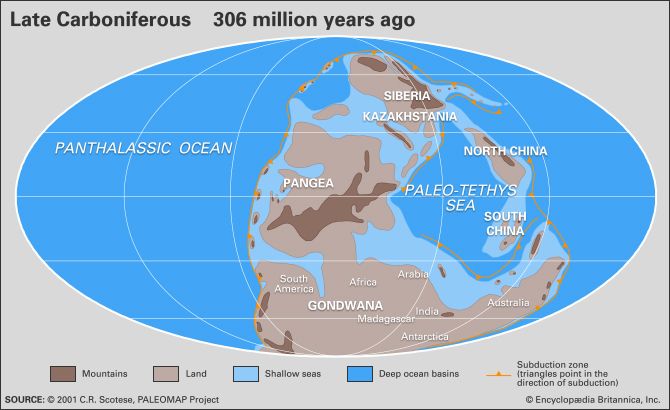
While the Tournaisian is primarily defined by its marine limestone deposits, it serves as a critical period in the broader context of terrestrial evolution. By this time, vascular land plants had already become established, having evolved from earlier green algae ancestors. These plants, which ranged from small shrubs to large trees, were essential in shaping the terrestrial environments that would later support the peak development of amphibians and the emergence of reptiles during the subsequent Pennsylvanian subperiod.18
Regarding animals, while insects had occupied land since the Devonian Period, the fossil record indicates that winged insects likely evolved during the Mississippian Subperiod, which includes the Tournaisian. Although definitive winged insect fossils are not well-represented in Tournaisian strata, this interval was a foundational phase for the diversification of terrestrial arthropods that would later reach massive sizes in the Pennsylvanian.19
Sources
- Tournaisian Stage — Encyclopædia Britannica
- Carboniferous Period — Encyclopædia Britannica
- Mississippian Subperiod — Encyclopædia Britannica
- Viséan Stage — Encyclopædia Britannica
- Famennian Stage — Encyclopædia Britannica
- Carboniferous Period - Distinctive features — Encyclopædia Britannica
- Devonian Period - Significant geologic events — Encyclopædia Britannica
- A Journey Through Time Since the Precambrian - Carboniferous Period: 358.9 million to about 298.9 million years ago — Encyclopædia Britannica
- Carboniferous Period - Invertebrates — Encyclopædia Britannica
- Ordovician Period - Earliest land plants — Encyclopædia Britannica
- Carboniferous Period - Mississippian limestones — Encyclopædia Britannica
- phylogeny - Evolution of land plants — Encyclopædia Britannica
Published on · 3 min read