Trapdoor Spider
Trapdoor spiders have evolved remarkable adaptations to survive as reclusive, burrow-dwelling ambush predators. Their primary survival strategy involves…
Are there any interesting adaptations or behaviors that trap-door spiders have developed for survival?
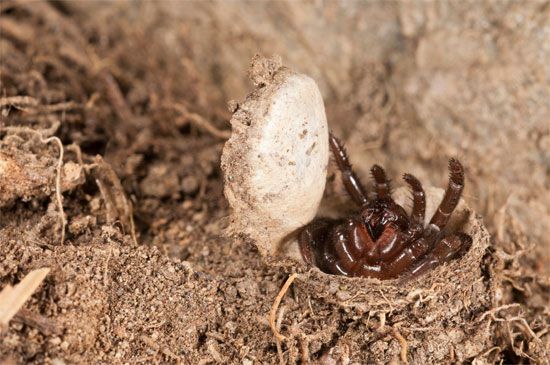
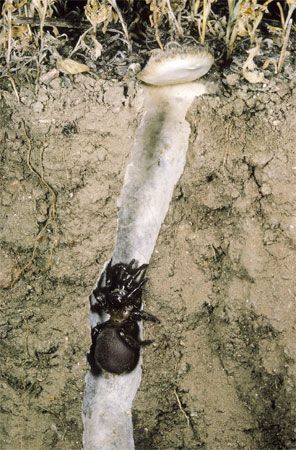
Trapdoor spiders have evolved remarkable adaptations to survive as reclusive, burrow-dwelling ambush predators. Their primary survival strategy involves constructing sophisticated burrows lined with silk, featuring a camouflaged, silken-hinged door that allows them to remain hidden while waiting for prey.12
Key survival behaviors and adaptations include:
- Defensive Strength: The California trapdoor spider is known for its immense strength; when threatened, it pulls its door shut and braces against the burrow walls, allowing it to resist forces up to 38 times its own body weight.12
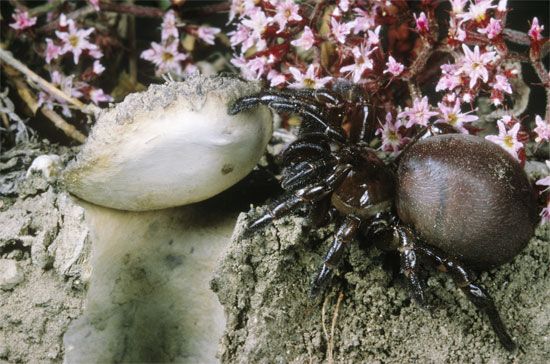
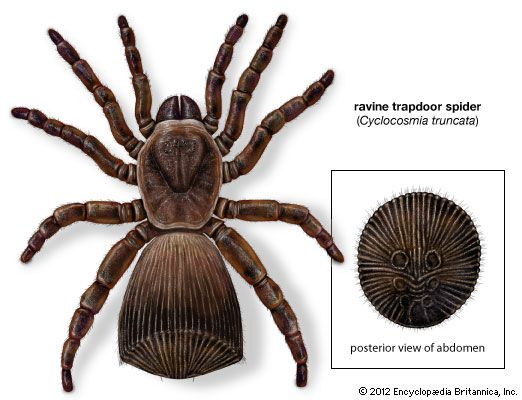
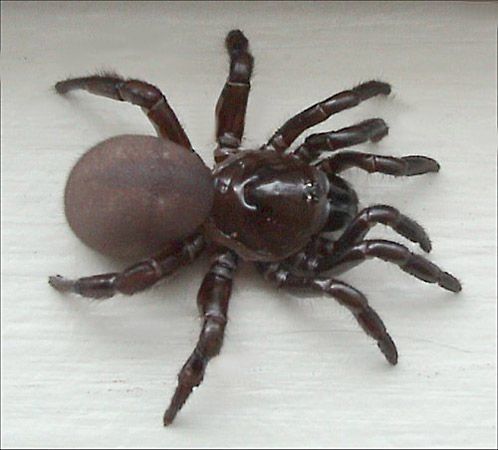
- Physical Shielding: The ravine trapdoor spider possesses a uniquely shaped abdomen that acts as a pluglike shield, protecting it from parasitoid wasps and other predators.1
- Excavation Tools: Many species are equipped with a rastellum—a series of spines on their chelicerae—specifically adapted for digging their burrows.12
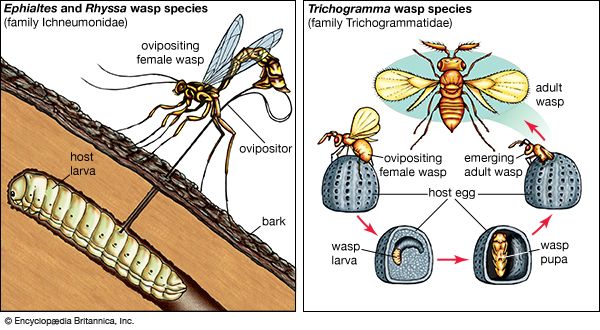
- Environmental Modification: To deter predators like spider wasps, these spiders may reinforce their doors with extra layers of silk or seal themselves inside during peak predator activity.2
How do trap-door spiders differ from other types of spiders in appearance and behavior?
Trapdoor spiders are distinct from many other spiders primarily due to their classification as mygalomorphs, a group that includes tarantulas. This classification dictates both their physical structure and their behavioral patterns.13
Physical Differences
- Jaw Movement: Unlike araneomorph spiders (the most common group), which have chelicerae that move sideways and together, trapdoor spiders have chelicerae that move forward and down.14
- Excavation Tools: Many trapdoor spiders possess a rastellum—a series of spines on their chelicerae—specifically adapted for digging their subterranean burrows.13
- Body Build: They are generally characterized by a stout body, a fused cephalothorax, and relatively short, thick legs.13
Behavioral Differences
- Ambush Predation: While many spiders actively hunt or build elaborate webs to catch prey, trapdoor spiders are reclusive ambush predators. They spend almost their entire lives inside a silk-lined burrow, waiting for prey to pass by the entrance.13
- Burrow Construction: They construct a sophisticated, camouflaged, silken-hinged door. When threatened, they exhibit a unique defensive behavior: they pull the door shut and brace themselves against the burrow walls, allowing them to resist significant external force.153
In which regions of the world can trap-door spiders be found?
Trapdoor spiders are found in various regions across the globe, primarily inhabiting tropical and subtropical environments. Their distribution is widespread, though specific species often have limited ranges due to their reclusive nature and tendency not to disperse far from their mother’s burrow.1
Key regions and habitats include:
- North America: Various species are found throughout the continent. For example, the California trapdoor spider is endemic to cliffs and sunny hillsides in southern California. Other species, such as the ravine trapdoor spider, inhabit riverbanks and ravines in Alabama, Georgia, and Tennessee. Additionally, Cyclocosmia torreya is found in northern Florida and southern Georgia.164
- Mexico and Central America: Species such as C. loricata are found in Mexico and potentially Guatemala6.
- Asia: Several species within the genus Cyclocosmia are native to Asia.4
- United States: Trapdoor spiders are particularly common in the southwestern United States.1
What are the unique characteristics of trap-door spiders that set them apart from other arachnids?
Trapdoor spiders are distinguished from other spiders primarily by their classification as mygalomorphs, which dictates several unique physical and behavioral traits.1
Key Characteristics
- Jaw Structure: Unlike the more common araneomorph spiders, whose chelicerae move sideways and together, trapdoor spiders possess chelicerae that move forward and down. Many species also feature a rastellum—a rake-like structure of spines on their jaws—specifically adapted for excavating their burrows.1347
- Burrowing Behavior: These spiders are reclusive, spending most of their lives in silk-lined subterranean tunnels. They are famous for constructing a camouflaged, silken-hinged door at the entrance, which they use to ambush passing insects and other arthropods.17
- Defensive Adaptations: When threatened, they exhibit remarkable strength by pulling their trapdoor shut and bracing themselves against the burrow walls. Some species, such as the ravine trapdoor spider, use their uniquely shaped abdomens as a plug-like shield to protect themselves from predators.1
Sources
- trapdoor spider — Encyclopædia Britannica
- California trapdoor spider — Encyclopædia Britannica
- spider - Distinguishing taxonomic features — Encyclopædia Britannica
- California trapdoor spider: Top Questions — Encyclopædia Britannica
- trapdoor spider — Merriam-Webster
- ravine trapdoor spider — Encyclopædia Britannica
- rastellus — Merriam-Webster
Published on · 3 min read