Ravine Trapdoor Spider
The ravine trapdoor spider (Cyclocosmia truncata) is a rare, reclusive North American spider found in Georgia, Alabama, and Tennessee. As a member of the…
What is ravine trapdoor spider?
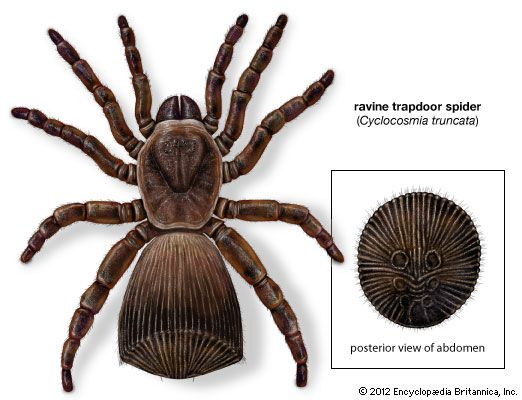
The ravine trapdoor spider (Cyclocosmia truncata) is a rare, reclusive North American spider found in Georgia, Alabama, and Tennessee. As a member of the infraorder Mygalomorphae, it is a burrowing species that constructs vertical, silk-lined tunnels in damp, shaded slopes.12
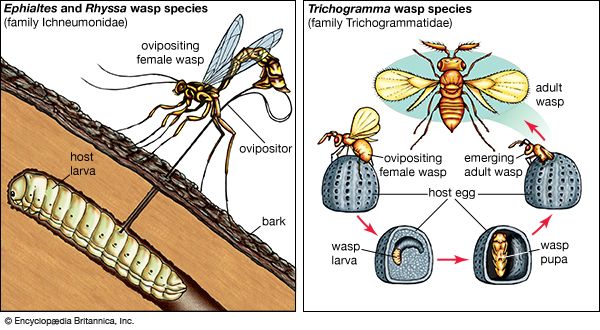
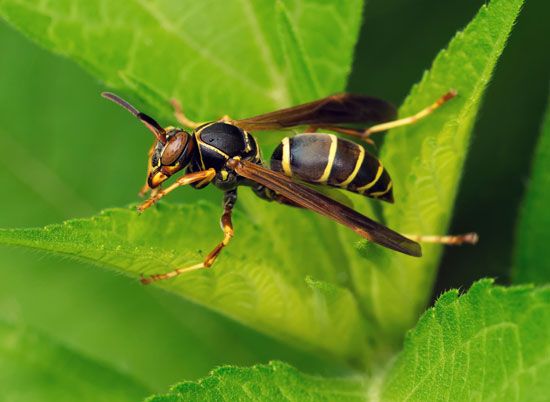
The spider is best known for its unique, stylized abdomen, which ends in a tough, flat, circular shield. When threatened by predators like parasitoid wasps, the spider retreats headfirst to the bottom of its burrow, using this shield as a plug to block the entrance and prevent extraction.23
While its bite is not considered dangerous to humans, the species is potentially vulnerable to extinction due to its limited range and specific habitat requirements. Females are long-lived, sometimes reaching 12 years of age, and spend nearly their entire lives within their burrows.2
How does the ravine trapdoor spider’s abdominal shield protect it from predators?
The ravine trapdoor spider (Cyclocosmia truncata) utilizes its uniquely shaped abdomen as a specialized defensive tool to survive encounters with predators, such as parasitoid wasps.1
The spider’s abdomen terminates in a tough, nearly flat, circular shield that features distinct stylized grooves and indentations. When the spider senses a threat, it retreats headfirst into its burrow. Once inside, it positions this hardened abdominal shield to act as a plug, effectively sealing the burrow entrance. By creating this physical barrier, the spider prevents predators from entering the tunnel and reaching its vulnerable body.21
What are the main differences between mygalomorph spiders and other types of spiders?
Mygalomorph spiders (Infraorder Mygalomorphae) are distinct from other spider groups, primarily the Araneomorphae (araneomorph spiders), based on several key anatomical and physiological features:
Jaw Movement
The most fundamental difference lies in the orientation and movement of the chelicerae (jaws). Mygalomorphs are “orthognath,” meaning their fangs move in a vertical, forward-and-down motion. In contrast, araneomorph spiders are “labidognath,” with fangs that move sideways and toward each other in a pinching motion.67
Respiratory Systems
Respiratory anatomy differs significantly between the two groups:
- Mygalomorphs: Typically possess two pairs of book lungs. Because they often grow to larger sizes, many rely exclusively on these book lungs for gas exchange.78910
- Araneomorphs: Most possess only one pair of book lungs, often supplemented by a system of tracheal tubes for more efficient gas exchange, which is particularly useful for smaller, faster-moving species.79
Reproductive Anatomy and Longevity
- Reproductive Structures: Female mygalomorphs lack an epigynum (a hardened external genital plate), whereas it is a standard feature in most female araneomorphs.67
- Life Cycle: Mygalomorphs are generally long-lived, often requiring several years to reach sexual maturity, whereas many araneomorphs mature much more rapidly.711
Other Distinctions
- Heart Structure: Mygalomorphs typically have four pairs of ostia (openings) in the heart, while araneomorphs usually have three or fewer.67
- Size: While there is overlap, the largest spiders in the world, such as tarantulas, belong to the Mygalomorphae.1210
Why do male ravine trapdoor spiders leave their burrows at maturity?
Male ravine trapdoor spiders leave their burrows upon reaching maturity for the primary purpose of finding a mate. Once they have successfully located and mated with a female, they die shortly thereafter. This behavior is characteristic of many trapdoor spiders, where males become “wandering” individuals in search of females, often leading to significantly shorter lifespans compared to females, which can live for many years.352
Sources
- ravine trapdoor spider: Top Questions — Encyclopædia Britannica
- trapdoor spider — Encyclopædia Britannica
- ravine trapdoor spider — Encyclopædia Britannica
- scorpion - Distinguishing taxonomic features — Encyclopædia Britannica
- California trapdoor spider — Encyclopædia Britannica
- spider - Distinguishing taxonomic features — Encyclopædia Britannica
- spider - Annotated classification — Encyclopædia Britannica
- Mygalomorphae — Merriam-Webster
- book lung — Encyclopædia Britannica
- spider - Size range — Encyclopædia Britannica
- arthropod - Respiratory system — Encyclopædia Britannica
- spider - Maturation — Encyclopædia Britannica
- spider: Top Questions — Encyclopædia Britannica
Published on · 3 min read