Treehopper
Treehoppers (family Membracidae) are a fascinating group of approximately 3,200 insect species known for their unique physical appearance. They are often…
Are there any notable treehopper species, and what makes them stand out?
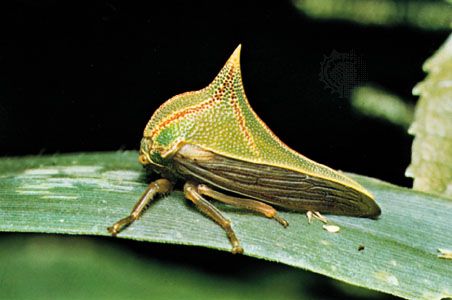
Treehoppers (family Membracidae) are a fascinating group of approximately 3,200 insect species known for their unique physical appearance. They are often called “insect brownies” due to their elflike look, characterized by a vertical face and a grotesquely enlarged thorax. This thorax can extend forward over the head to form spines or expand backward to create a hoodlike covering.
Notable species include:
- Buffalo treehopper (Stictocephala or Ceresa bubalus): Measuring 6 to 8 mm, this species is recognized for its potential to harm young orchard trees, particularly apple trees, by cutting slits into the bark to deposit its eggs.1
- Oak treehoppers (Platycotis vittata and P. quadrivittata): These species are notable for their specific association with deciduous and evergreen oaks, which serve as their primary food source.1
Beyond their appearance, these sap-sucking insects are known for secreting honeydew and can impact plant health by creating openings in bark that allow fungi and diseases to enter.1
What is a treehopper, and what makes it unique among insects?
A treehopper (family Membracidae) is a sap-sucking insect belonging to the order Homoptera, comprising approximately 3,200 species.1
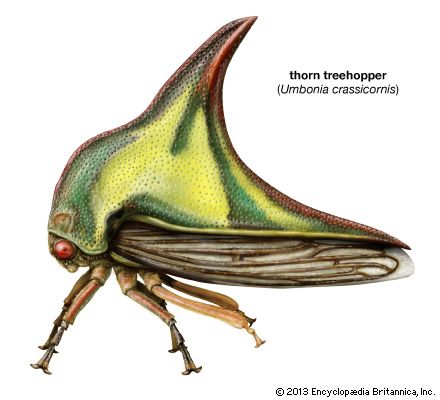
What makes treehoppers unique among insects is their highly specialized and often bizarrely enlarged prothorax. This structure can extend forward over the head to form spines or expand backward to create a hoodlike covering over the body. In many tropical species, this prothorax develops into elaborate chitinous adornments, such as pointed horns or large, keeled humps. Because of their vertical faces and these unusual thoracic structures, they are frequently referred to as “insect brownies” due to their elflike appearance.14
Beyond their morphology, treehoppers are notable for their sensory reactions to visual stimuli and their habit of secreting honeydew, a sweet digestive by-product. While they are primarily tropical, they can impact plant health by cutting slits into bark to deposit eggs, which may subsequently allow fungi and other diseases to infect trees and shrubs.51
How do treehoppers feed, and what types of plants do they prefer?
Treehoppers (family Membracidae) are specialized sap-sucking insects that derive their nutrition directly from the fluids of plants. Their feeding habits are closely tied to their life cycle and the specific host plants they inhabit.1
Feeding Habits
Treehoppers feed by extracting sap from their host plants. During the spring, newly emerged nymphs typically feed on the sap of weeds and grasses. As they mature into adults by mid-summer, they migrate to trees and shrubs to continue feeding and to lay their eggs.1
Plant Preferences
While many treehoppers are associated with specific hosts, their preferences can vary by species:
- Orchard Trees: The buffalo treehopper (Stictocephala or Ceresa bubalus) is known to feed on and damage young orchard trees, with a particular preference for apple trees.1
- Oaks: Species such as Platycotis vittata and P. quadrivittata are specifically associated with both deciduous and evergreen oaks, which serve as their primary food source.1
Beyond direct consumption, their feeding and egg-laying activities can indirectly harm plants by creating slits in the bark, which may serve as entry points for fungi and other plant diseases.1
What family do treehoppers belong to, and how are they related to other insects?
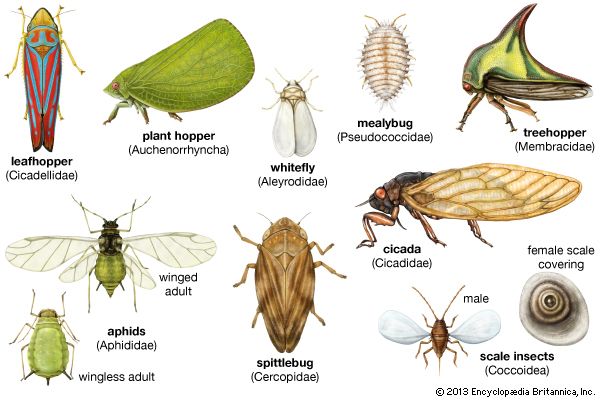
Treehoppers belong to the family Membracidae. They are classified within the order Homoptera, a group of sap-sucking insects that includes a wide variety of other well-known species.189
Relationship to Other Insects
Within the order Homoptera, treehoppers are placed in the suborder Auchenorrhyncha. This suborder is characterized by insects whose beaks arise from the antero-ventral extremity of the face and whose forewings are held in a rooflike position when at rest.9
Treehoppers share this suborder with several other familiar insect families, including:
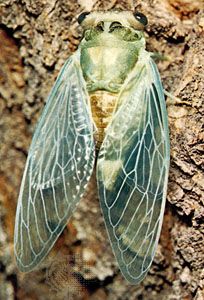
- Cicadidae (cicadas)9
- Cercopidae (froghoppers or spittlebugs)9
- Cicadellidae (leafhoppers)9
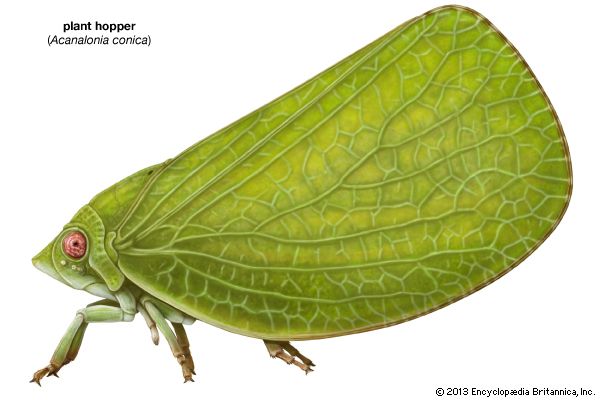
- Various groups of planthoppers (such as the families Delphacidae, Fulgoridae, and Issidae)9
While they share the general characteristics of the order—such as sucking mouthparts and a diet consisting of plant sap—treehoppers are distinct from other members of the Auchenorrhyncha due to their specialized, enlarged pronotum, which often extends over the head and body, and their jumping hind tibiae.19
Sources
- treehopper — Encyclopædia Britannica
- 9 Animals That Look Like Leaves — Encyclopædia Britannica
- Insects That Wear Things — Encyclopædia Britannica
- homopteran - Head — Encyclopædia Britannica
- homopteran - Polymorphism — Encyclopædia Britannica
- Eating the rainforest — Encyclopædia Britannica
- Orthoptera - Food — Encyclopædia Britannica
- List of insects - hemipterans (order Hemiptera) — Encyclopædia Britannica
- homopteran - Annotated classification — Encyclopædia Britannica
- Membracidae — Merriam-Webster
- membracid — Merriam-Webster
- treehopper — Merriam-Webster
Published on · 3 min read