Ground Pearl
A ground pearl is not a gemstone produced by mollusks, but rather a type of scale insect belonging to the genus Margarodes within the family Margarodidae.
What is ground pearl?
A ground pearl is not a gemstone produced by mollusks, but rather a type of scale insect belonging to the genus Margarodes within the family Margarodidae.12
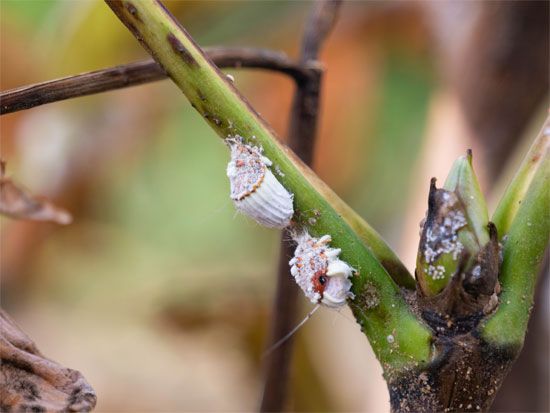
These insects are characterized by an iridescent, globular body that typically measures 2 to 4 mm (0.08 to 0.16 inches) in length. They exhibit a variety of colors, ranging from metallic bronze, red, or gold to cream or silver. Ground pearls are distributed worldwide and are commonly found living in the soil or attached to the roots of plants.1
While they are considered plant pests that can be managed with proper irrigation and fertilization, they also have practical uses. In tropical regions, the protective waxy coverings secreted by these insects are harvested to be used as beads and ornaments, and the insects themselves serve as a source of varnish. This is distinct from the biological process by which oysters create pearls through the secretion of nacre around an irritant.13
How do ground pearls differ from the pearls produced by oysters?
Ground pearls and the pearls produced by oysters are fundamentally different in their biological origin and composition.
- Ground Pearls: These are not true pearls but rather the encysted, globular forms of female scale insects belonging to the genus Margarodes. The “pearl” itself is a protective waxy covering secreted by the insect, which lives in the soil or on plant roots. In tropical regions, these waxy shells are collected and strung together to be used as beads or ornaments.43
- Oyster Pearls: These are biological gems formed within bivalve mollusks, such as pearl oysters. The process begins when an irritant, such as a parasite or grain of sand, enters the oyster’s shell. In response, the oyster’s mantle tissue secretes layers of nacre—a substance composed of aragonite and conchiolin—around the irritant. Over several years, these layers accumulate to create a smooth, lustrous pearl.15
While both are used for decorative purposes, ground pearls are insect-derived waxy secretions, whereas oyster pearls are mineralized deposits created by a mollusk’s defense mechanism.413
What are some other types of scale insects that affect plants?
Scale insects are a diverse group of plant-feeding insects that protect themselves with waxy shells or cottony cushions. Because they feed by sucking sap from plants, they can cause severe damage or death to crops and ornamentals when their populations become large enough to encrust plant surfaces.67
Several species are recognized as significant agricultural pests:
- San Jose scale: A destructive pest known for attacking fruit trees.6
- Oystershell scale: An introduced species that affects apple and other fruit trees.68
- Cottony-cushion scale: A major pest of citrus that was famously controlled through the introduction of the vedalia beetle.68
- Scurfy scale: Another species noted for its impact on plants.6
- Soft scales: Members of the family Coccidae, such as the brown soft scale, which remain active throughout their life stages.9
While many scale insects are harmful, some have commercial value. For instance, the lac insect is used to produce shellac and varnishes, and the cochineal insect is used to create red dyes.67
How do scientists classify insects within the order Homoptera?
Scientists classify insects within the order Homoptera based on specific structural characteristics, particularly their mouthparts and wing morphology. While many entomologists group Homoptera and Heteroptera together as suborders under the order Hemiptera, others argue for their separation at the ordinal level due to distinct evolutionary and anatomical differences.1112
Key Classification Criteria
- Mouthparts: Homopterans possess piercing-sucking mouthparts that are rigidly fastened to the head and appear to arise from the dorsoventral portion. Unlike heteropterans, which have a hard bridge called a gula separating the mouthparts from the prothorax, homopterans have a reduced or absent gula, causing the mouthparts to abut or fuse to the prothorax.1112
- Wings: The forewings of homopterans are generally of a uniform texture throughout and contain visible veins. When at rest, these wings are held at a rooflike angle over the abdomen, overlapping only slightly.11
- Scent Glands: Homopterans lack the scent glands that are present in all terrestrial and some aquatic heteropterans.12
Suborders of Homoptera
The order is traditionally divided into three primary suborders based on the origin of the beak and other anatomical features:2
- Coleorrhyncha: Considered the most primitive group, characterized by a beak originating at the antero-ventral extremity of the face and forewings held flat over the abdomen.2
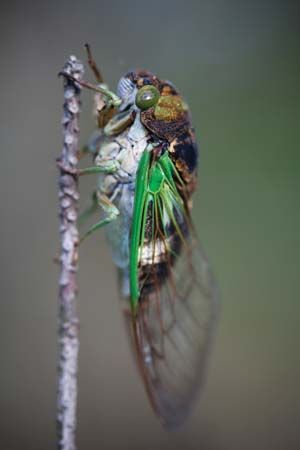
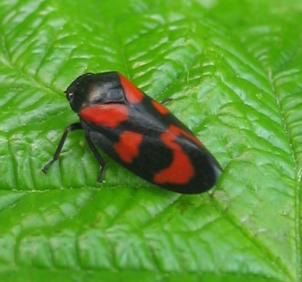
- Auchenorrhyncha: Includes insects such as cicadas, treehoppers, froghoppers, leafhoppers, and various planthoppers. These insects have a beak that arises at the antero-ventral extremity of the face and forewings that are held rooflike at rest.132
- Sternorrhyncha: Includes aphids, whiteflies, mealybugs, and various scale insects. In this group, the beak appears to arise between or behind the fore coxae.132
Sources
- ground pearl — Encyclopædia Britannica
- homopteran - Annotated classification — Encyclopædia Britannica
- How do oysters make pearls? — Encyclopædia Britannica
- ground pearl — Merriam-Webster
- oyster — Encyclopædia Britannica
- scale insect — Encyclopædia Britannica
- insect - Ecological factors — Encyclopædia Britannica
- homopteran - Importance — Encyclopædia Britannica
- soft scale — Merriam-Webster
- Pest — Encyclopædia Britannica
- homopteran — Encyclopædia Britannica
- homopteran - Critical appraisal — Encyclopædia Britannica
- heteropteran - Distinguishing taxonomic features — Encyclopædia Britannica
Published on · 4 min read