Tyrannosaurus Rex
Tyrannosaurus rex, often called T. rex, was a massive predatory dinosaur that lived during the late Cretaceous Period, approximately 66 million years ago.…
What is Tyrannosaurus rex?
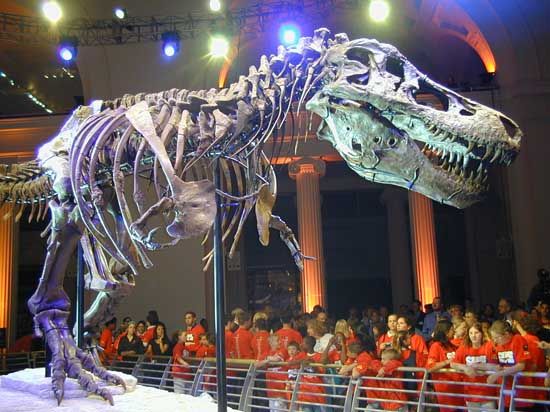
Tyrannosaurus rex, often called T. rex, was a massive predatory dinosaur that lived during the late Cretaceous Period, approximately 66 million years ago4. Its name is Latin for “king of the tyrant lizards”.12
Physical Characteristics
T. rex was one of the largest theropods, with adults reaching lengths of over 12 meters (39 feet) and weighing between 4,000 and 7,000 kg (about 9,000 to 15,000 pounds). It moved with a horizontal posture, using its tail as a counterbalance. While its hind limbs were powerful enough to reach speeds of 32 km (20 miles) per hour, its forelimbs were notably small.321
Hunting and Diet
As a voracious predator, T. rex possessed a massive skull and a bite force capable of crushing the bones of other dinosaurs. Evidence suggests it may have also been a scavenger, and some researchers interpret bite marks on T. rex fossils as potential evidence of cannibalism.32
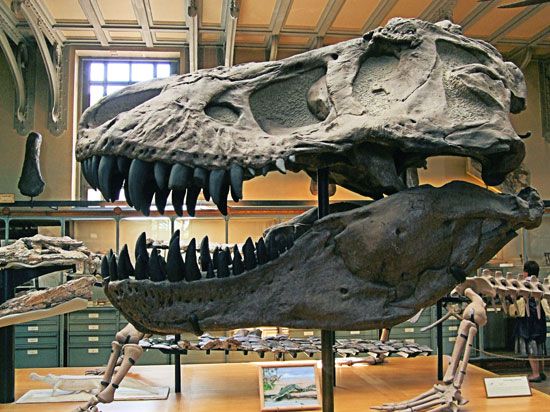
What are some other types of tyrannosaurs?
Tyrannosaurs were a diverse group of predatory dinosaurs that evolved from the Late Jurassic through the end of the Cretaceous Period. They are generally categorized into the more lightly built albertosaurines and the larger, more robust tyrannosaurines.3
Notable Tyrannosaur Species
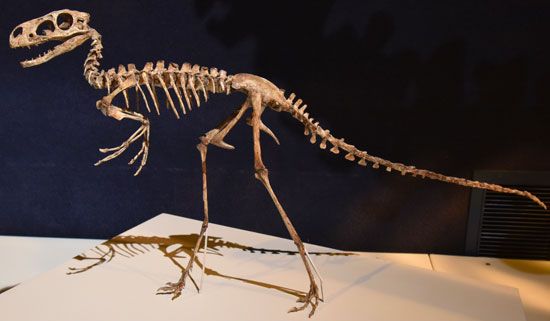
- Guanlong: A primitive, three-fingered tyrannosaur from the Late Jurassic of China, notable for a complex, hollow crest on its skull.3
- Dilong: An early, small tyrannosaur (1.5 meters long) from China, which provides evidence that some members of the group possessed simple “protofeathers”.3
- Eotyrannus: A relatively small and lightly built species discovered on the Isle of Wight.3
- Tarbosaurus: A large, robust form from the end of the Cretaceous in Mongolia that is very similar to T. rex.3
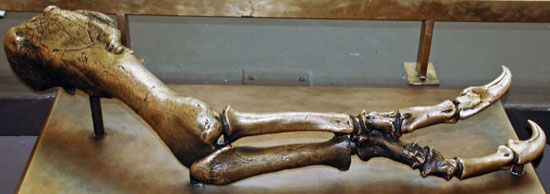
- Raptorex kriegsteini: An Early Cretaceous genus that, despite its small size, shares a body plan—including short arms and D-shaped teeth—that resembles a miniature T. rex.3
- Albertosaurus and Gorgosaurus: Large, carnivorous tyrannosaurids from the late Cretaceous of North America.62
- T. mcraeensis: A species identified in 2024 that predates T. rex by 6–7 million years.3
Did Tyrannosaurus rex have feathers?
While many smaller theropod dinosaurs and even some early tyrannosaurs—such as Dilong and the large Yutyrannus—are known to have possessed filamentous, featherlike structures, the evidence for Tyrannosaurus rex is less definitive.9
Paleontologists have confirmed that feathers were widespread among many dinosaur lineages, serving functions like insulation, camouflage, and display. Because Yutyrannus, a massive Early Cretaceous relative of T. rex, possessed filamentous feathers, it is biologically plausible that T. rex also retained some form of feathery covering. However, no direct fossil evidence of feathers has been found for T. rex itself. Some scientists suggest that as T. rex grew to its massive adult size, it may have lost much of its feathery coat, as large animals often struggle to dissipate body heat and would not require the same level of insulation as smaller species.910
What other dinosaurs lived during the Cretaceous Period?
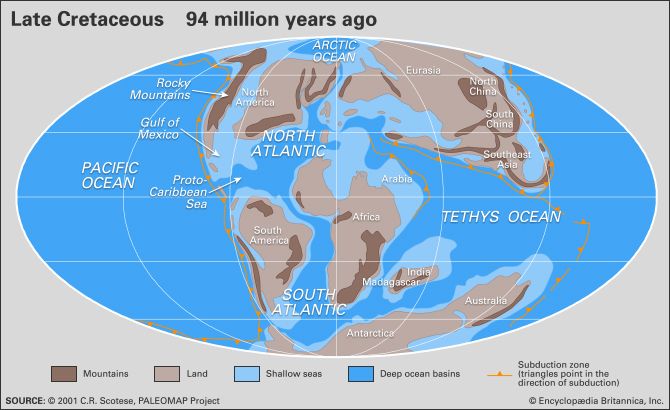
The Cretaceous Period (145 million to 66 million years ago) was a time of immense biological diversity, during which dinosaurs remained the dominant land animals12.12
Diverse Dinosaur Groups
Beyond the well-known tyrannosaurs, the Cretaceous landscape was home to a wide variety of specialized groups:
- Hadrosaurs (Duck-billed dinosaurs): These advanced ornithopods, such as Shantungosaurus, were dominant browsers that featured complex dental batteries for grinding tough vegetation.131415
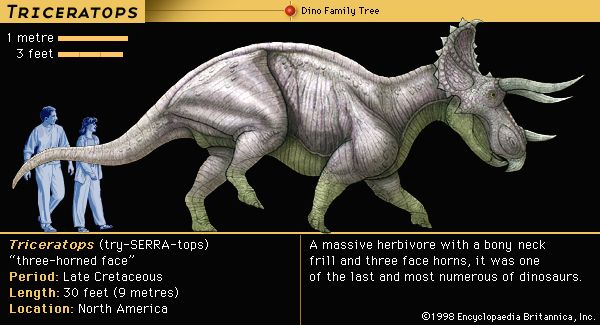
- Ceratopsians (Horned dinosaurs): Groups like Triceratops were prominent in North America during the Late Cretaceous, using their specialized beaks and shearing teeth to feed on fibrous plants.14153
- Sauropods: While they disappeared from northern continents for a time, these giant long-necked herbivores—including titanosaurs like Argentinosaurus and Dreadnoughtus—reinvaded northern regions during the second half of the period.153
- Ankylosaurs: These armored dinosaurs were represented by a variety of new forms that became prominent in North America and Asia during the Late Cretaceous.15
- Pachycephalosaurs: Known for their thickened skulls, these dinosaurs appeared in Asia and successfully colonized North America.15
- Theropods and Early Birds: The period saw the diversification of various theropods, including dromaeosaurs (raptors) and early birds such as Hesperornis and Ichthyornis.1532
Beyond dinosaurs, the skies were dominated by pterosaurs like the massive Quetzalcoatlus, while the seas teemed with giant marine reptiles, including ichthyosaurs, mosasaurs, and plesiosaurs.13123
Sources
- Tyrannosaurus rex: Top Questions — Encyclopædia Britannica
- tyrannosaur — Encyclopædia Britannica
- tyrannosaur - Classification — Encyclopædia Britannica
- Tyrannosaurus rex — Encyclopædia Britannica
- tyrannosaur - Skull and dentition — Encyclopædia Britannica
- tyrannosaur - Other skeletal features — Encyclopædia Britannica
- Gorgosaurus — Merriam-Webster
- Albertosaurus — Merriam-Webster
- feathered dinosaur — Encyclopædia Britannica
- Did Dinosaurs Really Have Feathers? — Encyclopædia Britannica
- dinosaur - Theropoda — Encyclopædia Britannica
- A Journey Through Time Since the Precambrian - Cretaceous Period: 145 million to 66 million years ago — Encyclopædia Britannica
- Cretaceous Period — Encyclopædia Britannica
- dinosaur - The plant eaters — Encyclopædia Britannica
- dinosaur - Faunal changes — Encyclopædia Britannica
- Cretaceous Period - Cretaceous life — Encyclopædia Britannica
- Cretaceous Period - Terrestrial life — Encyclopædia Britannica
- dinosaur - Dinosaur descendants — Encyclopædia Britannica
Published on · 4 min read