Vanua Lava
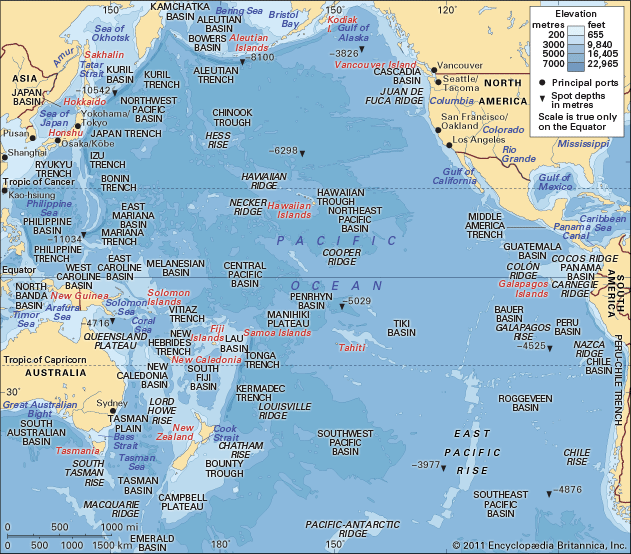
Vanua Lava is a volcanic island located in the Banks Islands group of Vanuatu, situated in the southwestern Pacific Ocean. Measuring approximately 15 miles…
What is Vanua Lava?
Vanua Lava is a volcanic island located in the Banks Islands group of Vanuatu, situated in the southwestern Pacific Ocean. Measuring approximately 15 miles long and 12 miles wide, the island features two primary harbours: Port Patteson on the east coast and Veutümboso Bay on the southwest coast.12
The island’s topography is defined by its volcanic activity, with the active volcano Séré’ama reaching 3,021 feet (921 metres) and its highest point, Tow Lav, standing at 3,104 feet (946 metres). First explored by Bishop George Selwyn in 1859, the island is now served by an airstrip and supports an economy focused on the export of copra and cacao.12
What is the significance of the Banks Islands in Vanuatu?
The Banks Islands are a volcanic group in northern Vanuatu that hold significance for their unique geography, history, and role in the local economy.
- Geographic Significance: The group, which includes islands such as Vanua Lava and Santa Maria, receives the highest average annual precipitation in Vanuatu, approximately 160 inches (4,000 mm), resulting in heavily forested landscapes. The islands are also notable for their active volcanoes and the unique volcanic cone of Uréparapara, which is breached by the sea to form a bay.2
- Historical Significance: The islands were first visited by European navigator Pedro Fernández de Quirós in 1606 and were later mapped in 1793 by Capt. William Bligh, who named them after the naturalist Sir Joseph Banks.2
- Economic Role: The islands are inhabited primarily by Melanesians who contribute to the national economy through the cultivation of copra and coffee for export.2
How do active volcanoes shape the landscape of Pacific islands?
Active volcanoes are the primary architects of Pacific island landscapes, shaping them through both constructive and destructive geological processes.
Construction and Formation
Most Pacific islands are built from the seafloor through the extrusion of basaltic and andesitic magmas. This occurs in two main settings:5
- Island Arcs: At subduction zones, where one tectonic plate is forced beneath another, long chains of volcanic islands emerge.56
- Hot Spots: In areas like Hawaii, plate movement over a stationary mantle hot spot creates chains of volcanoes that mark the direction of the plate’s travel.57
Landscape Evolution
Once formed, these islands undergo significant transformation:
- Young Terrain: Geologically young areas feature domelike structures, hardened lava flows, and clearly defined calderas.7
- Erosion: Over time, wind, rain, and wave action carve the landscape into sharp, craggy silhouettes, deep V-shaped valleys, and vertically grooved cliffs.7
- Soil Development: The weathering of volcanic ash and basaltic lava creates rich, arable soils, such as andisols, which are vital for agriculture.89
What is copra and how is it produced?
Copra consists of the dried meat of the coconut, which is the kernel of the fruit from the coconut palm. It is primarily valued for the coconut oil extracted from it, while the remaining residue, known as coconut-oil cake, is commonly used as livestock feed.11
Production Process
The production of copra involves several key steps:
- Husking and Cracking: Coconuts are husked by hand or mechanically using a sharp point. The shell is then typically cracked into two halves to expose the meat, which initially contains about 50 percent water and 30 to 40 percent oil.11
- Drying: To reach a stable state containing 4 to 5 percent moisture and 63 to 70 percent oil, the meat must be dried using one of several methods:11
- Sun Drying: The traditional method of exposing kernels to air and sun, which produces high-quality white copra.11
- Kiln Drying: A faster method used in high-humidity areas, where copra is placed on a grid over a fire pit sheltered by a roof.11
- Hot-Air Drying: The most uniform method, where copra is moved through a heated tunnel against a countercurrent of hot air, resulting in a premium, fine white product.11
Sources
- Vanua Lava — Encyclopædia Britannica
- Banks Islands — Encyclopædia Britannica
- Banks Islands — Merriam-Webster
- Vanuatu - Economy — Encyclopædia Britannica
- volcanism — Encyclopædia Britannica
- Pacific Ocean - Geology — Encyclopædia Britannica
- mountain - Volcanoes and island arcs surrounding the northwest Pacific basin — Encyclopædia Britannica
- Hawaii - Relief — Encyclopædia Britannica
- Cook Islands - Soils — Encyclopædia Britannica
- Hawaii - Soils — Encyclopædia Britannica
- Copra — Encyclopædia Britannica
- copra oil — Merriam-Webster
- Papua New Guinea - Agriculture, forestry, and fishing — Encyclopædia Britannica
Published on · 3 min read