Tulagi
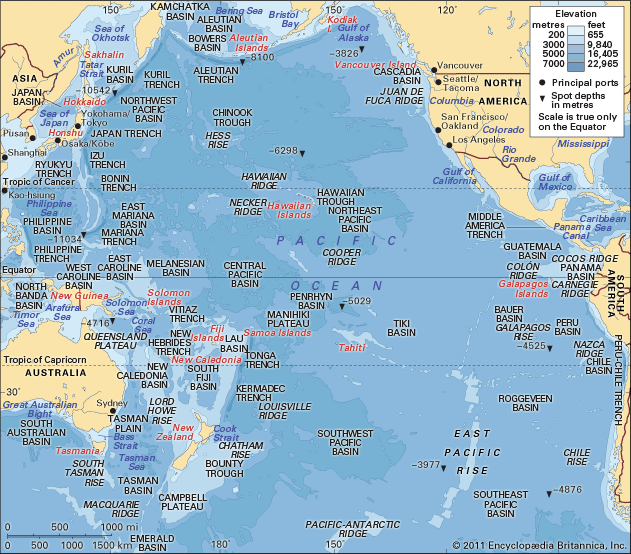
Tulagi is a town and island located in the Solomon Islands within the southwestern Pacific Ocean, situated just north of Guadalcanal.
What is Tulagi?
Tulagi is a town and island located in the Solomon Islands within the southwestern Pacific Ocean, situated just north of Guadalcanal.12
Historically, Tulagi served as the administrative seat of the British Solomon Islands Protectorate starting in 1893. However, during World War II, the town was destroyed by Japanese forces in 1942. Following this destruction, the capital of the Solomon Islands was relocated to Honiara, which was established on the island of Guadalcanal.13
Geographically, the island is small, measuring approximately 3 miles (5 km) in circumference, and the narrow strait separating it from Florida Island provides a sheltered harbour. As of 2009, the population of Tulagi and its adjacent islands was 1,251.1
What was the strategic importance of the Solomon Islands during World War II?
During World War II, the Solomon Islands held immense strategic importance as a critical link in the lines of communication between the United States, Australia, and New Zealand.5
In 1942, the Japanese began constructing an airfield on Guadalcanal. The Allies recognized that land-based aircraft operating from this location would pose a severe threat to Allied bases in New Caledonia, the New Hebrides, and Port Moresby in New Guinea. To prevent this, the Allies launched their first major offensive of the Pacific War on August 7, 1942, seizing the airfield—later named Henderson Field—and the harbor at Tulagi.65
The subsequent Battle of Guadalcanal became a brutal 15-month campaign that served as a decisive turning point in the war. By securing the islands, the Allies successfully halted the Japanese southward expansion and ensured the security of vital supply routes, ultimately shifting the momentum of the conflict in favor of the Allied powers.785
How did the Battle of Guadalcanal affect the region?
The Battle of Guadalcanal was a decisive turning point in the Pacific War, fundamentally altering the trajectory of the region during and after World War II.69
Strategic and Political Impact
The Allied victory halted the Japanese southward expansion, securing vital communication lines between the United States, Australia, and New Zealand.Australia), and New Zealand. By successfully defending the southern Solomon Islands, the Allies established a base for future offensives, such as the push toward Rabaul.91011
Post-War Transformation
The war left a lasting imprint on the islands’ infrastructure and political landscape:
- Capital Relocation: Due to the presence of military airfields and existing infrastructure, Honiara on Guadalcanal replaced Tulagi as the national capital.9
- Political Consciousness: The conflict stimulated political awareness among the islanders, leading to the rise of the nationalist Maasina Rule movement and eventually contributing to the nation’s path toward decolonization and independence in 1978.7
What is the geography of the Solomon Islands like?
The Solomon Islands is a nation in the southwestern Pacific Ocean composed of a double chain of volcanic islands and coral atolls. Geologically, these islands are part of a volcanic arc extending from Papua New Guinea to Vanuatu.1314
Topography and Climate
The main islands are rugged and mountainous, with Mount Popomanaseu on Guadalcanal reaching 7,644 feet (2,330 meters). The islands are arranged in two parallel chains that converge on San Cristobal. The climate is tropical oceanic, characterized by high heat and humidity, abundant rainfall, and cooling winds.14
Volcanic and Seismic Activity
The region is geologically active, featuring several volcanoes such as Tinakula and the submarine volcano Kavachi. Earthquakes and destructive cyclones occur regularly, posing significant risks to the population. Additionally, the country faces severe challenges from climate change, particularly rising sea levels, which have necessitated government plans to relocate vulnerable coastal communities.1415
Sources
- Tulagi — Encyclopædia Britannica
- Solomon Islands: Country Facts — Encyclopædia Britannica
- Tulagi — Merriam-Webster
- Joseph Stalin - Role in World War II of Joseph Stalin — Encyclopædia Britannica
- history of Solomon Islands - The Solomons during World War II — Encyclopædia Britannica
- Battle of Guadalcanal — Encyclopædia Britannica
- Solomon Islands - World War II — Encyclopædia Britannica
- Battle of Guadalcanal - Landings in the southern Solomons and the Battle of Savo Island — Encyclopædia Britannica
- Pacific War - Guadalcanal and Papua — Encyclopædia Britannica
- Guadalcanal Island — Encyclopædia Britannica
- Battle of Guadalcanal - Outcome and casualties — Encyclopædia Britannica
- Solomon Islands - Independence — Encyclopædia Britannica
- Solomon Islands — Encyclopædia Britannica
- Solomon Islands - Land — Encyclopædia Britannica
- Solomon Islands - Climate change concerns — Encyclopædia Britannica
Published on · 3 min read