Vulture
Vultures are distinguished from other birds of prey primarily by their specialized adaptations for a scavenging lifestyle, as they rarely or never kill their…
What are the key physical characteristics that distinguish vultures from other birds of prey?
Vultures are distinguished from other birds of prey primarily by their specialized adaptations for a scavenging lifestyle, as they rarely or never kill their own food.12
Key physical characteristics include:
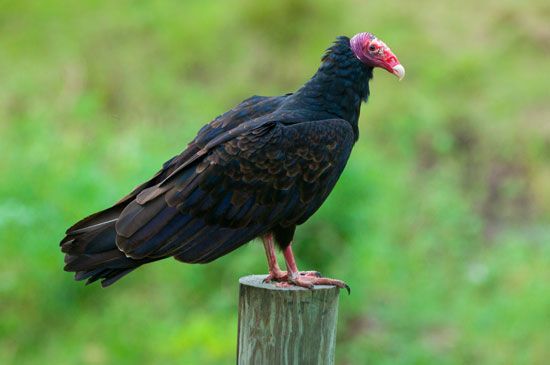
- Feet and Talons: Unlike typical raptors that use their feet to kill and grasp prey, vultures have feet that lack long, sharp talons. New World vultures, in particular, possess weak, flat feet that are poorly adapted for grasping.21
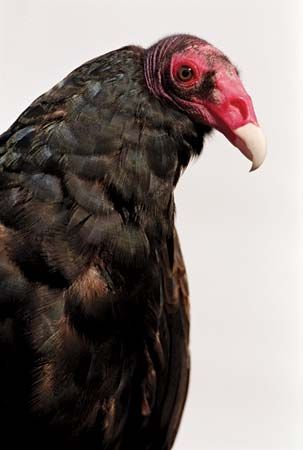
- Head and Neck: Many vulture species have bare heads and necks. This is a critical adaptation that prevents feathers from becoming matted with blood and bacteria when the birds reach inside carcasses to feed.1
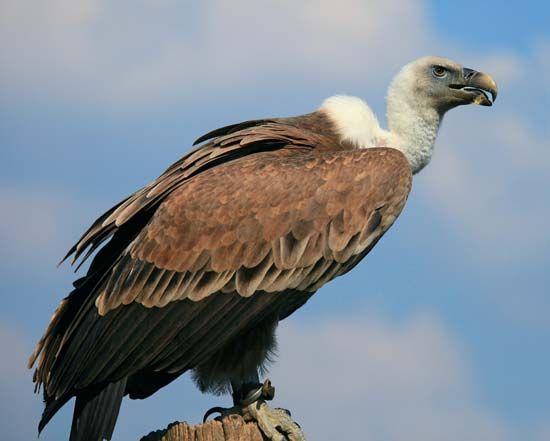
- Beak Structure: While some vultures have exceptionally strong, heavy beaks for tearing through tough hide, muscle, and bone, their bill structures vary to allow for ecological separation when multiple species feed on the same carcass.12
- Flight Adaptations: Vultures have large wings relative to their body weight, allowing them to soar effortlessly on thermal updrafts. They often maintain their wings in a slight V-shape, known as a dihedral, for stability, and can spread their primary feathers to create slots that reduce air resistance during slow glides.3
- Internal Adaptations: Many possess a large throat pouch called a crop, which allows them to store food and survive long periods between meals.1
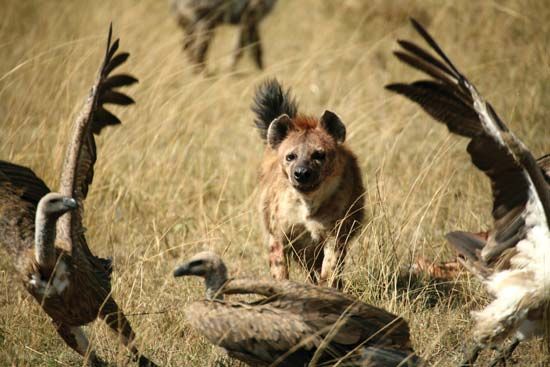
How do vultures’ unique adaptations help them in their scavenging lifestyle?
Vultures possess a suite of specialized adaptations that allow them to thrive on a “feast-or-famine” scavenging lifestyle, where they rely on locating and consuming carrion.12
Locating Food
- Soaring Efficiency: Vultures conserve energy by riding warm thermal updrafts, allowing them to remain aloft for hours while surveying vast areas. Their large wings, maintained in a stable “dihedral” (V-shape), and primary feathers that create air-reducing slots, enable them to maneuver efficiently at slow speeds.12
- Sensory Capabilities: All vultures possess exceptional eyesight to spot carcasses from great distances. Additionally, some species, such as the turkey vulture, have a highly developed sense of smell that helps them locate food hidden beneath forest canopies.12
Feeding and Digestion
- Hygiene Adaptations: Many vultures have bare heads and necks, which prevents feathers from becoming matted with blood and bacteria when they reach inside carcasses.12
- Nutritional Storage: They possess a throat pouch called a crop, which allows them to store large amounts of food, enabling them to survive long periods between meals.12
- Ecological Specialization: Vultures often feed in groups, utilizing a social hierarchy based on size and beak strength. Different species exhibit ecological separation; some use heavy beaks to tear through tough hide and bone, while others use slender beaks to reach soft tissues or cavities inaccessible to larger birds.124
What are the different types of vultures found around the world?
Vultures are categorized into two distinct, distantly related groups: New World vultures (family Cathartidae) and Old World vultures (family Accipitridae). While they share a scavenging lifestyle, they are classified separately and exhibit different evolutionary traits.2
New World Vultures
Found in the Western Hemisphere, these 7 species do not build nests, instead laying eggs in natural cavities or on bare ground. They lack a syrinx, meaning they have no voice, and possess a perforated nasal septum. Notable species include:27
- Turkey vulture: The most widespread species, known for its keen sense of smell.2
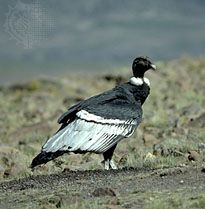
- Condors: Large birds including the California and Andean varieties.2
- Black vulture: The most abundant vulture species.2
- King vulture: A colorful bird of tropical forests.2
Old World Vultures
These 15 species inhabit Africa, Asia, and Europe. Unlike their New World counterparts, they build large stick nests in trees or on cliffs and are part of the hawk and eagle family. Notable species include:27
- Cinereous vulture: Often considered the largest bird of prey.2
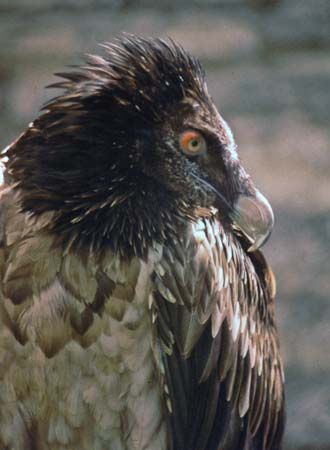
- Lammergeier: Also known as the bearded vulture.2
- Egyptian vulture: A smaller species with a distinct mane of feathers.2
- Common griffon vulture: A widespread species of the genus Gyps.2
- Lappet-faced vulture: A dominant, large species of arid Africa.2
- Palm-nut vulture: Unique for being primarily vegetarian.2
What is a vulture?
A vulture is any of 22 species of large, carrion-eating birds found primarily in tropical and subtropical regions. They are classified into two distinct, distantly related groups: the 7 species of New World vultures (family Cathartidae) and the 15 species of Old World vultures (family Accipitridae).2
Vultures are highly specialized for a “feast-or-famine” scavenging lifestyle. Key characteristics include:2
- Physical Adaptations: Many species have bare heads and necks to prevent feathers from matting with bacteria and blood while feeding. They possess a throat pouch called a crop, allowing them to store large amounts of food to survive long periods between meals.2
- Flight and Foraging: Vultures are expert soarers, utilizing broad wings to ride thermal updrafts for hours while surveying the ground. They possess exceptional eyesight, and some species, like the turkey vulture, also have a highly developed sense of smell.21
- Social and Feeding Behavior: They often feed in groups, maintaining a strict social hierarchy based on size and beak strength. While they primarily consume carrion, they rarely attack live animals, though some may occasionally take helpless prey.21
Sources
- Why do vultures circle? — Encyclopædia Britannica
- Vulture — Encyclopædia Britannica
- Falconiform - Feet and beak — Encyclopædia Britannica
- scavenger — Encyclopædia Britannica
- Falconiform - Evolution and paleontology — Encyclopædia Britannica
- Falconiform - Feeding — Encyclopædia Britannica
- Falconiform - Annotated classification — Encyclopædia Britannica
- Bird of prey — Encyclopædia Britannica
Published on · 4 min read