Velvety Shore Bug
The velvety shore bug is an insect belonging to the family Ochteridae within the order Heteroptera. These insects are small, typically measuring about 4 to 5…
What is velvety shore bug?
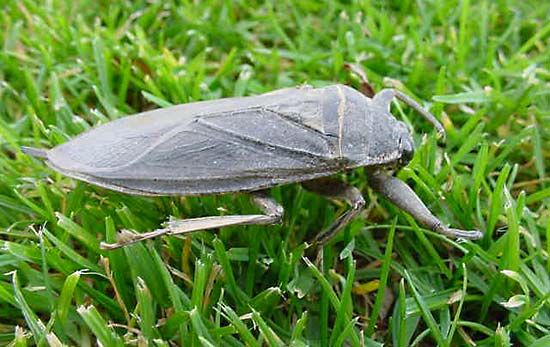
The velvety shore bug is an insect belonging to the family Ochteridae within the order Heteroptera. These insects are small, typically measuring about 4 to 5 mm (nearly 0.2 inch) in length, and are known for their resemblance to tiny toads.12
They are found living among plants near streams and ponds. As their common name suggests, their body surface is smooth and velvetlike. Unlike some other aquatic or semiaquatic bugs, the velvety shore bug possesses slender front legs that are specifically developed for running.1
What are some other examples of predatory insects in the order Heteroptera?
Predation is a widespread feeding strategy within the order Heteroptera, occurring across various aquatic, semiaquatic, and terrestrial families. Below are several notable examples of predatory insects within this order:3
Aquatic and Semiaquatic Predators
- Water Striders (family Gerridae): These insects skate across the surface of ponds and streams, using their short front legs to capture insects that fall onto the water’s surface.4
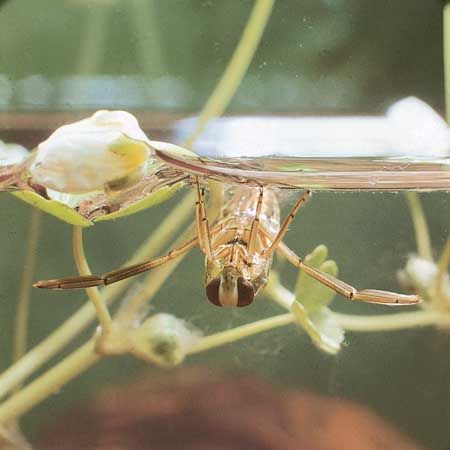
- Giant Water Bugs (family Belostomatidae): Like most families in the former Hydrocorisae group, these are predatory on small aquatic animals, including tadpoles, small fish, and frogs.35
- Backswimmers (family Notonectidae): These aquatic predators dive deeply to hunt and are known for their ability to remain submerged by utilizing air stores trapped against their bodies.5
- Shore Bugs (family Saldidae): These bugs frequent shorelines and are characterized by their ability to run quickly across rocks and ground to capture prey with their thickened, grasping front legs.5
Terrestrial Predators
- Assassin Bugs (family Reduviidae): A diverse family known for using piercing-sucking mouthparts to inject enzymes that liquefy prey tissues. Examples include the wheel bug, which uses venomous saliva, and the masked hunter, which often preys on household insects like flies and bedbugs.2
- Damsel Bugs (family Nabidae): These are well-known terrestrial predators that frequently hunt other insects.35
- Ambush Bugs (subfamily Phymatinae): These predators hide on vegetation and use their greatly enlarged fore femurs to suddenly capture passing prey.25
- Flower Bugs (family Anthocoridae): These small predators are highly effective at controlling populations of other arthropods, such as mites.35
How do aquatic insects manage to breathe while submerged underwater?
Aquatic insects have evolved diverse strategies to overcome the challenge of breathing while submerged, as their primary respiratory system—a network of branching tubes called tracheae—is fundamentally designed for air.78
Atmospheric Air Access
Many insects must periodically return to the surface to replenish their air supply. Some use a respiratory siphon or snorkel-like tube to reach the surface film, while others, such as certain water beetles, store air in chambers beneath their wings or trapped against their bodies by dense, water-repellent hairs.798
Physical Gills and Plastrons
Air bubbles trapped by insects can function as a physical gill. As the insect consumes oxygen from the bubble, the partial pressure of oxygen drops, allowing dissolved oxygen from the water to diffuse into the bubble. Some insects utilize a plastron—a permanent, thin layer of air held by dense, hydrofuge hairs—which allows for continuous oxygen extraction from the water without the need to resurface.78
Direct Gas Exchange
Many immature insects, such as mayfly and dragonfly larvae, possess tracheal gills. These are thin-walled extensions of the body that allow oxygen to diffuse directly from the water into the tracheal system.79
What physical adaptations help insects walk on the surface of water?
Insects that walk on water, such as water striders, rely on the physical property of surface tension, which allows the surface of a liquid to act like a stretched elastic membrane.8
To successfully navigate this environment, these insects possess several key physical adaptations:
- Leg Structure: They have long, thin middle and hind legs that spread their weight across a larger area, preventing them from breaking through the surface film. The middle pair of legs is primarily used for propulsion, while the hind pair is used for steering.1072
- Hydrofuge Hairs: The feet (tarsi) and often the entire body are covered in a dense, fine pile of water-repellent (hydrofuge) hairs. These hairs trap a thin layer of air, which prevents the insect from becoming wet and helps it remain supported by the surface tension of the water.72
- Body Mass: These insects have small, slender bodies with very little bulk, which minimizes the force exerted on the water’s surface, allowing them to stand or skate without sinking.7
Sources
- velvety shore bug — Encyclopædia Britannica
- heteropteran - Habitats — Encyclopædia Britannica
- assassin bug — Encyclopædia Britannica
- heteropteran - Food habits — Encyclopædia Britannica
- water strider — Encyclopædia Britannica
- Coleoptera - As predators — Encyclopædia Britannica
- Respiratory system - Trachea — Encyclopædia Britannica
- insect - Aquatic insects — Encyclopædia Britannica
- heteropteran - Respiratory system — Encyclopædia Britannica
- surface tension — Encyclopædia Britannica
- Locomotion - Tetrapodal vertebrates — Encyclopædia Britannica
- arthropod - Muscles , appendages , and locomotion — Encyclopædia Britannica
Published on · 3 min read