Watermelon
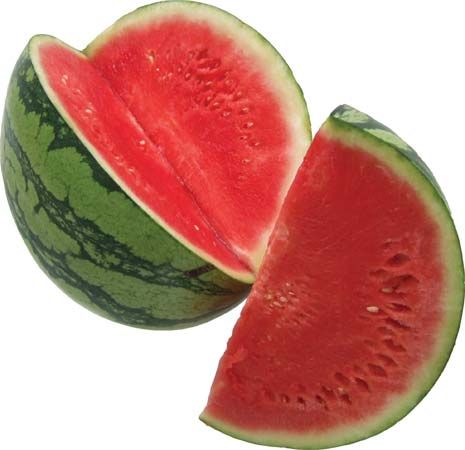
The watermelon (Citrullus lanatus) is a succulent, vinelike plant belonging to the gourd family, Cucurbitaceae. Its botanical classification is as follows:
What is the botanical classification of watermelon and where did it originate?
The watermelon (Citrullus lanatus) is a succulent, vinelike plant belonging to the gourd family, Cucurbitaceae. Its botanical classification is as follows:
- Kingdom: Plantae
- Division: Angiosperm
- Order: Cucurbitales
- Family: Cucurbitaceae
- Genus: Citrullus1
Regarding its origins, the watermelon is native to tropical Africa. It has a long history of cultivation, with evidence of its existence in agriculture dating back more than 4,000 years, as indicated by its depiction in early Egyptian art and the existence of a Sanskrit term for the fruit.1
How does the watermelon plant grow, and what conditions are ideal for its cultivation?
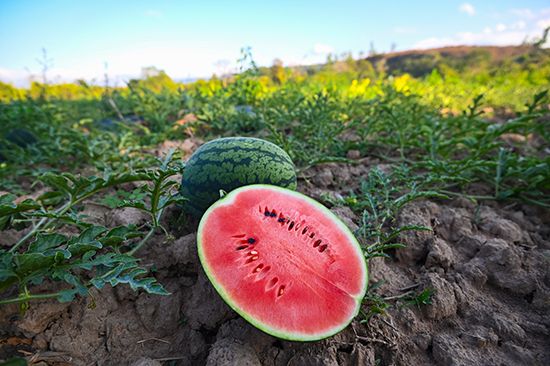
The watermelon (Citrullus lanatus) is an annual plant that thrives in hot climates. Its growth habit is characterized by vines that spread along the ground, supported by branched tendrils and deeply cut leaves. The plant produces light yellow flowers singly in the axil of a leaf; these are either male, producing pollen, or female, which develop into the fruit.1
Cultivation Conditions
Because the watermelon is native to tropical Africa, it requires warm temperatures to grow successfully. While the plant is cultivated globally, its preference for heat is a primary factor in its development and productivity. Each vine is capable of producing between 2 and 15 fruits, which are botanically classified as a type of berry known as a pepo. Through domestication and selective breeding, modern varieties have been optimized for sweetness, size, and reduced seed content.1
How has watermelon been portrayed in art and popular culture?
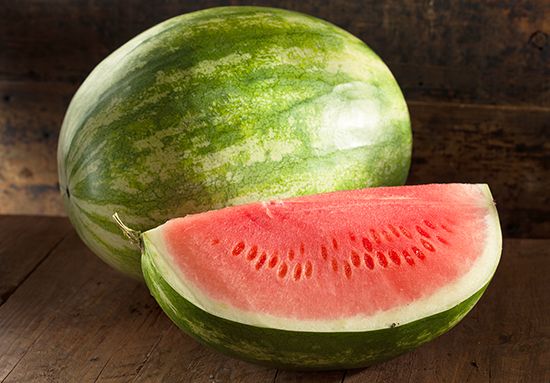
The watermelon has a long history of human interaction, with its presence in agriculture spanning more than 4,000 years. Its significance is reflected in early Egyptian art, where the fruit was frequently depicted, serving as one of the earliest cultural records of the plant.1
Beyond these ancient depictions, the provided search results do not contain further information regarding the portrayal of watermelons in broader popular culture or modern art.
What other fruits belong to the Cucurbitaceae family?
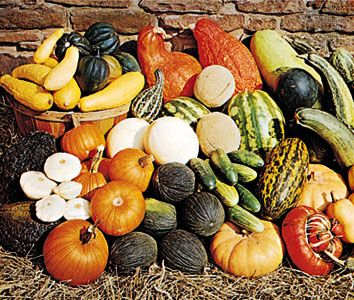
The Cucurbitaceae family, commonly known as the gourd family, includes a diverse range of flowering plants. Beyond watermelons, several other well-known fruits and vegetables belong to this group:
These plants are generally characterized by their fast-growing, prostrate, or climbing vines and their production of a specific type of fleshy, many-seeded berry with a tough rind, known as a pepo.3
Sources
- Watermelon — Encyclopædia Britannica
- watermelon — Merriam-Webster
- Cucurbitaceae — Encyclopædia Britannica
Published on · 2 min read