Webspinner
A webspinner (order Embioptera) is a small, delicate insect, typically measuring 4 to 7 mm (about 0.2 inch) in length and colored yellow or brown. These…
What is webspinner?
A webspinner (order Embioptera) is a small, delicate insect, typically measuring 4 to 7 mm (about 0.2 inch) in length and colored yellow or brown. These insects are characterized by their biting mouthparts and their ability to live in colonies within silk-lined tunnels and chambers, which they construct beneath stones or among mosses and lichens.12
Both larvae and adults possess silk-producing glands located in an enlarged section of the foreleg, which they use to create these protective environments. While most males have two pairs of narrow wings and are weak fliers, all females are wingless. Webspinners feed on dead plant material and are known for their ability to run rapidly both forward and backward. When threatened, they typically retreat through their tunnels or exhibit death-feigning behavior.1
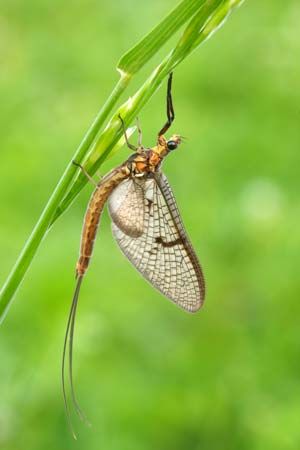
It is worth noting that the term “spinner” is also used to describe the adult stage of a mayfly, which is a completely different insect order.3
How do webspinners use their silk to build protective tunnels?
Webspinners (order Embioptera) utilize specialized silk-producing glands located in an enlarged section of their forelegs to construct their protective environments. Both larvae and adults possess these glands, which allow them to spin silk as they move.1
They use this silk to create elaborate, silk-lined tunnels and chambers that serve as communal housing for colonies, which can consist of several hundred individuals. These structures are typically built in sheltered locations, such as beneath stones or among mosses and lichens, providing the insects with a secure retreat when they are disturbed.1
What are the main differences between webspinners and spiders?
Webspinners and spiders are distinct organisms with significant biological and anatomical differences. The primary distinctions include:
- Classification and Anatomy: Webspinners are insects (order Embioptera) with bodies divided into head, thorax, and abdomen, possessing six legs attached to the thorax. Spiders are arachnids with bodies divided into two main parts: the cephalothorax and the abdomen, with eight legs attached to the cephalothorax.15
- Silk Production: Webspinners possess silk-producing glands located in an enlarged section of their forelegs. In contrast, spiders produce silk using glands located in their abdomen, which is then expelled through specialized structures called spinnerets.165
- Colonial Behavior: Webspinners are known for living in colonies of several hundred individuals within communal, silk-lined tunnels and chambers. While some spiders are social, most are solitary predators that use silk primarily for hunting, protection, or egg sacs rather than communal housing.165
- Diet: Webspinners feed on dead plant material. Spiders are predators that typically use venom, delivered through fangs in their chelicerae, to subdue their prey.15
Why do male webspinners have wings while females are wingless?
In the order Embioptera, webspinners exhibit sexual dimorphism where most males possess two pairs of narrow wings, while all females are wingless.1
While the specific evolutionary driver for this trait in webspinners is not explicitly detailed in the provided search results, the presence of wings in males typically facilitates their ability to travel and locate mates, whereas females remain within the protective, silk-lined tunnels and chambers of the colony to care for their eggs. This division of labor is a common feature in many insect species, where the mobile sex (often the male) must actively seek out the stationary sex to ensure reproduction.19
Sources
- webspinner — Encyclopædia Britannica
- mayfly — Encyclopædia Britannica
- How do spiders make circular webs? — Encyclopædia Britannica
- web spinner — Merriam-Webster
- spider - Silk — Encyclopædia Britannica
- sericulture — Encyclopædia Britannica
- spider - Spiderwebs — Encyclopædia Britannica
- spider - External features — Encyclopædia Britannica
- Sexual dimorphism — Encyclopædia Britannica
- spider - Courtship — Encyclopædia Britannica
- spider - Maturation — Encyclopædia Britannica
- purseweb spider: Top Questions — Encyclopædia Britannica
- homopteran - Reproduction and growth — Encyclopædia Britannica
Published on · 2 min read