Wedekindellina
Wedekindellina is a genus of extinct fusulinid foraminiferans, which were single-celled protozoans characterized by their relatively large, hard shells.…
What is Wedekindellina?
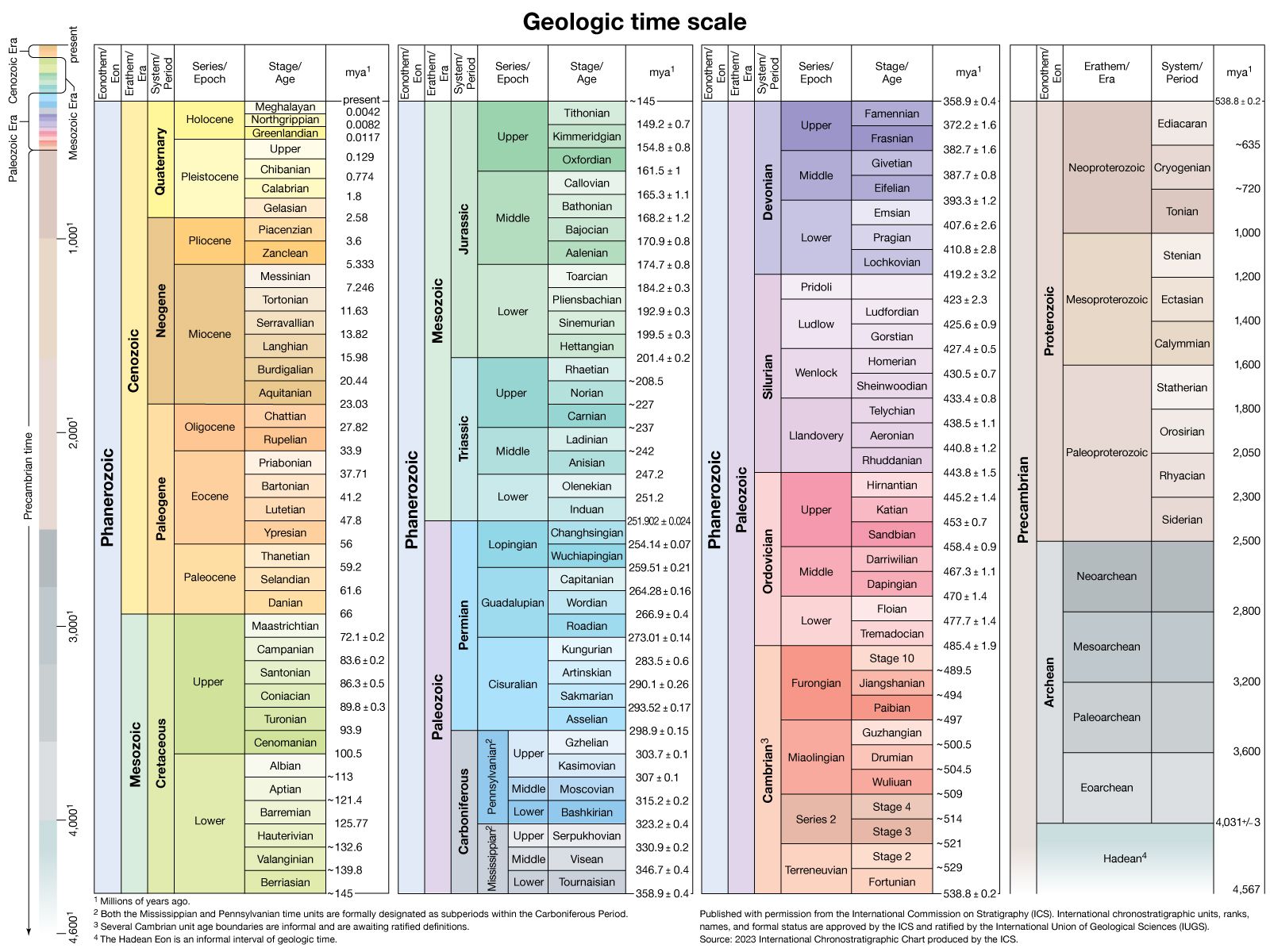
Wedekindellina is a genus of extinct fusulinid foraminiferans, which were single-celled protozoans characterized by their relatively large, hard shells. These organisms are particularly significant as index fossils found in deposits from the Pennsylvanian Subperiod (approximately 318 million to 299 million years ago) in midcontinental North America.12
Because of their distinct evolutionary traits and widespread presence, the various species of Wedekindellina allow geologists to divide Late Carboniferous rock units into more precise time intervals. Like other fusulinids, they lived in clear, offshore marine environments and possessed complex internal shell structures that are essential for their classification and the study of their evolutionary history.12
What are index fossils and why are they important?
An index fossil is any plant or animal preserved in the Earth’s rock record that serves as a marker for a specific span of geologic time or a particular environment.3
Characteristics of an Ideal Index Fossil
To be considered a useful index fossil, a specimen should ideally possess the following traits:
- Short temporal range: The species existed for only a brief moment in geologic history, allowing for precise dating.4
- Wide geographic distribution: The organism was cosmopolitan, appearing across vast regions.4
- Abundance: The fossilized population is common enough to be easily discovered.34
- Distinctiveness: It is easily recognizable, which prevents misidentification.34
Importance in Geology
Index fossils are fundamental to stratigraphy and the study of Earth history. They provide the basis for defining boundaries within the geologic time scale and are essential for the correlation of rock strata across different locations. By applying the principle of faunal succession, geologists can determine the relative age of fossiliferous rocks, a method that has been consistently validated by modern radiometric dating techniques.34
How do foraminiferans differ from modern amoebas?
Foraminiferans and modern amoebas are both unicellular protozoans that utilize pseudopodia for movement and feeding, but they differ significantly in their morphology, life cycles, and environmental roles.567
Key Differences
- Shells and Structure: Most foraminiferans are encased in a test (shell), which is often chambered and calcareous. In contrast, many common amoebas, such as Amoeba proteus, are “naked” and lack a shell, though some testate amoebas do possess single-chambered tests.587
- Pseudopodia Type: Foraminiferans utilize reticulopodia—fine, branching threads that fuse to form a dense network for trapping prey. Typical amoebas use lobopodia, which are blunt, fingerlike extensions.69
- Reproduction: While amoebas primarily reproduce asexually through binary fission, foraminiferans typically undergo a complex life cycle that alternates between sexual and asexual phases, often involving the production of flagellated swarmers through multiple fission.8107
- Habitat: Foraminiferans are an entirely marine group, whereas amoebas are found in diverse environments, including freshwater, soil, and as parasites within hosts.5117
Foraminiferans are also notable for their extensive fossil record, which makes them vital as index fossils for geological dating and petroleum exploration, a role not shared by most modern amoebas.511
What defines the Pennsylvanian Subperiod?
The Pennsylvanian Subperiod is the second major interval of the Carboniferous Period, spanning from 323.2 million to 298.9 million years ago. It is defined by several key geological and biological characteristics:12
- Sedimentary Cycles: The subperiod is typified by cyclical sedimentary deposits that reflect frequent alternations between marine and nonmarine conditions, driven by significant advances and retreats of shallow seas.1213
- Coal Formation: It is renowned for the extensive development of coal swamps, particularly in equatorial regions. More coal was formed during the Pennsylvanian than at any other time in the geologic record.1213
- Biological Diversity: The strata contain abundant remains of unique vascular plants, including sphenopsids, lycopods, and seed ferns. The era also saw a variety of insects and the emergence of the first reptiles in its later stages.13
- Tectonic Activity: The subperiod featured significant orogenic activity, including mountain building in the Cordilleran region of North America, the Hercynides and Ural Mountains of Europe, and across Asia and Africa.13
Sources
- Wedekindellina — Encyclopædia Britannica
- fusulinid — Encyclopædia Britannica
- index fossil — Encyclopædia Britannica
- dating - Principles and techniques — Encyclopædia Britannica
- foraminiferan — Encyclopædia Britannica
- Protozoan - Evolution and paleontology — Encyclopædia Britannica
- Protozoan - Mechanisms of asexual reproduction — Encyclopædia Britannica
- protist - Pseudopodia — Encyclopædia Britannica
- pseudopodium — Encyclopædia Britannica
- Protozoan - Mechanisms of sexual reproduction — Encyclopædia Britannica
- amoeba — Encyclopædia Britannica
- Pennsylvanian Subperiod — Encyclopædia Britannica
- Carboniferous Period - Distinctive features — Encyclopædia Britannica
- Carboniferous Period - Major subdivisions of the Carboniferous System — Encyclopædia Britannica
- Carboniferous Period - Paleoclimate — Encyclopædia Britannica
Published on · 3 min read