Welwitschiaceae
Welwitschia mirabilis is a highly unusual gymnosperm and the sole extant member of the Welwitschiaceae family. Found exclusively in the Namib desert, it is…
What are the unique characteristics of Welwitschia mirabilis, the only species in the Welwitschiaceae family?
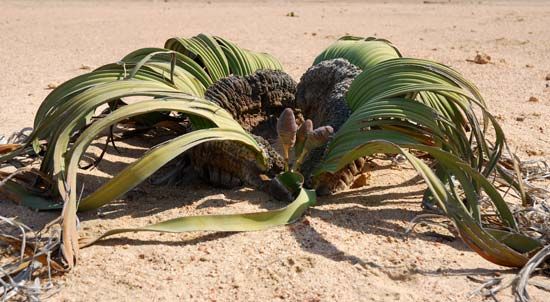
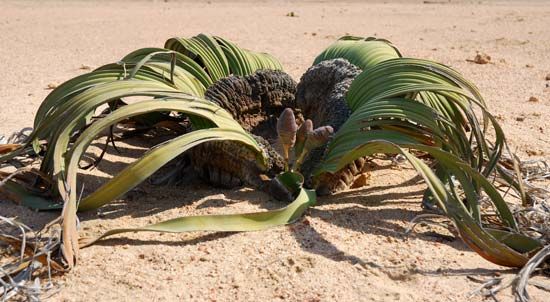
Welwitschia mirabilis is a highly unusual gymnosperm and the sole extant member of the Welwitschiaceae family. Found exclusively in the Namib desert, it is one of the most geographically restricted and distinct plants in the world.12
Key characteristics include:
- Longevity and Growth: Some specimens are estimated to be 1,500 to 2,000 years old. The plant features a deep taproot and a short, cone-shaped stem that projects slightly above the ground.12
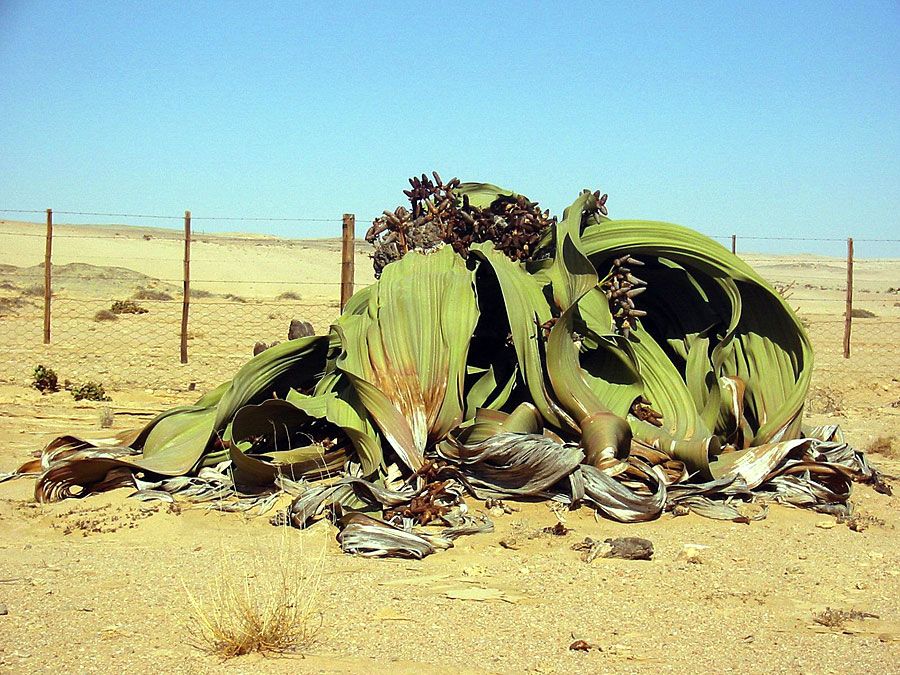
- Unique Foliage: Throughout its life, the plant produces only two permanent, broad, straplike leaves. These grow continuously from a basal meristem but are kept at a consistent length by erosion from desert sand.12
- Survival Mechanisms: Thriving in an extremely arid environment, the plant likely utilizes moisture from frequent morning fog. It also engages in photosynthesis during the day, losing significant water through transpiration to cool its leaf surfaces.1
- Reproduction: Like other gymnosperms, it reproduces via cones rather than flowers.1
What is the evolutionary history of Welwitschiaceae and how does it relate to other gymnosperms?
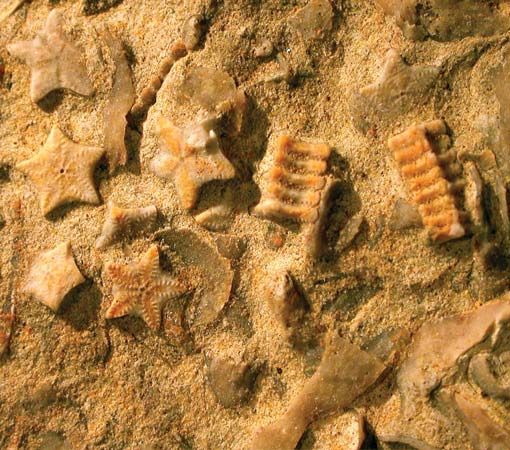
The evolutionary history of the Welwitschiaceae family is rooted in the Gnetales order of gymnosperms. While Welwitschia mirabilis is the only living species today, the fossil record from the Early Cretaceous reveals the existence of three extinct genera: Priscowelwitschia, Welwitschiophyllum, and Welwitschiostrobus. These fossils, including leafy shoots, seedlings, and pollen, confirm that the family was once more diverse.2
Regarding their relationship to other gymnosperms, the placement of gnetophytes has historically been contentious. Because they possess double fertilization, they were once theorized to be closely related to angiosperms, though it is now understood that this trait evolved independently in both groups. Modern phylogenetic studies often identify them as a sister group to other gymnosperms.3
Gnetophytes, including Welwitschia, Ephedra, and Gnetum, are distinguished from all other gymnosperms by two primary features:
- The presence of vessel elements in the xylem, whereas other gymnosperms typically rely on tracheids.4
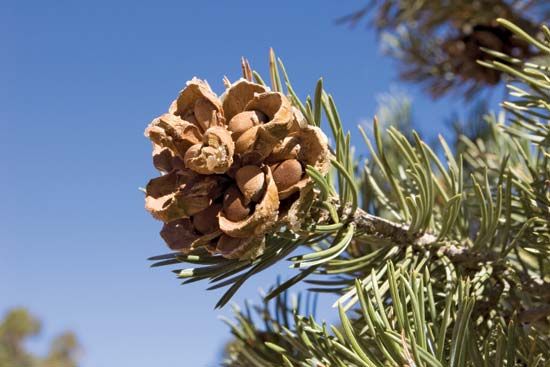
- Specialized reproductive morphologies that differ significantly from the cone structures found in conifers and cycads.45
How does Welwitschia mirabilis adapt to its harsh desert environment?
Welwitschia mirabilis employs several specialized adaptations to survive the extreme aridity of the Namib desert:
- Water Acquisition: The plant features a deep taproot that can extend 1.5 meters or more, likely accessing water sources unavailable to other desert flora. Additionally, it is hypothesized that the plant absorbs moisture from the frequent morning fog that blankets the region, though this process remains unproven.16
- Photosynthetic Strategy: While it has been observed that Welwitschia takes up carbon dioxide during the day through open stomata—leading to significant water loss via transpiration to cool its leaves—there is also evidence that the plant utilizes crassulacean acid metabolism (CAM). This pathway allows for nocturnal carbon fixation, which significantly improves water-use efficiency.7
- Growth Pattern: The plant produces only two permanent, straplike leaves that grow continuously from a basal meristem. These leaves are kept at a manageable length by the abrasive action of desert sand, preventing excessive tissue exposure.16
How do the leaves of Welwitschia continue to grow throughout the plant’s lifetime?
The two permanent, straplike leaves of Welwitschia mirabilis grow continuously throughout the plant’s life due to a specialized meristem located at the base of each leaf.16
Shortly after the plant germinates and produces its initial cotyledons, growth activity shifts away from the apical meristem at the stem tip to this basal meristematic zone. This region continuously adds new tissue to the base of the leaves at a rate of approximately 8 to 15 cm (3 to 6 inches) per year. This unique growth pattern shifts the plant’s development from increasing in height to expanding the two leaves outward, eventually forming a bilobed crown.61
While the leaves grow indefinitely, they do not reach infinite lengths; the hot, abrasive sand of the Namib desert erodes the tips of the leaves, typically keeping them at a length of about 3 meters (nearly 10 feet). Over time, the leaves become split and frayed, often giving the appearance of having more than two leaves.16
Sources
- welwitschia — Encyclopædia Britannica
- Welwitschiaceae — Encyclopædia Britannica
- Plant - Gymnosperms — Encyclopædia Britannica
- gnetophyte — Encyclopædia Britannica
- gymnosperm - Annotated classification — Encyclopædia Britannica
- gnetophyte - Leaves — Encyclopædia Britannica
- Photosynthesis - Carbon fixation via crassulacean acid metabolism (CAM) — Encyclopædia Britannica
Published on · 3 min read