Whistling Swan
The whistling swan (Cygnus columbianus) is a North American species of swan that is also commonly known as the tundra swan. Named for its soft, high-pitched…
What is Whistling swan?
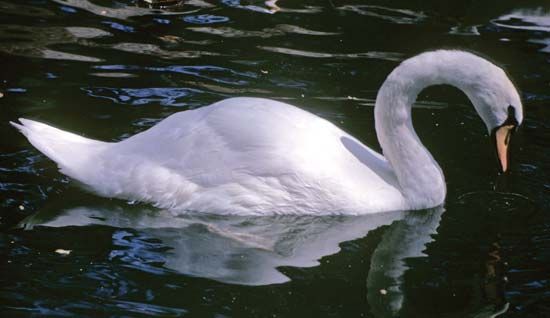
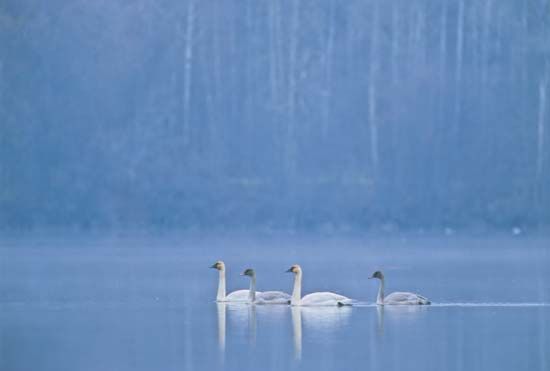
The whistling swan (Cygnus columbianus) is a North American species of swan that is also commonly known as the tundra swan. Named for its soft, high-pitched, musical call, this bird is characterized by a black bill that typically features a small yellow spot near the eye.1234
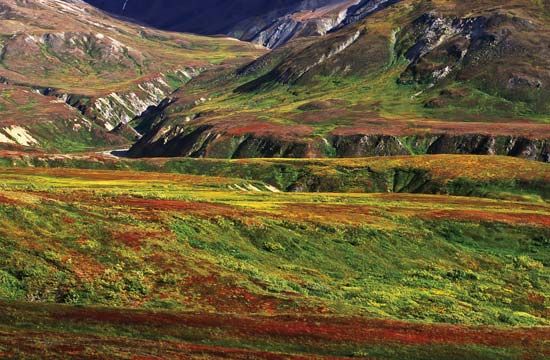
These birds breed in the Arctic tundra and migrate to spend the winter in shallow fresh or salt water, particularly along the eastern and western coasts of the United States. As members of the family Anatidae, they share the general characteristics of other swans, such as being large, long-necked, and heavy-bodied waterfowl that feed by dabbling in shallow water for aquatic plants.134
How do tundra swans prepare for their long migration?
Tundra swans prepare for their long migration through a combination of internal physiological changes and behavioral adjustments. As part of their annual life cycle, these birds undergo significant metabolic shifts, primarily under the control of the pituitary gland and the thyroid gland.5
Key aspects of this preparation include:
- Metabolic Changes: Before migration, birds experience a change in metabolic patterns, leading to the accumulation of fat in their body tissues. This stored energy is essential for sustaining them during their long-distance flights.5
- Increased Food Consumption: To support these physiological changes, food intake typically increases, reaching a peak as the migration season approaches.5
- Social and Family Dynamics: Unlike many other bird species, young tundra swans remain with their parents during their first winter. They migrate to and from their wintering grounds in the company of their parents, which helps ensure their survival during their first journey.6
- Environmental Cues: While the pituitary gland prepares the birds for flight, the actual initiation of migration is often triggered by ecological conditions, such as the availability of food and changes in weather or temperature.5
What are the main differences between swans and geese?
Swans and geese are both members of the bird family Anatidae, but they exhibit several distinct differences in physical build, behavior, and anatomy.
Physical Characteristics
- Size and Build: Swans are the largest waterfowl species, known for their graceful, long necks and heavy bodies. Geese are intermediate in size and build between large ducks and swans, with necks that are always shorter than their bodies.89
- Bills and Legs: Geese have strong, deep bills adapted for grazing on grasses and sedges, or digging for roots. Their legs are positioned farther forward on the body than those of swans, which allows them to walk on land with greater ease.810
- Plumage: In geese, the sexes are alike in coloration, though males (ganders) are typically larger than females (hens). Similarly, male swans (cobs) and female swans (pens) look alike.89
Behavior and Anatomy
- Vocalization: Geese are known for loud honking or gabbling cries. Swans produce a variety of sounds from the windpipe, which in some species is looped within the breastbone to create a resonant, instrument-like call.8109
- Social Structure: Both groups are generally monogamous and pair for life. However, geese and swans differ in their family dynamics; young geese and swans remain with their parents during their first winter, whereas young ducks typically must fend for themselves much earlier.869
- Flight: Both groups are powerful fliers that often travel in V-formations to conserve energy. Swans are noted for being particularly fast on the water and in the air compared to other waterfowl.89
What other bird species live in the Arctic tundra?
The Arctic tundra is home to a diverse array of bird species, though the population is largely seasonal. While a few species are year-round residents, the majority of Arctic birds migrate to temperate or tropical regions during the winter.13
Resident Species
Only a few species remain in the Arctic throughout the year, often adapting to the harsh conditions by sheltering in snow tunnels or utilizing specialized feeding strategies:1314
- Ptarmigan (Lagopus species)
- Snowy owl (Nyctea scandiaca)
- Gyrfalcon (Falco rusticolus)
- Raven (Corvus corax)
Migratory and Breeding Species
Most Arctic birds arrive during the short summer to breed and rear their young, taking advantage of the abundant food sources, such as insects and aquatic life.1314
- Shorebirds and Waterfowl: These are among the most abundant nesters. Common groups include various species of sandpipers, gray plovers, sanderlings, geese, ducks, and divers.1314
- Passerines: Finches, buntings, and sparrows are common, with the snow bunting and Lapland bunting being particularly notable.1314
- Raptors: In addition to residents, birds like the peregrine falcon, rough-legged hawk, short-eared owl, and golden eagle (in North America) or white-tailed eagle (in Eurasia/Greenland) nest in the region.13
- Marine and Coastal Birds: Species such as jaegers, gulls, terns (including the Arctic tern), and members of the Alcidae family (such as puffins, murres, and auklets) rely on marine food sources and often nest in coastal colonies.1314
Sources
- Whistling swan — Encyclopædia Britannica
- whistling swan — Merriam-Webster
- tundra swan — Merriam-Webster
- Swan — Encyclopædia Britannica
- Migration - Physiological stimulus of migration — Encyclopædia Britannica
- Anseriform - Life history — Encyclopædia Britannica
- Migration - In Europe — Encyclopædia Britannica
- Goose — Encyclopædia Britannica
- Anatidae — Encyclopædia Britannica
- Anseriform - Anatomy — Encyclopædia Britannica
- Anseriform - Behaviour — Encyclopædia Britannica
- Anseriform - Importance to humans — Encyclopædia Britannica
- Polar ecosystem - Biota of the Arctic — Encyclopædia Britannica
- Asia - The tundra — Encyclopædia Britannica
- Tundra - Effects of human activities and climate change — Encyclopædia Britannica
Published on · 4 min read