Zoanthid
A zoanthid is any member of the order Zoanthidea, a group comprising approximately 300 species of marine animals within the class Anthozoa (phylum Cnidaria).…
What is zoanthid?
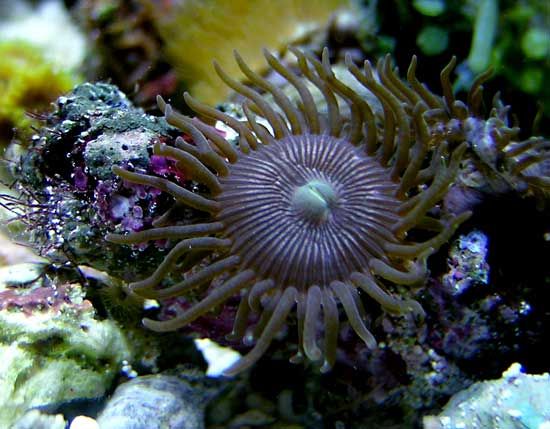
A zoanthid is any member of the order Zoanthidea, a group comprising approximately 300 species of marine animals within the class Anthozoa (phylum Cnidaria). These organisms are characterized by a polyp—a cylindrical, stalk-like structure featuring a mouth and tentacles at the upper end, while the lower end remains attached to a surface.1
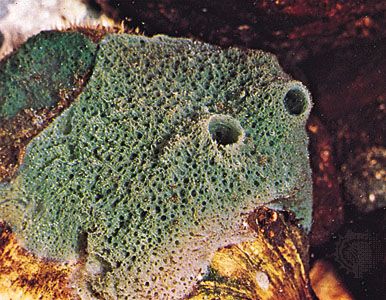
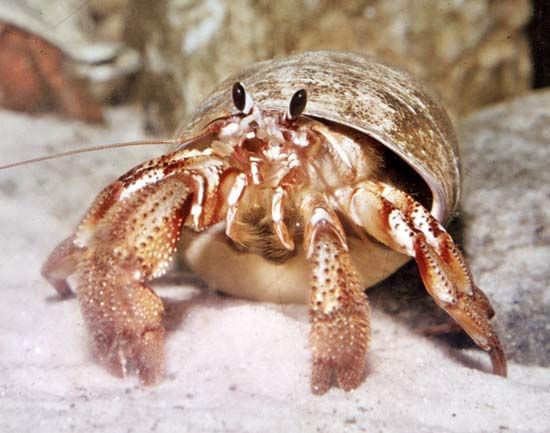
Zoanthids closely resemble the sea anemone, though they are generally smaller and possess a mucous coat that collects sand and other debris. Many species live in close association with other animals, such as sponges. For instance, Epizoanthus americanus is known to attach to seashells inhabited by hermit crabs; it eventually dissolves the shell and encloses the crab within its structure. While some species are solitary, others form colonies.1
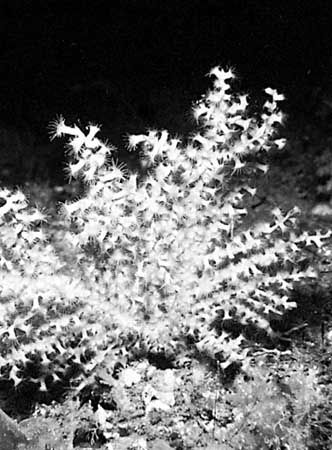
How do zoanthids differ from sea anemones?
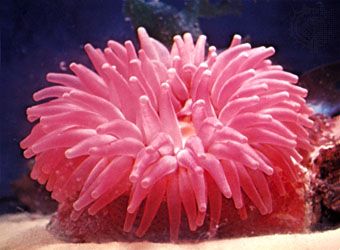
While zoanthids and sea anemones both belong to the class Anthozoa, they are distinct groups with notable differences in size, physical composition, and social behavior.
Key Differences
- Size: Zoanthids are generally much smaller than sea anemones. While some sea anemones can grow up to 1.5 meters in diameter, the largest known zoanthid species reaches only about 19 centimeters in length.14
- Physical Composition: A defining characteristic of zoanthids is the presence of a mucous coat that collects sand and other debris from their environment. While some sea anemones may also use adhesive structures to attach foreign objects like shell bits or sand to their bodies, this is not a universal or defining feature of the group in the same way it is for zoanthids.14
- Colonial vs. Solitary: Sea anemones are typically solitary individuals. In contrast, while some zoanthids are solitary, many species form colonies.51
- Associations: Both groups often live in association with other marine life, such as hermit crabs or sponges. However, zoanthids exhibit unique behaviors like Epizoanthus americanus, which attaches to a hermit crab’s shell, eventually dissolving the shell and enclosing the crab within its own structure.14
What role do zoanthids play in their marine ecosystems?
Zoanthids play a significant role in marine ecosystems primarily through their close associations with other organisms. As members of the order Zoanthidea, many species live on or in intimate relationships with sponges and other marine animals.1
A notable example of their ecological role is Epizoanthus americanus, which attaches to the shells inhabited by hermit crabs. In this process, the zoanthid dissolves the original shell and eventually encloses the crab within its own structure, creating a unique symbiotic dynamic. Similarly, other species, such as the coral Parazoanthus axinellae, are known to grow specifically on certain sponges, illustrating the specialized nature of these associations.19
While zoanthids are distinct from other anthozoans like sea anemones and reef-building corals, they contribute to the biological complexity of benthic (bottom-dwelling) environments by participating in these diverse interspecies relationships.1107
What are some other animals in the class Anthozoa?
The class Anthozoa includes a diverse array of marine animals characterized by their polypoid body structure and lack of a medusa stage. Beyond zoanthids, several other groups belong to this class:112
- Sea Anemones: Solitary or clonal polyps that lack a skeleton and are commonly found attached to firm substrates or burrowing in soft sediments.1
- Stony Corals: Also known as true corals, these are mostly colonial organisms that secrete a hard, external calcium carbonate skeleton. They are the primary builders of coral reefs.131
- Soft Corals: Colonial forms that lack a hard, stony skeleton, instead possessing an internal structure made of isolated calcareous spicules.131
- Gorgonians: Often called sea fans or sea whips, these colonial organisms typically feature an arborescent (tree-like) structure supported by an internal skeleton of gorgonin and/or calcareous spicules.131
- Black Corals: Bushy, colonial organisms characterized by a thorny, hornlike axial skeleton.131
- Tube Anemones: Solitary polyps that build felt-like tubes and burrow into soft sediments.1
- Sea Pens: Fleshy, unbranched colonies that include a central calcified axial rod and a peduncle used for burrowing into soft substrates.1
Sources
- zoanthid — Encyclopædia Britannica
- Zoantharia — Merriam-Webster
- toxin — Encyclopædia Britannica
- sea anemone — Encyclopædia Britannica
- Reproductive behaviour - Coelenterates — Encyclopædia Britannica
- cnidarian - Critical appraisal — Encyclopædia Britannica
- cnidarian - Distribution and abundance — Encyclopædia Britannica
- cnidarian - Size range and diversity of structure — Encyclopædia Britannica
- sponge - Associations with other organisms — Encyclopædia Britannica
- cnidarian - Associations — Encyclopædia Britannica
- Marine ecosystem - Benthos — Encyclopædia Britannica
- coral — Encyclopædia Britannica
- cnidarian - Annotated classification — Encyclopædia Britannica
- anthozoan — Merriam-Webster
Published on · 3 min read