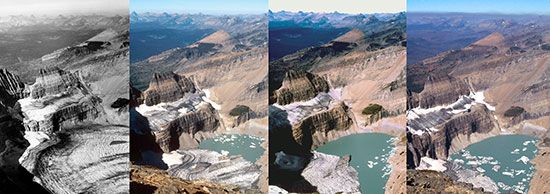
A Recent History of Climate Change
Recent climate change, often termed global warming, refers to the rise in Earth's average surface temperature observed over the past one to two centuries…
What is A Recent History of Climate Change?
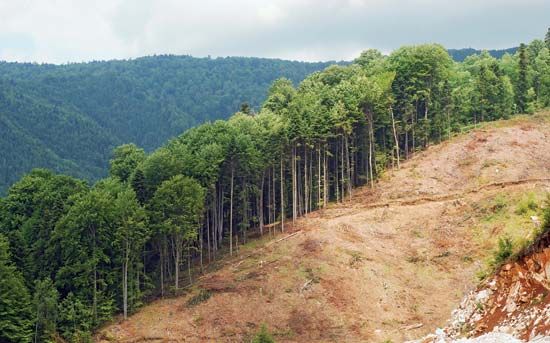
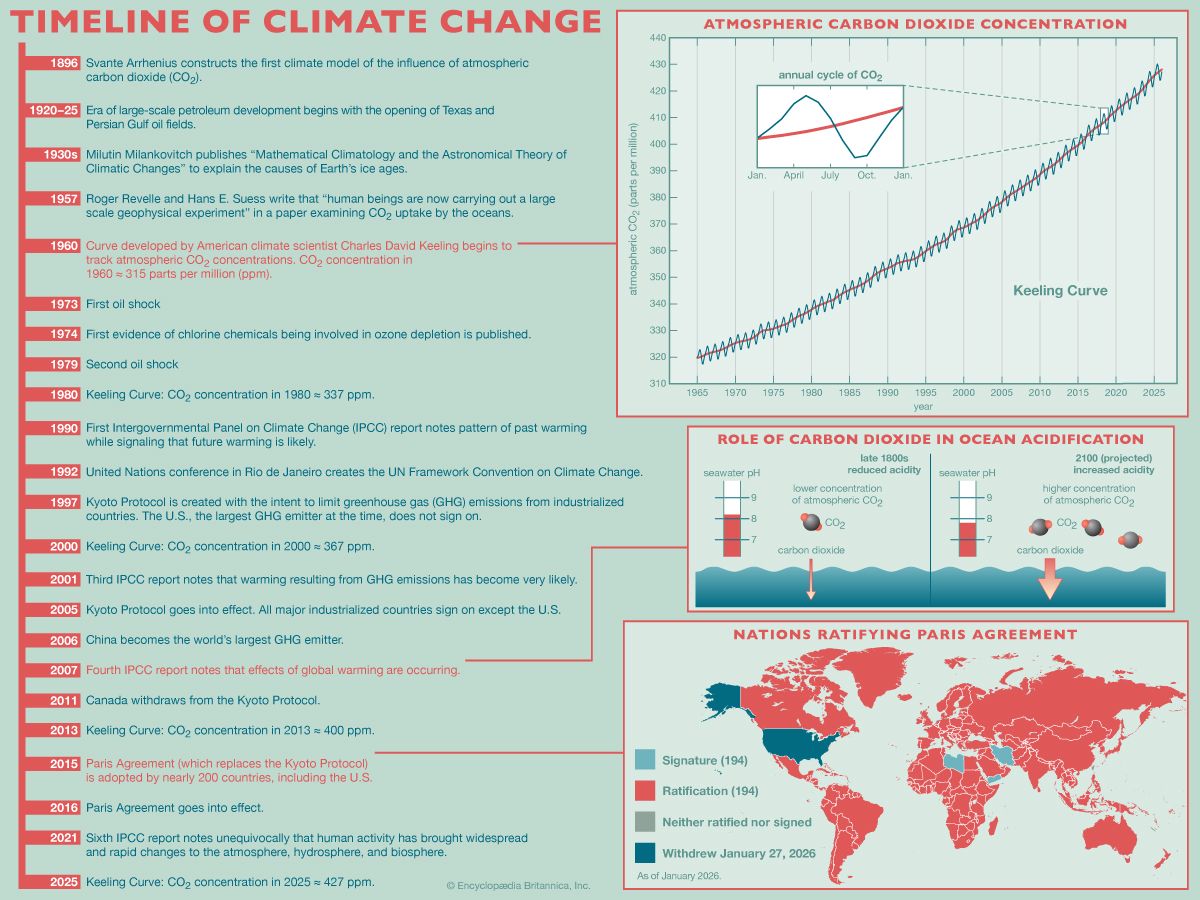
Recent climate change, often termed global warming, refers to the rise in Earth’s average surface temperature observed over the past one to two centuries, with a marked acceleration since the mid-20th century. Unlike historical climatic variations driven by non-anthropogenic factors, the current warming trend is primarily attributed to human activities, specifically the emission of greenhouse gases like carbon dioxide from fossil-fuel combustion and deforestation.123
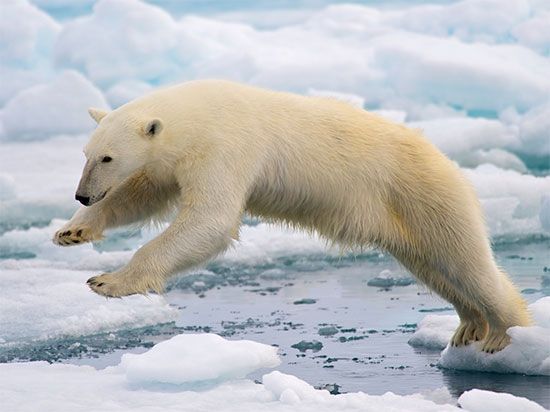
Scientific consensus, synthesized by the Intergovernmental Panel on Climate Change (IPCC), confirms that global average surface temperatures have risen by approximately 1.07 °C (1.9 °F) between 1850 and 2019. This warming has led to rising sea levels, melting ice, and shifts in weather patterns. International policy efforts to mitigate these impacts, such as the United Nations Framework Convention on Climate Change and the Paris Agreement, aim to stabilize greenhouse gas concentrations and limit temperature increases to avoid severe ecological and social damage.3145
How do scientists use ice cores to study ancient climates?
Scientists use ice cores—long cylinders of glacial ice drilled from sheets in places like Greenland and Antarctica—as archives of Earth’s past climate. By analyzing these cores, researchers can reconstruct environmental conditions spanning over 100,000 years.89
Key methods of analysis include:
- Isotopic Composition: Scientists measure the ratios of oxygen (18^{18}O/16^{16}O) and hydrogen (2^{2}H) isotopes in the ice. Because these ratios are influenced by the air temperature at the time of snowfall, they serve as a proxy for past temperature variations.89
- Atmospheric Sampling: Tiny air bubbles trapped within the ice preserve samples of the ancient atmosphere. Extracting these allows researchers to measure historical concentrations of greenhouse gases like carbon dioxide and methane.89
- Dust and Impurities: Measuring microparticles and sulfate concentrations helps identify past volcanic eruptions and periods of intense atmospheric circulation, which often correlate with arid, glacial conditions.89
- Layer Counting: In areas with high snow accumulation, annual layers can be counted to establish a precise chronology, similar to tree-ring studies.89
What are some examples of greenhouse gases besides carbon dioxide?
Besides carbon dioxide, several other gases contribute to the greenhouse effect by absorbing and reradiating heat energy in Earth’s atmosphere. Notable examples include:1112
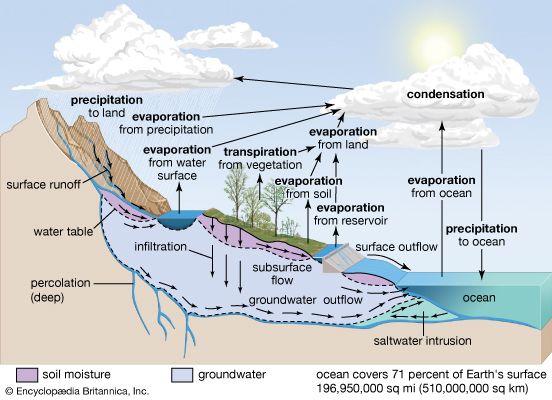
- Water Vapor: This is the most potent greenhouse gas in the atmosphere. Unlike other gases, its concentration is primarily determined by air temperature rather than direct human activity; as the surface warms, evaporation increases, leading to higher concentrations of water vapor that trap more heat.1113
- Methane (CH₄): The second most significant greenhouse gas, methane is more potent than carbon dioxide but exists in lower concentrations and has a shorter atmospheric residence time. It originates from both natural sources, such as wetlands and termites, and human activities, including livestock farming, coal mining, and waste management.1112
- Surface-Level Ozone (O₃): Distinct from the naturally occurring ozone in the stratosphere, surface-level ozone is a byproduct of air pollution, specifically photochemical reactions involving carbon monoxide.11
- Nitrous Oxide (N₂O): This trace gas has small natural background concentrations from biological processes in soil and water, but it is also produced through industrial activities.1114
- Fluorinated Gases: These include halocarbons such as hydrofluorocarbons (HFCs), perfluorocarbons (PFCs), and sulfur hexafluoride. Unlike many other greenhouse gases, these are almost entirely the result of industrial sources.1114
What is the difference between weather and climate?
The primary difference between weather and climate is the duration of time over which atmospheric conditions are measured.15
- Weather refers to the state of the atmosphere at a specific location over a limited period, such as throughout a single day or even hour-to-hour. It describes immediate conditions like temperature, humidity, precipitation, and wind speed.1516
- Climate describes the average atmospheric conditions—including variability, extreme ranges, and frequency of events—over a long period, typically 30 years or more. While weather is highly volatile and localized, climate provides a broader, more stable view of atmospheric behavior for a region or country.1615
An effective way to visualize this is to compare weather to a single inning in a baseball game, while climate represents the entire game. Understanding this distinction is vital, as even slight shifts in long-term climate can have severe consequences for ecosystems and human agriculture, whereas weather changes are a normal, daily occurrence.1517
Sources
- Climate change - Human activities — Encyclopædia Britannica
- Global warming policy - The IPCC and the scientific consensus — Encyclopædia Britannica
- Climate change - Evidence for climate change — Encyclopædia Britannica
- Global warming policy - The UN Framework Convention and the Kyoto Protocol — Encyclopædia Britannica
- Global warming — Encyclopædia Britannica
- Global warming - Prehistorical climate records — Encyclopædia Britannica
- Global warming - Modern observations — Encyclopædia Britannica
- Pleistocene Epoch - Ice-core records — Encyclopædia Britannica
- ice core — Encyclopædia Britannica
- Pleistocene Epoch - Marine oxygen isotope record — Encyclopædia Britannica
- 5 Notorious Greenhouse Gases — Encyclopædia Britannica
- methane — Encyclopædia Britannica
- Greenhouse gas - Nitrous oxides and fluorinated gases — Encyclopædia Britannica
- Greenhouse gas - Water vapour — Encyclopædia Britannica
- Climate — Encyclopædia Britannica
- climate — Merriam-Webster
- What’s the Difference Between Weather and Climate? — Encyclopædia Britannica
- weather — Merriam-Webster
- natural disaster - Frequency and disaster patterns — Encyclopædia Britannica
Published on · 3 min read