Snowshoe Hare
The snowshoe hare (Lepus americanus) is a species of hare native to northern North America. It is well-known for its seasonal color change, transitioning…
What is snowshoe hare?
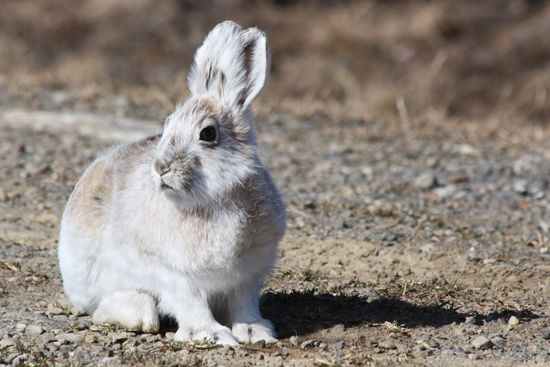
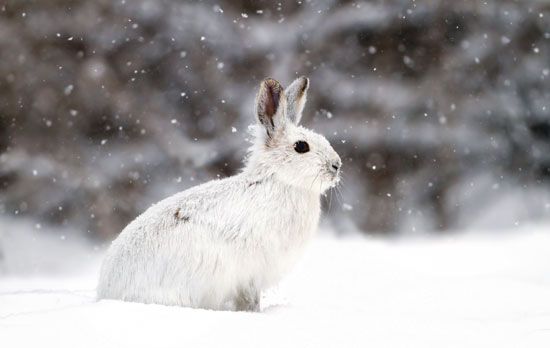
The snowshoe hare (Lepus americanus) is a species of hare native to northern North America. It is well-known for its seasonal color change, transitioning from a brownish or grayish coat in the summer to a pure white coat in the winter to blend into its environment.12
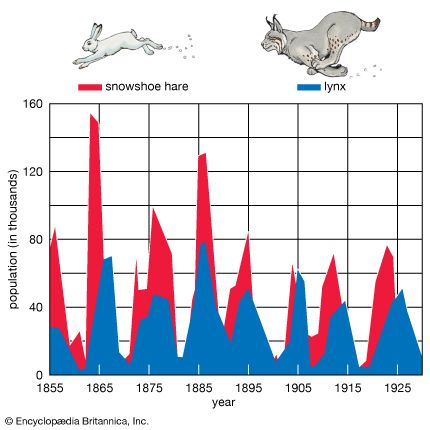
The hare is named for its large, heavily furred hind feet, which act like snowshoes to help it travel across deep snow. It is a key species in the boreal forests of North America, where its population undergoes dramatic, cyclical “boom-and-bust” patterns that typically span 8 to 11 years. These cycles are closely linked to the population of the Canada lynx, which relies on the hare as a primary food source. As an herbivore, the snowshoe hare plays a significant role in its ecosystem, though its high population density can sometimes lead to damage to local vegetation.1234
How do snowshoe hares change their fur color with the seasons?
The snowshoe hare (Lepus americanus) undergoes an annual molt, replacing its brownish or grayish summer coat with a pure white winter pelage to provide effective camouflage against the snow.15
This seasonal color change is primarily regulated by the photoperiod, or the amount of daylight received. As days shorten in the autumn, receptors in the hare’s retina transmit this information to the brain, which triggers the replacement of brown hair with white, beginning at the extremities. Conversely, the spring molt is stimulated by lengthening days, though the specific rate at which the hare transitions back to its summer coat is influenced by temperature.67
This adaptation is critical for survival in the boreal forest, though it faces new challenges due to climate change. Reduced snow cover can create a mismatch between the hare’s white coat and the earth-colored surroundings, leaving the animals vulnerable to predators.6
What are the main differences between hares and rabbits?
While rabbits and hares are both members of the order Lagomorpha, they are distinct animals with notable differences in their physical traits, life history, and behaviors.
Physical and Behavioral Differences
- Size and Appearance: In general, hares are larger than rabbits and possess longer ears and longer, more powerful hind legs.8910
- Development at Birth: A primary biological distinction is the state of their young at birth. Hares are born fully developed, covered in fur, and with their eyes open. In contrast, rabbits are born blind, furless, and helpless.8910
- Habitat and Shelter: Rabbits typically prefer habitats with trees and shrubs, where they live in underground burrows or tunnels known as warrens. Hares are better suited to open areas like prairies, where they live alone or in pairs and make their nests in small, open depressions on the ground.8910
- Defense Strategy: When threatened, rabbits generally rely on hiding in their burrows, whereas hares are built for speed and rely on running to escape predators.8
Common naming conventions often cause confusion; for example, jackrabbits are biologically classified as hares, while species like the hispid hare are actually rabbits.8910
Why do snowshoe hare and lynx populations follow a 10-year cycle?
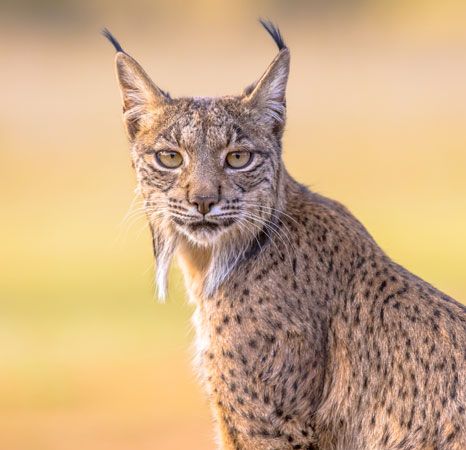
The 10-year population cycle of the snowshoe hare and the Canada lynx is a classic example of predator-prey dynamics. Because snowshoe hares constitute 35 to 100 percent of the lynx’s diet, the lynx population is heavily dependent on the availability of its primary food source.2
As the density of the hare population increases, the lynx population follows with a lag of one to two years, as the abundance of food supports higher lynx survival and reproduction rates. When the hare population reaches a peak and subsequently crashes, the lynx population declines shortly thereafter due to the sudden scarcity of prey.2
These oscillations are further influenced by environmental factors that affect the hare’s habitat and food resources, including:
- Climate and Weather: Variations in snowfall and forest fires impact the availability of suitable living conditions.2
- Solar Activity: Changes in solar cycles are also linked to the environmental conditions that drive these density fluctuations.2
Sources
- snowshoe hare — Encyclopædia Britannica
- Canada lynx - Diet — Encyclopædia Britannica
- hare — Encyclopædia Britannica
- snowshoe hare — Merriam-Webster
- 7 Animals That Turn White in Winter — Encyclopædia Britannica
- coloration - Seasonal changes — Encyclopædia Britannica
- Taiga - Mammals — Encyclopædia Britannica
- What’s the Difference Between Rabbits and Hares? — Encyclopædia Britannica
- lagomorph — Encyclopædia Britannica
- rabbit — Encyclopædia Britannica
- What's the difference between a rabbit and a hare? — Merriam-Webster
Published on · 3 min read