Alkali Flat
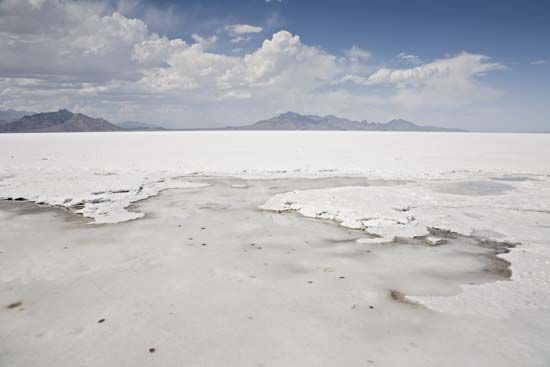
An alkali flat is a level, arid or semiarid region—typically a playa or dried-out desert lake bed—that is encrusted with salt or alkali deposits. These…
What is alkali flat?
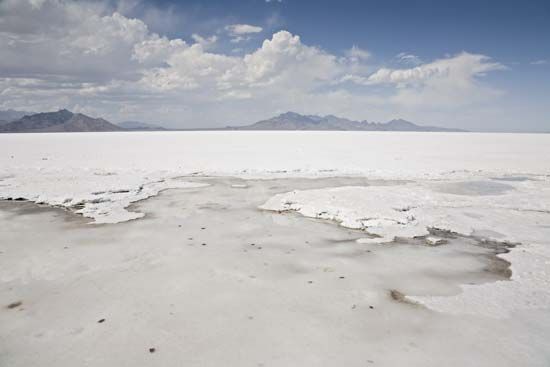
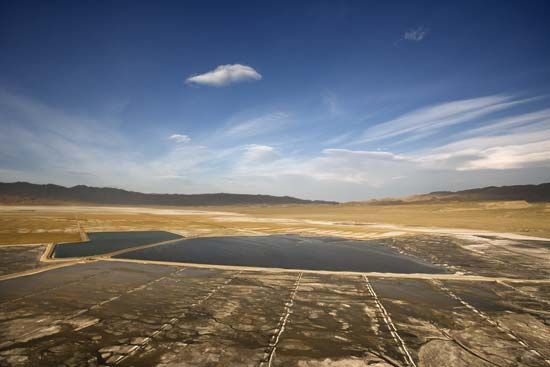
An alkali flat is a level, arid or semiarid region—typically a playa or dried-out desert lake bed—that is encrusted with salt or alkali deposits. These features form in interior desert basins where evaporation significantly exceeds water inflow, causing minerals to precipitate as the water evaporates or infiltrates the ground.123
While the term is most commonly used in the western United States, it is one of many names for such landforms, which are also known as salt pans, salars, or dry lake beds depending on their specific composition and location. The Bonneville Salt Flats near Salt Lake City serve as a prominent example of these remarkably flat surfaces, which are often used for high-speed automotive testing. Because they are formed by periodic inundation, these areas maintain a near-perfect level surface.23
How do salt flats differ from other desert landforms?
Salt flats, often referred to as playas, are distinct from other desert landforms primarily due to their extreme flatness and their formation through interior drainage in arid basins where evaporation exceeds water inflow. While other desert features like sand dunes or rocky plateaus are shaped by wind erosion or tectonic uplift, salt flats are created by the periodic inundation of water that leaves behind concentrated deposits of salt, sand, and mud as it evaporates or infiltrates the ground.34
Key differences between salt flats and other desert landforms include:
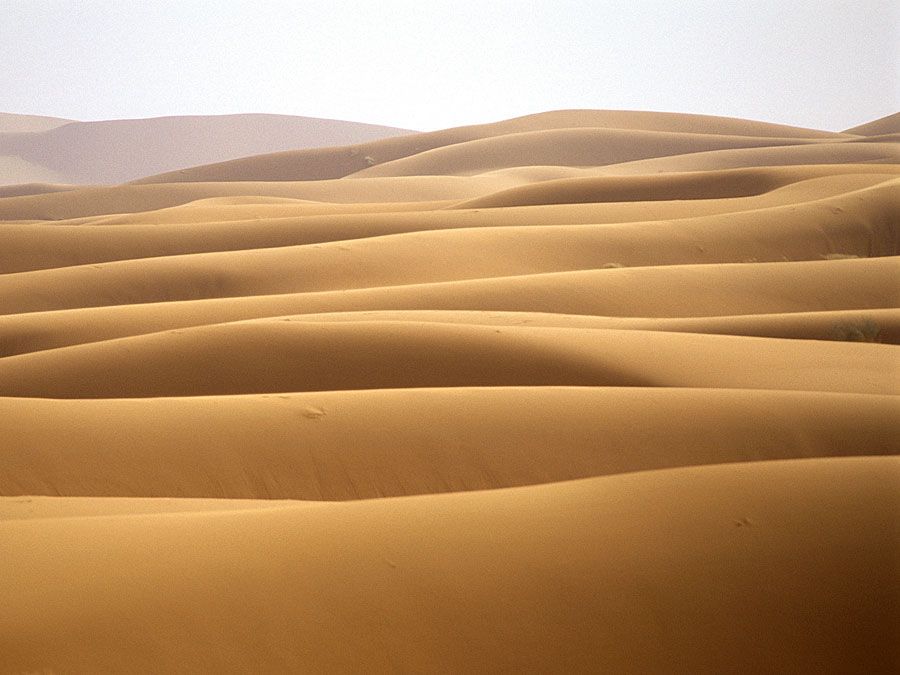
- Surface Composition: Unlike the sandy surfaces of dunes or the bedrock platforms found in regions like the Namib, salt flats are characterized by evaporite crusts. These crusts can range from smooth, level surfaces—formed by regular flooding—to rugged, irregular salt structures.56
- Vegetation: While some wetlands or salt marshes support halophytic (salt-tolerant) grasses and sedges, many salt flats are too saline to support significant plant life, distinguishing them from marshy ecosystems that require steady water supplies.78
- Geological Processes: Salt flats are maintained by the process of inundation, which creates a near-perfect level surface with slopes often less than 0.2 meters per kilometer. In contrast, other landforms are defined by their relief, such as the steep slopes of mountains or the shifting, wind-blown nature of dunes.346
Why are the Bonneville Salt Flats famous for speed records?
The Bonneville Salt Flats are world-renowned for speed records primarily due to their unique physical characteristics. As a remnant of an ancient lake bed, the surface is exceptionally level and smooth, providing an ideal track for high-speed vehicles.1213
By the end of the summer, the salt crust becomes as solid as concrete, offering a stable, high-traction surface that is perfectly suited for automotive and motorcycle speed trials. These natural conditions have made the site the home of the Bonneville Speedway, where numerous world automobile and motorcycle speed and endurance records have been established since 1935.1213
What causes water to evaporate so quickly in desert basins?
Rapid evaporation in desert basins is driven by a combination of high energy availability and the physical properties of the atmosphere. The primary factors include:
- High Solar Radiation: Intense sunlight provides the necessary energy to heat the water surface, which significantly increases the vapour pressure at the evaporating surface and accelerates the transition of liquid water into a gaseous state.14
- Saturation Deficit: Desert air is typically characterized by very low relative humidity. Because the capacity of warm air to hold water vapour is high, the gradient between the saturated air at the water’s surface and the dry air above is steep, promoting rapid diffusion the dry air above is steep, promoting rapid diffusion.15
- Temperature: High daytime temperatures increase the water vapour capacity of the air, further driving the evaporation process.15
- Wind and Surface Conditions: While winds are not always stronger in deserts than elsewhere, the general lack of vegetation allows wind to move freely at ground level, which helps maintain the diffusion gradient by removing moisture-laden air from the surface.1614
These conditions result in potential evaporation rates that often exceed 2,500 to 3,500 millimetres per year in many desert regions.16
Sources
- alkali flat — Merriam-Webster
- alkali flat — Encyclopædia Britannica
- playa — Encyclopædia Britannica
- playa - Saline minerals — Encyclopædia Britannica
- playa - Surface relief and structures — Encyclopædia Britannica
- Marsh — Encyclopædia Britannica
- salt dome - Origin of salt domes. — Encyclopædia Britannica
- salt dome - Physical characteristics of salt domes. — Encyclopædia Britannica
- Salt marsh — Encyclopædia Britannica
- landform — Encyclopædia Britannica
- Namib - Physiography — Encyclopædia Britannica
- Bonneville Salt Flats — Encyclopædia Britannica
- Bonneville Salt Flats — Merriam-Webster
- Desert - Environment — Encyclopædia Britannica
- Climate - Evaporation and humidity — Encyclopædia Britannica
- Biosphere - Humidity — Encyclopædia Britannica
- Arabian Desert - Climate of the Arabian Desert — Encyclopædia Britannica
- The Sahara Was Once Green: Top Questions — Encyclopædia Britannica
Published on · 3 min read