Sabkha
A sabkha (also spelled sebkha) is a saline flat or a salt-crusted depression. These features are commonly found along the coasts of North Africa and the…
What is sabkha?
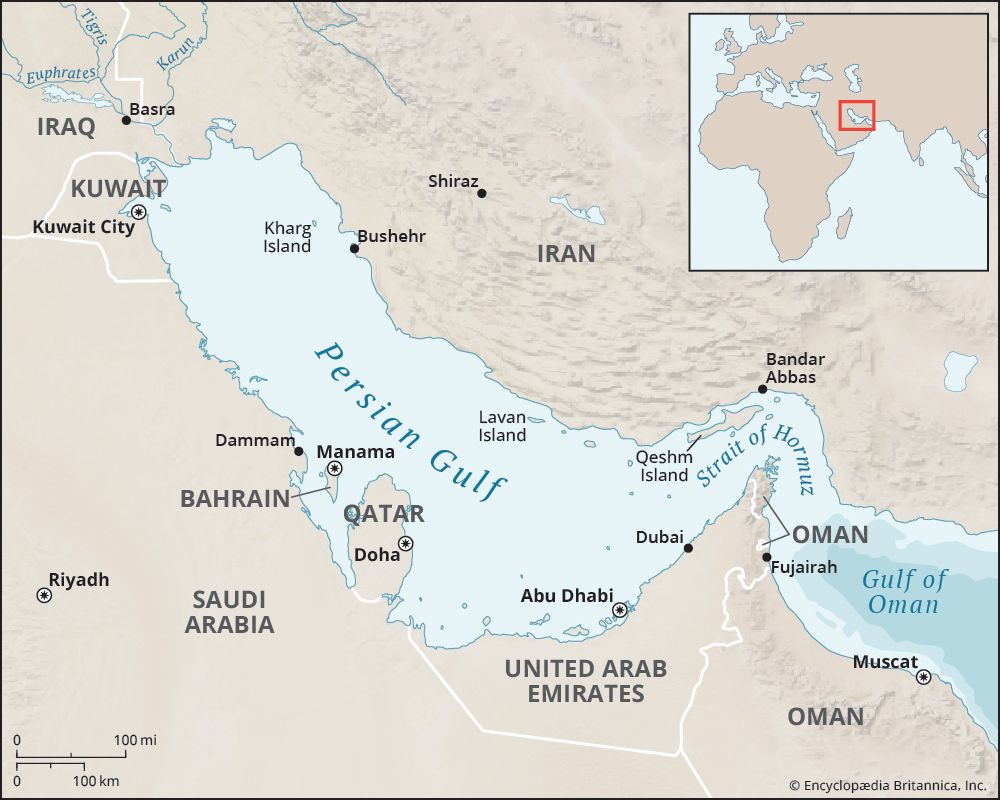
A sabkha (also spelled sebkha) is a saline flat or a salt-crusted depression. These features are commonly found along the coasts of North Africa and the southern Persian Gulf.12
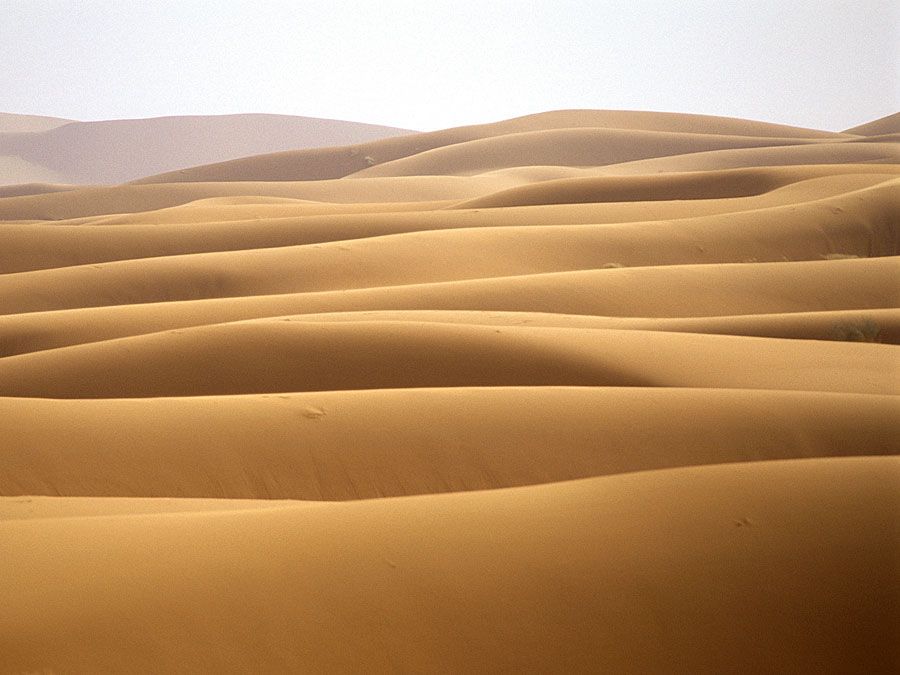
Typically bordered by sand dunes, sabkhas are characterized by soft, impermeable floors created by cycles of flooding and evaporation. The concentration of seawater and the capillary discharge of groundwater lead to the accumulation of minerals such as gypsum, calcite, and aragonite. Many of these formations are believed to have originated as small sea inlets, functioning similarly to basins where evaporites accumulated throughout geological history. In some regions, these plains may be temporarily covered by shallow lakes following rainfall.12
How do evaporites form in desert environments?
Evaporites form in desert environments through the precipitation of brines in areas where the rate of evaporation significantly exceeds the total input of water from rainfall, rivers, and streams. This process requires a specific climate and basin setting to concentrate dissolved minerals to the point of crystallization.34
Mechanisms of Formation
- Basin Restriction: Whether in deep, isolated basins or shallow coastal areas, the primary requirement is the restriction of water bodies from the open ocean. This prevents the dilution of brines, allowing them to reach the high salinity levels necessary for mineral precipitation.45
- Orderly Precipitation: As water volume decreases, minerals precipitate based on their solubility. Typically, less soluble components like calcite, gypsum, and anhydrite form first, followed by more soluble salts such as halite and sylvite.36
- Environmental Settings: In deserts, these deposits occur in various forms, including:
What types of plants or animals can survive in a sabkha?
The environment of a sabkha is characterized by high salinity and periodic flooding, which creates a challenging habitat for most organisms. While the provided search results do not explicitly list specific species that reside exclusively within a sabkha, they highlight that similar arid, saline environments—such as salt marshes—support specialized life forms adapted to these extreme conditions.71
Adaptations for Saline Environments
Plants and animals in such high-salinity areas typically exhibit the following survival strategies:
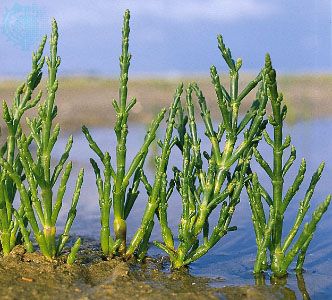
- Halophytic Plants: Vegetation in saline habitats is often halophytic, meaning it is adapted to survive in high-salt concentrations. Some plants, such as glassworts, can accumulate salts in their leaves and stems to tolerate the environment.7
- Invertebrate Resilience: Invertebrates in saline marshes often adapt to low-oxygen conditions. For example, some nematodes can survive in the absence of oxygen, while others utilize air spaces within plants.7
- Osmotic Control: Animals like fiddler crabs have developed the ability to regulate their internal osmotic concentration to survive fluctuations in salinity.7
- Behavioral Avoidance: Many desert-dwelling animals, such as the jerboa, survive extreme heat and arid conditions by remaining in cool burrows during the day and emerging only at night.8
How do coastal sabkhas differ from continental ones?
Coastal and continental sabkhas are both saline, salt-crusted depressions found in arid regions, but they differ primarily in their hydrological sources and geological settings.
Coastal Sabkhas
Coastal sabkhas are located along marine margins, such as the Persian Gulf and parts of North Africa. Their formation is driven by the concentration of seawater and the capillary discharge of groundwater. These areas are often remnants of former sea inlets and are characterized by deposits of gypsum, calcite, and aragonite. They typically interfinger with tidal flat limestone and fine-grained mudrock.16
Continental Sabkhas
In contrast, continental sabkhas (often referred to as playa lakes or inland basins) are located within the interior of desert regions. Unlike coastal varieties, they are not directly linked to marine tidal processes. Instead, they form in closed depressions where surface runoff and groundwater accumulate and subsequently evaporate, leaving behind concentrated mineral crusts. These inland basins are often associated with diatomaceous earth and various salts that reflect the local geology of the surrounding desert landscape.14
Sources
- sabkha — Encyclopædia Britannica
- sebkha — Merriam-Webster
- sedimentary rock - Evaporites — Encyclopædia Britannica
- sedimentary rock - Deep-basin environment — Encyclopædia Britannica
- evaporite — Encyclopædia Britannica
- sedimentary rock - Shallow marine environment — Encyclopædia Britannica
- Salt marsh — Encyclopædia Britannica
- 8 Animals That Live in Extreme Environments — Encyclopædia Britannica
- Sahara - Soils — Encyclopædia Britannica
Published on · 3 min read