Bladdernut
A bladdernut is any shrub or small tree belonging to the genus Staphylea within the family Staphyleaceae. These plants are native to the North Temperate Zone…
What is bladdernut?
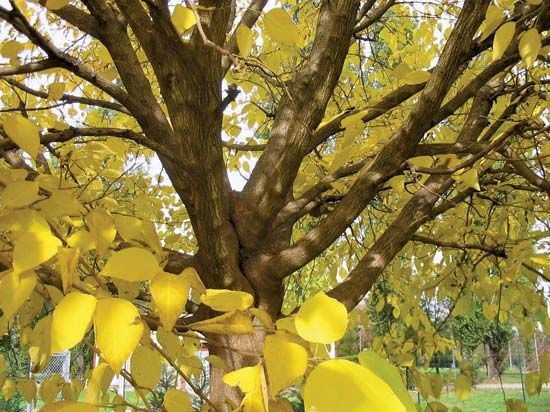
A bladdernut is any shrub or small tree belonging to the genus Staphylea within the family Staphyleaceae. These plants are native to the North Temperate Zone and typically reach heights of 3.5 to 4.5 meters (12 to 15 feet).12
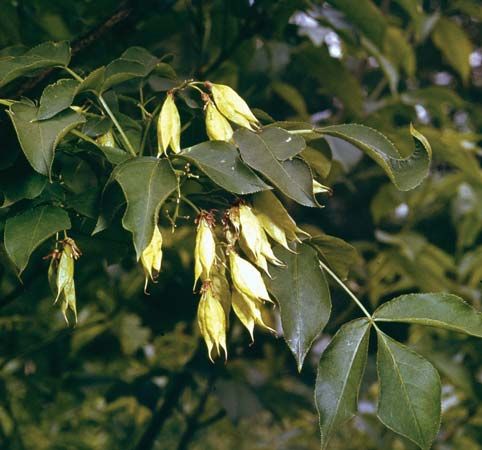
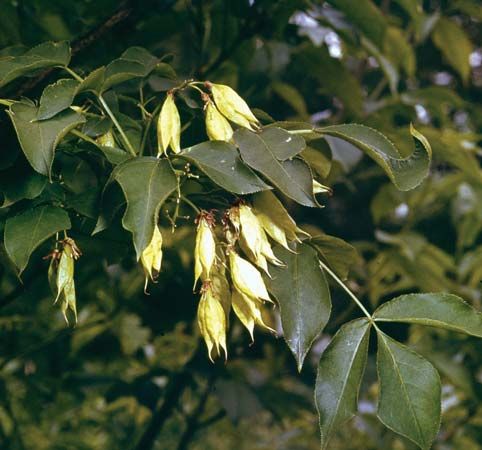
While they produce white, greenish-white, or pinkish flowers, they are primarily cultivated for their attractive green foliage. The plant is most distinct for its fruit, which consists of an inflated, three-sided membranous capsule. The name “bladdernut” refers to these bladdery, inflated capsules.123
It is important to distinguish the bladdernut from the breadnut (Brosimum alicastrum), a completely different, protein-rich tree species from the family Moraceae that is native to tropical rainforests and historically significant to the Mayan civilization.4
How did the bladdernut get its unique name?
The name “bladdernut” is derived from the plant’s distinctive fruit, which consists of an inflated, membranous, three-sided capsule. These capsules appear “bladdery” in texture and shape, leading to the common name used to describe the genus Staphylea and its members.1346
While the common name highlights the appearance of the fruit, the scientific name for the genus, Staphylea, has a different origin. It is derived from the Greek word staphylē, meaning “bunch of grapes,” which refers to the way the plant’s flowers and fruits grow in clusters.6
What are the main differences between bladdernut and breadnut?
Bladdernut and breadnut are distinct plants with significant botanical and functional differences.
Bladdernut (Staphylea)
- Classification: Member of the Staphyleaceae family.14
- Habitat: Native to the North Temperate Zone.1
- Characteristics: These are ornamental shrubs or small trees, typically growing 3.5 to 4.5 meters tall. They are primarily cultivated for their green foliage rather than their inconspicuous flowers.14
- Fruit: The name is derived from their fruit, which is an inflated, three-sided, membranous capsule.14
Breadnut (Brosimum alicastrum or Artocarpus camansi)
- Classification: Member of the Moraceae (mulberry) family.78
- Habitat: Native to tropical regions, including Central America, Mexico, Papua New Guinea, and Indonesia.78
- Characteristics: These are tropical evergreen trees valued for their utility. Brosimum alicastrum is a prolific, fast-growing tree with a dense crown.78
- Use: The seeds are highly nutritious and protein-rich; they are often boiled, roasted for coffee substitutes, or ground into meal for bread. Historically, they served as a vital food source for the Mayan civilization.78
In what types of environments do Staphylea species typically thrive?
Staphylea species, commonly known as bladdernut, are primarily found within the North Temperate Zone.15
These plants, which comprise a family of 10–15 known species, are adapted to the environmental conditions characteristic of these northern temperate regions. They typically grow as shrubs or small trees, reaching heights of approximately 3.5 to 4.5 meters (12 to 15 feet), and are noted for their compound leaves and inflated, capsular fruit.15
Sources
- bladdernut — Encyclopædia Britannica
- breadnut — Encyclopædia Britannica
- Staphylea — Merriam-Webster
- bladdernut — Merriam-Webster
- Staphyleaceae — Merriam-Webster
- American bladdernut — Merriam-Webster
- breadnut — Merriam-Webster
- black walnut — Encyclopædia Britannica
Published on · 2 min read